Introduction
Does your home often feel like it’s in a constant state of chaos? One minute the living room is tidy, and the next it’s covered with toys, school bags, shoes, and laundry. If you’re juggling work, parenting, household responsibilities, and your own wellbeing, staying organized can sometimes feel impossible.
The good news is that being organised isn’t about having a perfect home; it’s about creating systems that make everyday life easier.
Many parents believe organization simply means keeping things clean. In reality, it’s much more than that. An organized home reduces stress, improves productivity, strengthens family teamwork, and helps children develop responsibility and independence from an early age.
Research also suggests that predictable routines and organized environments can positively influence children’s emotional wellbeing, attention, and ability to manage daily responsibilities. When children know where things belong and what is expected of them, they often feel more confident and secure.
The best part? You don’t have to do everything alone.
By involving your children in age-appropriate tasks, you can transform organizing from a stressful chore into a valuable life lesson that benefits the entire family.
In this guide, you’ll discover 10 practical and family-friendly tips that will help you organize your home, reduce daily stress, and build habits that last long after the cleaning is done.
Why Organization Matters for Families
Life becomes much easier when everything has its place.
An organized home doesn’t just look tidy—it creates an environment where everyone knows what needs to be done, where to find things, and how to contribute.
Family organization can help:
- Reduce daily stress and overwhelm
- Save time spent searching for misplaced items
- Improve productivity
- Encourage children’s independence
- Create smoother morning and bedtime routines
- Reduce family conflicts over chores
- Support children’s executive functioning skills
- Make more time for family activities
Instead of constantly reacting to messes, organized families spend more time enjoying each other’s company.
How Organization Supports Children’s Development
Many parents don’t realize that involving children in organizing the home teaches skills that extend far beyond cleaning.
When children participate in household routines, they begin to develop:
Responsibility
Children learn that everyone contributes to keeping the home running smoothly.
Time Management
Following routines teaches children how to prioritize tasks and manage their time effectively.
Problem-Solving Skills
Simple organizing tasks encourage children to think critically about where items belong and how systems work.
Independence
When children know where their belongings are stored, they become more confident managing their own responsibilities.
Emotional Regulation
Research suggests that structured routines and organized environments may help children feel more secure by reducing uncertainty and creating predictability in daily life.
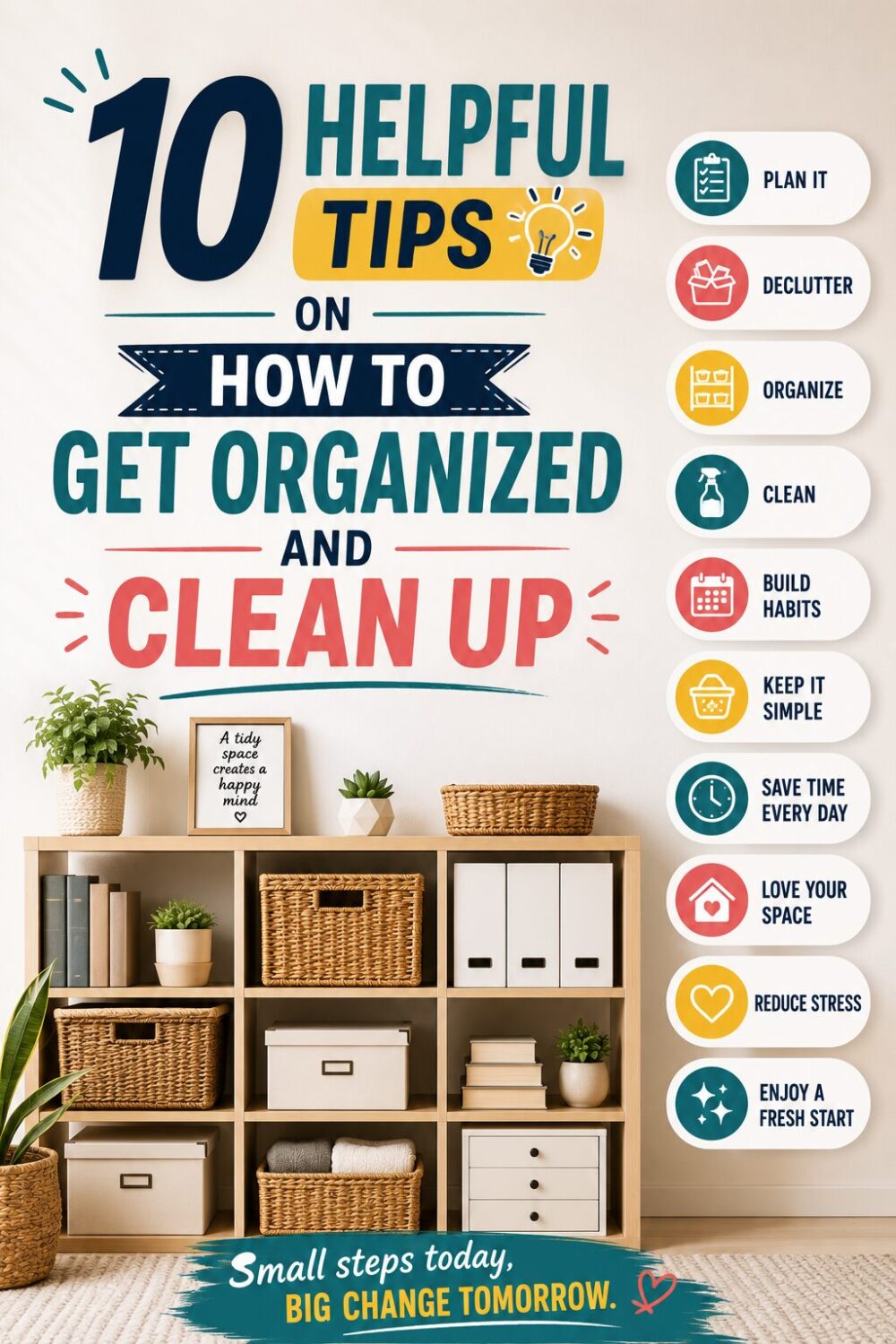
10 Helpful Tips on How to Get Organized
1. Start with a Family Meeting
Before reorganizing your entire home, take a step back and bring everyone together.
Organization works best when every family member understands why changes are being made—not just what needs to be done.
Choose a relaxed time when everyone is available and explain the goal.
Instead of saying:
“We need to stop making such a mess.”
Try:
“Let’s work together to make our home easier to live in.”
Children respond much better when they feel involved rather than blamed.
Discuss Together
Ask questions like:
- What areas of the house feel the messiest?
- What makes mornings stressful?
- What would make our home easier to manage?
- Which chores should everyone help with?
Giving children an opportunity to share ideas increases their sense of ownership and cooperation.
Set Realistic Goals
Avoid trying to organize the entire house in one weekend.
Instead, create small achievable goals.
For example:
Week 1
- Organize the toy area.
Week 2
- Declutter bedrooms.
Week 3
- Organize school supplies.
Small victories build motivation and make organization feel manageable.
2. Create a Family Calendar Everyone Can See
One of the biggest causes of household stress isn’t clutter—it’s forgetting appointments, activities, homework deadlines, and family commitments.
A central family calendar keeps everyone informed and reduces last-minute surprises.
Whether you prefer a wall calendar, whiteboard, planner, or digital calendar, choose one that the whole family can easily access.
Include Important Events Such As:
- School activities
- Homework deadlines
- Sports practice
- Birthday parties
- Medical appointments
- Family outings
- Grocery shopping days
- Household chores
- Special celebrations
Children enjoy adding their own activities to the calendar.
This helps them develop planning skills while giving them a sense of responsibility.
Make It Interactive
Use different colors for each family member.
For example:
🟦 Dad
🟩 Mom
🟨 Child 1
🟪 Child 2
Visual organization makes schedules much easier to understand—especially for younger children.
3. Declutter One Small Space at a Time
One of the biggest mistakes families make is trying to organize everything in a single day.
Looking at an entire house can feel overwhelming.
Instead, focus on one manageable area at a time.
For example:
- One drawer
- One shelf
- One closet
- One toy box
- One kitchen cabinet
Completing small projects creates momentum and makes the process far less stressful.
Teach Children How to Declutter
As you sort through belongings together, encourage children to create three simple piles:
Keep
Items they regularly use or truly enjoy.
Donate
Items in good condition that someone else could benefit from.
Recycle or Dispose
Broken, damaged, or unusable items.
This process teaches decision-making, gratitude, and generosity while reducing unnecessary clutter.
Ask Helpful Questions
Instead of deciding for your child, ask:
- Have you used this in the last year?
- Does it still fit?
- Does it still make you happy?
- Would another child enjoy this more?
These conversations help children become thoughtful decision-makers rather than simply accumulating possessions.
4. Divide Household Responsibilities Fairly
One of the biggest misconceptions about organization is that one person—usually a parent—has to do everything. In reality, a well-organized home is built on teamwork.
Giving every family member age-appropriate responsibilities not only reduces your workload but also teaches children accountability, independence, and life skills they’ll carry into adulthood.
Children who regularly help with household tasks often develop greater confidence and a stronger sense of responsibility because they see themselves as valuable contributors to the family.
Create a Family Chore Chart
A simple chore chart helps everyone understand their responsibilities and reduces the need for constant reminders.
You can divide chores into:
Daily Tasks
- Making the bed
- Putting toys away
- Feeding pets
- Washing dishes
- Wiping the dining table
- Packing school bags
- Watering plants
Weekly Tasks
- Vacuuming
- Organizing bookshelves
- Laundry
- Cleaning bathrooms
- Dusting furniture
- Taking out the recycling
Monthly Tasks
- Decluttering wardrobes
- Organizing the garage
- Deep-cleaning the refrigerator
- Sorting old paperwork
- Donating unused items
Match Chores to Your Child’s Age
Children are more likely to succeed when tasks match their abilities.
Ages 3–5
- Put toys in bins
- Place dirty clothes in the laundry basket
- Water indoor plants
- Help set the table
Ages 6–9
- Make the bed
- Pack their school bag
- Fold simple laundry
- Organize books and stationery
- Feed pets under supervision
Ages 10–13
- Wash dishes
- Vacuum rooms
- Help prepare meals
- Take out the trash
- Organize shared spaces
Teenagers
- Cook simple meals
- Manage their own laundry
- Help younger siblings
- Grocery shopping assistance
- Clean common areas independently
Remember, the goal isn’t perfection—it’s participation.
Praise effort rather than expecting flawless results.
5. Use Labels and Smart Storage Systems
A tidy home is easier to maintain when everything has a designated place.
Labels and storage containers eliminate the guesswork of where things belong, making it easier for both adults and children to clean up after themselves.
Sort Before You Store
Before buying storage containers, sort items into categories.
For example:
Toy Room
- Building blocks
- Dolls
- Board games
- Puzzles
- Art supplies
- Stuffed animals
Kitchen
- Baking supplies
- Snacks
- Lunch boxes
- Water bottles
Study Area
- Books
- Notebooks
- Craft materials
- Chargers
- Stationery
Once everything is categorized, storage becomes much more manageable.
Label Everything
Labels are especially helpful for younger children who are still learning organizational skills.
You can use:
- Printed labels
- Chalkboard labels
- Color-coded stickers
- Pictures for pre-readers
- Transparent containers
Visual labels help children know exactly where items belong, making clean-up faster and more consistent.
Keep Frequently Used Items Accessible
Store everyday essentials where family members can easily reach them.
For example:
- School bags near the entrance
- Shoes on a dedicated rack
- Homework supplies in one organizer
- Keys and wallets in one tray
- Charging stations in a common area
Simple systems save time and reduce daily frustration.
6. Create a Dedicated Homework and Study Space
Homework becomes much less stressful when children have a consistent place to learn.
A designated study area helps children focus, reduces distractions, and builds positive study habits over time.
It doesn’t have to be a separate room.
A quiet corner of the dining room, living room, or bedroom can work just as well.
Include Essential Supplies
Keep commonly used materials nearby, such as:
- Pencils
- Pens
- Erasers
- Notebooks
- Calculator
- Sticky notes
- Highlighters
- Ruler
- Charging cables
- Desk lamp
Having everything within reach prevents unnecessary interruptions during study time.
Reduce Distractions
Try to minimize:
- Television noise
- Mobile phones
- Video games
- Loud conversations
A calm environment helps children concentrate and complete homework more efficiently.
Encourage Independence
Teach children to:
- Pack their own school bags
- Organize tomorrow’s assignments
- Prepare uniforms the night before
- Check homework before leaving school
These small routines gradually build executive functioning skills that support lifelong organization.
7. Build Simple Daily Routines
Organization becomes much easier when important tasks happen automatically.
Daily routines reduce decision fatigue and help every family member know what comes next.
Instead of repeatedly reminding children what to do, routines create predictable patterns they can follow independently.
Morning Routine
A simple morning checklist might include:
✔ Wake up
✔ Brush teeth
✔ Get dressed
✔ Eat breakfast
✔ Pack school bag
✔ Fill water bottle
✔ Wear shoes
✔ Leave on time
A visual checklist can be especially helpful for younger children.
After-School Routine
Encourage children to follow a consistent order, such as:
- Put shoes away
- Wash hands
- Have a healthy snack
- Complete homework
- Outdoor play or physical activity
- Screen time (if appropriate)
- Family dinner
Consistent after-school routines reduce conflict and help children transition smoothly between school and home.
Evening Routine
A calming bedtime routine supports both organization and better sleep.
It might include:
- Tidying bedrooms
- Packing school bags
- Choosing clothes for the next day
- Brushing teeth
- Reading together
- Lights out at a consistent time
Preparing for tomorrow today makes mornings significantly less stressful.
Why Routines Matter
Research suggests that predictable family routines can:
- Reduce stress and anxiety
- Improve emotional regulation
- Encourage independence
- Support better sleep habits
- Improve time management
- Help children develop self-discipline
Children don’t just need structure—they often thrive because of it.
8. Make Organization Fun Instead of a Chore
Let’s be honest—very few children get excited when they’re told to clean their room.
But organization doesn’t have to feel like punishment.
By adding an element of play, creativity, or teamwork, parents can make organizing something children are much more willing to participate in.
Turn Cleaning into a Game
Try fun challenges like:
🏁 Beat the Timer
Set a timer for 10 minutes and see how much everyone can organize before it rings.
🎵 Music Challenge
Play your child’s favorite upbeat songs and clean until the playlist ends.
🎯 Treasure Hunt
Ask children to find and return specific items to their correct places.
📦 Sorting Race
Who can organize the books, toys, or laundry the fastest while still doing it correctly?
These activities make routine tasks feel less like work and more like shared family experiences.
Celebrate Progress, Not Perfection
Children learn best when they feel encouraged.
Instead of focusing on what they missed, acknowledge what they did well:
- “You remembered to put all your books away.”
- “I noticed you organized your desk without being asked.”
- “Thank you for helping your brother clean up.”
Positive reinforcement increases the likelihood that helpful behaviors will be repeated.
9. Plan Meals Together as a Family
One of the biggest daily stressors for many families is deciding “What’s for dinner?” Meal planning is a simple yet highly effective way to reduce decision fatigue, save time, minimize food waste, and encourage healthier eating habits.
When children are involved in planning meals, they also learn valuable life skills such as decision-making, responsibility, nutrition, and budgeting.
Set Aside One Day Each Week
Choose a day—perhaps Sunday evening—to plan meals for the upcoming week.
Discuss:
- Breakfast ideas
- School lunches
- Afternoon snacks
- Dinner plans
- Weekend treats
Writing everything down makes grocery shopping quicker and reduces unnecessary purchases.
Let Children Participate
Depending on their age, children can help by:
- Choosing one dinner each week
- Looking through healthy recipes
- Writing the grocery list
- Washing vegetables
- Setting the dining table
- Packing school lunches
- Helping prepare simple meals
When children contribute to meal planning, they’re often more willing to try new foods because they feel involved in the process.
Teach Healthy Eating Habits
Meal planning is also a wonderful opportunity to discuss:
- Why fruits and vegetables matter
- The importance of drinking enough water
- Choosing balanced meals
- Limiting sugary snacks
- Trying different cuisines together
These conversations encourage healthier eating habits that can last a lifetime.
Prepare Ahead
Simple preparation can make busy weekdays much easier.
For example:
- Wash fruits and vegetables in advance.
- Prepare lunch ingredients the night before.
- Freeze homemade meals for hectic days.
- Keep healthy snacks readily available.
Being organized in the kitchen often creates more quality family time because there’s less stress around meals.
10. Celebrate Progress and Small Wins
Many families start organizing with great enthusiasm but lose motivation after a few weeks.
One of the best ways to build lasting habits is to celebrate progress—not perfection.
Children, in particular, respond well to encouragement and recognition.
Celebrate Everyday Achievements
You don’t need elaborate rewards.
Simple acknowledgements can be incredibly meaningful.
For example:
- “Great job keeping your room tidy this week!”
- “I noticed you remembered your homework without being reminded.”
- “Thank you for helping organize the pantry.”
Positive feedback reinforces good habits far more effectively than criticism.
Create Family Milestones
Celebrate when your family reaches shared goals, such as:
- Keeping the living room organized for a month
- Completing chores consistently
- Following morning routines successfully
- Decluttering an entire room together
You might celebrate with:
- A family movie night
- A picnic in the park
- Baking together
- A board game evening
- Visiting a favorite place
- Extra family playtime
These rewards strengthen teamwork rather than focusing only on individual achievements.
Focus on Progress, Not Perfection
Remember that no family stays perfectly organized every day.
Life gets busy.
Schedules change.
Children have difficult days.
The goal isn’t to maintain a picture-perfect home—it’s to create habits that make everyday life calmer, healthier, and less stressful.
Common Mistakes Families Make When Trying to Get Organized
Even with the best intentions, some organizing strategies don’t last because they aren’t realistic.
Here are a few common mistakes to avoid.
Trying to Organize Everything at Once
Decluttering an entire house in one weekend often leads to exhaustion and frustration.
Instead, focus on one small area at a time.
Slow, steady progress is much easier to maintain.
Doing Everything Yourself
Parents sometimes redo chores because children don’t complete them perfectly.
While understandable, this prevents children from developing responsibility.
Allow them to learn through practice—even if it takes a little longer.
Buying Storage Before Decluttering
It’s tempting to purchase storage boxes before organizing.
However, storing unnecessary items simply creates organized clutter.
Declutter first.
Organize second.
Buy storage last.
Creating Overly Complicated Systems
If organizing requires too many steps, people are less likely to maintain it.
Simple systems are usually the most successful.
For example:
- One basket for school items
- One tray for keys
- One drawer for chargers
The easier a system is, the more likely everyone will use it consistently.
Expecting Children to Remember Everything
Young children are still developing planning and memory skills.
Visual reminders such as:
- Picture charts
- Checklists
- Labels
- Family calendars
help children become independent over time.
How Organization Supports Mental Wellbeing
An organized home isn’t just about appearances—it can also influence how we feel.
Although everyone’s experience is different, many people find that organized spaces help reduce daily stress by making routines more predictable and minimizing unnecessary distractions.
For children, consistent routines and organized environments may contribute to:
- Greater emotional security
- Better focus during learning
- Increased confidence
- Reduced anxiety around daily transitions
- Stronger independence
- Improved problem-solving skills
For parents, organization can mean:
- Less mental overload
- Fewer last-minute conflicts
- More quality family time
- Reduced decision fatigue
- Greater sense of control over daily responsibilities
Ultimately, organization isn’t about achieving perfection—it’s about creating an environment where everyone can function more comfortably and confidently.
Habits That Help Families Stay Organized Long-Term
Getting organized is one thing.
Staying organized is another.
These simple habits make long-term success much more likely.
Follow the “One-Minute Rule”
If something takes less than a minute, do it immediately.
Examples:
- Hang up a coat.
- Put shoes away.
- Throw away junk mail.
- Wash a cup.
Small actions prevent clutter from building up.
Spend 10 Minutes Tidying Every Evening
A quick family tidy-up before bedtime keeps small messes from becoming overwhelming.
Everyone can participate by putting away their own belongings.
Review the Family Calendar Weekly
Spend a few minutes each weekend reviewing upcoming appointments, school activities, birthdays, and household tasks.
Planning ahead reduces surprises and helps everyone feel prepared.
Declutter Regularly
Every few months, revisit closets, toy boxes, kitchen cabinets, and storage areas.
Ask:
- Do we still use this?
- Does someone else need it more?
- Can it be donated or recycled?
Regular decluttering prevents clutter from returning.
Final Thoughts
Getting organized isn’t about having spotless rooms, perfectly labeled containers, or a home that looks like it belongs in a magazine. It’s about creating systems that make everyday life easier, calmer, and more enjoyable for everyone in the family.
Every small habit matters.
Packing school bags the night before, returning toys to their designated places, following a family calendar, or spending just ten minutes tidying up each evening may seem insignificant on their own. However, these simple routines gradually become lifelong habits that teach children responsibility, independence, and self-discipline.
Remember, children learn far more from what they experience than from what they’re told. When they see parents planning ahead, working together, and maintaining healthy routines, they’re more likely to adopt those behaviors themselves.
Don’t aim for perfection.
Some days the house will be messy, routines will be interrupted, and plans won’t go as expected—and that’s perfectly normal.
The goal isn’t to eliminate every bit of clutter; it’s to create a home where everyone feels supported, less stressed, and able to spend more time making memories instead of constantly cleaning up.
Organization is a journey, not a destination. Start with one small change today, celebrate every step forward, and watch how those small improvements transform your family’s daily life over time.
A Word from Syona Minds
At Syona Minds, we believe that our surroundings play an important role in our overall mental and emotional wellbeing.
While an organized home won’t eliminate life’s challenges, it can create a calmer environment where families communicate better, children develop healthy routines, and daily responsibilities feel more manageable.
For children especially, predictable routines and structured environments provide a sense of security. They learn valuable life skills such as responsibility, planning, problem-solving, and independence—skills that extend far beyond keeping their rooms tidy.
We also recognize that every family is different. Some days will feel effortless, while others may be filled with unexpected challenges. Be kind to yourself throughout the process. Progress matters far more than perfection.
By working together, celebrating small victories, and building simple habits over time, families can create homes that support not only organization but also emotional connection, resilience, and overall wellbeing.
At Syona Minds, our mission is to empower families with practical, evidence-informed strategies that help children and parents thrive—both mentally and emotionally.
Because sometimes, the smallest daily habits create the biggest lifelong changes.
Frequently Asked Questions (FAQs)
1. Why is organization important for families?
An organized home helps reduce stress, improves time management, makes daily routines smoother, and creates a more predictable environment for children. It also encourages responsibility, independence, and teamwork among family members.
2. How can I motivate my child to stay organized?
Children are more likely to stay organized when tasks feel achievable and enjoyable. Involve them in decision-making, use visual reminders, celebrate their efforts, and make organizing a shared family activity rather than a punishment.
3. At what age should children start helping with household organization?
Even toddlers can begin learning simple organizational habits, such as putting toys into baskets or placing dirty clothes in a laundry hamper. As children grow, responsibilities can gradually increase based on their age and abilities.
4. How do I keep my home organized with a busy schedule?
Focus on small, consistent habits rather than large cleaning sessions. Ten minutes of tidying each evening, weekly meal planning, using a family calendar, and assigning simple daily chores can make a significant difference.
5. What is the best way to declutter without feeling overwhelmed?
Start with one small space at a time—a drawer, shelf, or closet—rather than tackling the entire house. Completing smaller tasks builds momentum and makes the process more manageable.
6. How can routines benefit children?
Consistent routines help children know what to expect throughout the day. This can support independence, improve time management, reduce stress during transitions, and encourage healthy habits such as regular sleep, homework, and self-care.
7. Should every family member have household responsibilities?
Yes. Assigning age-appropriate responsibilities encourages teamwork and teaches children valuable life skills such as accountability, cooperation, and problem-solving. Sharing tasks also reduces the burden on one person.
8. How often should families declutter their homes?
While there is no fixed schedule, many families find it helpful to declutter every three to six months. Regularly reviewing toys, clothing, books, and household items prevents unnecessary clutter from building up over time.
9. Does an organized home improve mental wellbeing?
Although organization isn’t a cure for stress or anxiety, many people find that tidy, predictable environments reduce daily overwhelm and make routines easier to manage. Organized spaces may also help children feel more secure and confident.
10. What’s the first step toward getting organized?
Begin by identifying one area of your home that causes the most daily frustration. Set a realistic goal, involve your family, and focus on creating simple systems that everyone can follow consistently.
Key Takeaways
✔ Organization is about creating practical systems—not achieving perfection.
✔ Small daily habits often have a greater long-term impact than occasional deep-cleaning sessions.
✔ Involving children in organizing teaches responsibility, independence, and essential life skills.
✔ Family calendars, routines, labels, and designated storage spaces simplify everyday life.
✔ Decluttering one area at a time is more sustainable than trying to organize the whole house at once.
✔ Celebrating progress helps motivate children and reinforces positive habits.
✔ Organized environments can contribute to reduced stress and smoother family routines.
✔ Consistency—not perfection—is the key to maintaining an organized home.
References
This article is informed by guidance and research from reputable organizations in child development, family wellbeing, and home organization, including:
1. American Academy of Pediatrics (AAP). Healthy Family Routines and Child Development.
2. Centers for Disease Control and Prevention (CDC). Positive Parenting Tips.
3. Harvard Center on the Developing Child. Executive Function & Self-Regulation.
4. American Psychological Association (APA). Research on family routines, stress, and child wellbeing.
5. UNICEF Parenting Resources. Building Healthy Daily Routines for Children.