Introduction
Bringing a pet into your family is one of life’s most rewarding experiences. Whether it’s an energetic dog greeting you at the door, a curious cat curling up beside you, or a playful rabbit hopping around the house, pets bring unconditional love, companionship, and joy into our lives.
But being a pet parent is about much more than providing food and shelter. Just like people, pets need proper nutrition, regular healthcare, mental stimulation, exercise, and emotional connection to lead healthy, fulfilling lives.
Today, veterinarians emphasize preventive care rather than simply treating illnesses after they occur. Small daily habits—such as maintaining a healthy diet, scheduling regular veterinary visits, encouraging physical activity, and creating a safe environment—can significantly improve your pet’s quality of life and even extend their lifespan.
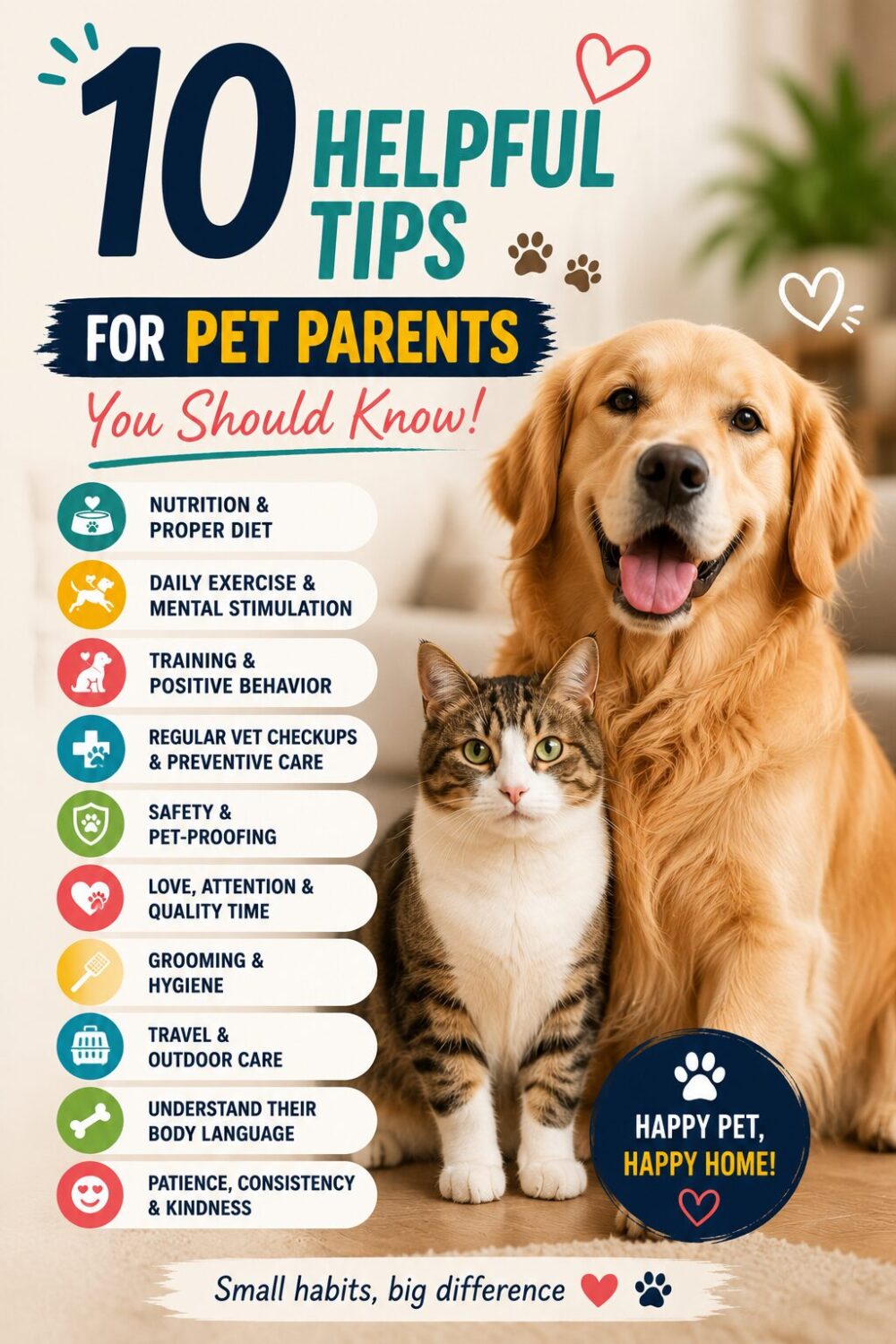
Whether you’re a first-time pet owner or an experienced pet parent, there’s always something new to learn about responsible pet care. In this comprehensive guide, we’ll share 10 expert-backed tips for pet parents that will help your furry companion stay healthy, happy, and emotionally secure for years to come.
Why Responsible Pet Care Matters
Owning a pet is a long-term commitment that comes with both joys and responsibilities. According to veterinary experts, responsible pet ownership involves more than meeting your pet’s basic needs—it means actively supporting their physical health, emotional wellbeing, and safety throughout every stage of life.
Healthy pets are more likely to:
- Live longer and healthier lives
- Experience fewer preventable illnesses
- Develop stronger bonds with their families
- Display fewer behavioral problems
- Enjoy better emotional wellbeing
- Stay active and maintain a healthy weight
Unfortunately, many common health conditions in pets—including obesity, dental disease, arthritis, and certain infections—can often be prevented or managed through regular care and early intervention.
Being proactive today can help avoid serious health issues tomorrow.
Understanding Your Pet’s Needs
Every pet is unique. Their care requirements vary depending on factors such as:
- Species
- Breed
- Age
- Activity level
- Size
- Existing medical conditions
- Living environment
For example:
A young Labrador Retriever may require significantly more exercise than an older Bulldog.
Similarly, indoor cats have different environmental enrichment needs compared to cats that have supervised outdoor access.
Understanding your pet’s individual needs allows you to make informed decisions about nutrition, exercise, healthcare, training, and daily routines.
Signs Your Pet Is Healthy and Happy
While regular veterinary check-ups are essential, pet parents should also know what good health looks like at home.
Healthy pets generally:
- Eat and drink normally
- Maintain a healthy weight
- Have bright, clear eyes
- Display a clean, shiny coat
- Remain curious and alert
- Enjoy regular play and interaction
- Sleep comfortably without excessive lethargy
- Pass normal urine and stools
- Show interest in their surroundings
Changes in behavior are often one of the earliest signs that something may be wrong.
If your usually playful dog suddenly becomes withdrawn or your cat stops eating, it’s worth consulting a veterinarian promptly.
10 Essential Tips for Pet Parents
1. Schedule Regular Veterinary Check-ups
One of the most important responsibilities of a pet parent is ensuring that your pet receives routine veterinary care.
Many health problems develop gradually and may not show obvious symptoms during the early stages. Regular check-ups allow veterinarians to detect concerns before they become more serious.
During a routine examination, your veterinarian may assess:
- Body weight
- Heart and lung health
- Eyes and ears
- Skin and coat condition
- Dental health
- Joint mobility
- Vaccination status
- Parasite prevention
- Nutrition
- Overall wellbeing
Early detection often leads to more effective treatment and can reduce both medical complications and healthcare costs over time.
How Often Should Pets Visit the Vet?
Although recommendations vary depending on age and health status, a general guideline is:
Healthy adult pets
- At least once a year
Senior pets
- Every six months, or as advised by your veterinarian
Puppies and kittens
- More frequent visits during their first year for vaccinations, growth monitoring, and preventive care
Routine health examinations also provide an opportunity to discuss your pet’s behavior, nutrition, weight management, and lifestyle.
Never hesitate to ask questions—your veterinarian is one of your most valuable partners in your pet’s lifelong health.
2. Provide a Balanced and Nutritious Diet
Nutrition forms the foundation of your pet’s overall health.
Just like humans, pets require a balanced diet containing the right combination of proteins, fats, carbohydrates, vitamins, minerals, and fresh water.
However, there is no one-size-fits-all diet.
A pet’s nutritional needs depend on several factors, including:
- Species
- Breed
- Age
- Activity level
- Reproductive status
- Medical conditions
For instance:
Growing puppies require different nutrients than senior dogs.
Similarly, indoor cats often need fewer calories than highly active outdoor cats.
Feeding the wrong type or amount of food may contribute to:
- Obesity
- Diabetes
- Joint problems
- Digestive disorders
- Nutritional deficiencies
Choose a high-quality pet food appropriate for your pet’s life stage, and avoid making major dietary changes without consulting your veterinarian.
Don’t Forget Fresh Water
Clean drinking water should always be available.
Proper hydration supports:
- Digestion
- Kidney function
- Body temperature regulation
- Overall health
If your pet suddenly begins drinking significantly more or less water than usual, consult your veterinarian, as this may indicate an underlying medical condition.
Common Foods That Can Be Dangerous for Pets
Many everyday human foods are toxic to dogs and cats.
Avoid feeding your pet:
- Chocolate
- Grapes and raisins
- Onions
- Garlic
- Xylitol (found in sugar-free gum and candies)
- Alcohol
- Caffeinated beverages
- Macadamia nuts
- Cooked bones
If you suspect your pet has eaten something toxic, contact your veterinarian or an emergency animal poison service immediately.
3. Keep Your Pet Active with Regular Exercise and Play
Exercise isn’t just about burning energy—it’s essential for your pet’s physical health, mental stimulation, and emotional wellbeing. Regular activity helps maintain a healthy weight, strengthens muscles and joints, improves heart health, and reduces boredom-related behaviors.
The amount of exercise your pet needs depends on factors such as age, breed, health, and personality. For example, a Border Collie may require far more daily activity than a Pug, while an indoor cat benefits from short, interactive play sessions throughout the day.
Benefits of Regular Exercise
A consistent exercise routine can help your pet:
- Maintain a healthy body weight
- Improve cardiovascular health
- Build stronger muscles and joints
- Reduce anxiety and stress
- Prevent destructive behaviors caused by boredom
- Improve sleep quality
- Increase confidence and overall happiness
Exercise Ideas for Different Pets
For Dogs
- Daily walks
- Fetch
- Hiking
- Swimming (breed-dependent)
- Agility training
- Interactive toys
For Cats
- Feather wand toys
- Laser pointer sessions (always end with a physical toy they can catch)
- Puzzle feeders
- Climbing trees and shelves
- Hide-and-seek games
For Rabbits, Guinea Pigs, and Other Small Pets
- Supervised play areas
- Tunnels
- Safe chew toys
- Exploration spaces
- Obstacle courses
The goal isn’t simply to tire your pet out—it’s to create opportunities for movement, exploration, and fun.
4. Stimulate Your Pet’s Mind Every Day
Just as physical exercise strengthens the body, mental stimulation keeps your pet’s brain active and engaged.
Animals that lack mental enrichment often become bored, frustrated, or anxious. Over time, this boredom may lead to behaviors such as:
- Excessive barking
- Chewing furniture
- Digging
- Scratching
- Restlessness
- Attention-seeking behaviors
Providing your pet with regular mental challenges can reduce these issues while improving their confidence and overall wellbeing.
Simple Ways to Keep Pets Mentally Engaged
You don’t need expensive equipment to stimulate your pet’s mind.
Try activities like:
- Food puzzle toys
- Snuffle mats
- Teaching new tricks
- Hide-and-seek games
- Rotating toys every few days
- Scent games for dogs
- Climbing structures for cats
- Cardboard boxes and tunnels
- Interactive feeding puzzles
Even spending 10–15 minutes teaching a new command or playing an interactive game can provide valuable mental exercise.
Why Enrichment Matters
Mental enrichment encourages natural behaviors such as:
- Problem-solving
- Exploring
- Hunting
- Searching
- Learning
- Investigating new environments
Pets that are mentally stimulated are often calmer, happier, and less likely to develop behavioral problems.
5. Train with Patience, Consistency, and Positive Reinforcement
Training isn’t about controlling your pet—it’s about building trust, improving communication, and creating a safe environment for everyone.
Whether you have a puppy, kitten, or an older rescue animal, training helps pets understand what is expected while strengthening the bond you share.
Start with the Basics
Dogs benefit from learning simple commands such as:
- Sit
- Stay
- Come
- Leave it
- Down
- Heel
Cats can also learn simple cues and routines, especially when motivated by treats or play.
Training can even be beneficial for birds, rabbits, and other companion animals by teaching them to respond to cues or interact confidently with their environment.
Focus on Positive Reinforcement
Modern animal behavior experts recommend rewarding desired behaviors instead of punishing unwanted ones.
Positive reinforcement includes:
- Treats
- Praise
- Toys
- Gentle affection
- Playtime
When pets associate learning with positive experiences, they become more confident and eager to participate.
Why Socialization Is Equally Important
For puppies and kittens especially, early socialization plays a vital role in helping them become confident adults.
Gradually exposing young pets to:
- New people
- Other animals
- Different environments
- Various sounds
- Car rides
- Veterinary visits
helps reduce fear and anxiety later in life.
Always ensure these experiences are safe, gradual, and positive.
6. Prioritize Grooming and Hygiene
Grooming isn’t only about keeping your pet looking good—it is an essential part of preventive healthcare.
Regular grooming allows you to identify changes in your pet’s skin, coat, ears, eyes, and nails before they develop into larger problems.
Brushing
Routine brushing helps:
- Remove loose fur
- Prevent painful matting
- Reduce shedding
- Improve blood circulation
- Distribute natural skin oils
- Keep the coat healthy and shiny
Long-haired breeds generally require more frequent brushing than short-haired breeds.
Bathing
Pets don’t usually require frequent bathing unless recommended by a veterinarian or unless they become particularly dirty.
Overbathing may strip natural oils from the skin and cause irritation.
Always use shampoos specifically formulated for pets.
Nail Care
Long nails can cause:
- Pain while walking
- Joint strain
- Difficulty maintaining proper posture
- Increased risk of injury
Regular trimming keeps your pet comfortable and mobile.
Dental Health
Dental disease is one of the most common health issues seen in companion animals.
Poor oral health may contribute to:
- Bad breath
- Tooth loss
- Gum disease
- Difficulty eating
- Pain
- Bacterial infections affecting other organs
Healthy dental habits include:
- Brushing your pet’s teeth regularly
- Veterinary dental check-ups
- Dental chews (if recommended)
- Dental diets when appropriate
Ear and Eye Care
Check your pet’s ears regularly for:
- Redness
- Swelling
- Unpleasant odor
- Excessive wax
- Discharge
Similarly, watch for eye redness, excessive tearing, or cloudiness, and consult your veterinarian if you notice any concerning changes.
7. Create a Safe and Comfortable Home Environment
Your home should be a place where your pet feels secure, relaxed, and protected.
Many everyday household items that seem harmless to humans can pose serious risks to animals.
Pet-Proof Your Home
Reduce risks by:
- Keeping medications out of reach
- Storing cleaning products securely
- Covering exposed electrical cords
- Keeping small objects away from curious pets
- Using pet-safe houseplants
- Securing balconies and windows where necessary
If you’re introducing a new pet to your home, allow them time to explore gradually rather than overwhelming them with too much space at once.
Provide a Personal Safe Space
Every pet benefits from having a quiet area where they can rest without being disturbed.
This might include:
- A comfortable bed
- A crate (used positively)
- A quiet room
- A cozy corner
- A blanket that smells familiar
Having a predictable, safe retreat helps reduce stress during loud events such as thunderstorms, fireworks, or family gatherings.
Keep Identification Updated
Even indoor pets can sometimes escape unexpectedly.
Ensure your pet has:
- An identification tag
- Updated contact information
- A registered microchip (where available and recommended)
Proper identification significantly increases the chances of being reunited if your pet becomes lost.
8. Build a Consistent Daily Routine
Pets thrive on routine. Just like children, they feel more secure when they know what to expect each day. Consistency helps reduce stress, improves behavior, and supports both physical and emotional health.
Whether you have a dog, cat, rabbit, or bird, establishing regular routines creates a sense of stability and predictability.
Why Routine Matters
A consistent schedule can help:
- Reduce anxiety and stress
- Improve digestion
- Encourage better sleep
- Prevent unwanted behaviors
- Support house training
- Make transitions easier during travel or lifestyle changes
Pets often associate routines with safety. When meals, walks, and bedtime happen around the same time every day, they are less likely to become anxious or restless.
A Healthy Daily Routine Might Include
Morning
- Fresh drinking water
- Bathroom break (for dogs)
- Breakfast
- A short walk or play session
Afternoon
- Interactive toys
- Rest time
- Mental enrichment activities
Evening
- Exercise or play
- Dinner
- Family interaction
- Calm bedtime routine
Of course, every pet is different. The goal isn’t perfection—it’s consistency.
9. Strengthen Your Bond Through Love and Quality Time
Food and shelter meet a pet’s physical needs, but love, attention, and companionship support their emotional wellbeing.
Pets form strong emotional connections with their families. Spending quality time together helps build trust and creates a relationship based on security and affection.
Simple Ways to Bond with Your Pet
Quality time doesn’t always require elaborate activities.
Small daily moments can make a big difference:
- Going for a walk
- Playing fetch
- Gentle brushing
- Training sessions
- Talking to your pet
- Sitting together while reading or watching television
- Gentle petting (if your pet enjoys it)
These interactions help your pet feel valued and secure.
Learn Your Pet’s Personality
Every pet expresses affection differently.
Some dogs enjoy cuddling, while others prefer active games.
Some cats seek constant attention, whereas others enjoy quiet companionship from a distance.
Respecting your pet’s preferences helps strengthen trust and reduces stress.
Positive Reinforcement Builds Confidence
Rewarding good behavior with praise, affection, toys, or treats encourages your pet to repeat those behaviors.
Avoid punishment whenever possible.
Fear-based training can damage trust and may contribute to anxiety or aggression.
Instead, focus on guiding your pet toward desired behaviors through patience and encouragement.
10. Be Prepared for Emergencies
Emergencies are unpredictable, but preparation can make a significant difference.
Whether it’s a sudden illness, accident, or natural disaster, having a plan helps you respond quickly and calmly.
Keep a Pet First Aid Kit
A basic pet emergency kit may include:
- Gauze
- Bandages
- Adhesive tape
- Antiseptic solution (approved for pets)
- Tweezers
- Digital thermometer
- Disposable gloves
- Emergency blanket
- Saline solution
- Any prescription medications your pet requires
Remember that a first aid kit is designed to provide temporary care until your pet can be seen by a veterinarian.
Save Important Contacts
Keep these numbers easily accessible:
- Your regular veterinarian
- Nearest emergency veterinary hospital
- Animal poison helpline (if available in your country)
- Local animal shelter
Saving these contacts in your phone can save valuable time during an emergency.
Prepare for Natural Disasters
If you live in an area prone to floods, storms, earthquakes, or wildfires, include your pet in your family’s emergency plan.
Prepare:
- Food for several days
- Drinking water
- Medications
- Leash or harness
- Carrier
- Vaccination records
- Favorite toy or blanket
Planning ahead reduces panic and helps ensure your pet’s safety.
Common Mistakes Many Pet Parents Make
Even the most caring pet owners can unintentionally develop habits that affect their pet’s wellbeing.
Recognizing these common mistakes can help you provide even better care.
Overfeeding
One of the most common health concerns among companion animals is obesity.
Extra treats, table scraps, and oversized meal portions may seem harmless but can increase the risk of:
- Diabetes
- Arthritis
- Heart disease
- Reduced mobility
- Shorter lifespan
Always follow your veterinarian’s feeding recommendations.
Skipping Preventive Veterinary Care
Some owners only visit the veterinarian when their pet appears sick.
However, many illnesses develop silently.
Routine check-ups help identify health problems before obvious symptoms appear.
Preventive healthcare is often less expensive and more effective than treating advanced disease.
Ignoring Dental Care
Many pets develop dental disease by middle age.
Bad breath isn’t just unpleasant—it can indicate gum disease or infection.
Simple habits like regular brushing and veterinary dental cleanings can improve both oral health and overall wellbeing.
Not Providing Enough Mental Stimulation
A bored pet often becomes a mischievous pet.
Chewing furniture, scratching carpets, excessive barking, and destructive behavior are frequently signs that a pet needs more enrichment rather than punishment.
Assuming Every Pet Is the Same
Each animal has unique needs.
Breed, personality, age, medical history, and lifestyle all influence what type of care is most appropriate.
Avoid comparing your pet with others.
Instead, focus on what helps your companion thrive.
When Should You Visit a Veterinarian?
While annual wellness examinations are essential, don’t wait for the next scheduled appointment if your pet develops concerning symptoms.
Seek veterinary advice if your pet experiences:
- Loss of appetite lasting more than a day
- Vomiting or diarrhea that persists
- Difficulty breathing
- Sudden limping
- Unexplained weight loss
- Persistent coughing
- Difficulty urinating
- Blood in urine or stool
- Seizures
- Extreme lethargy
- Sudden behavioral changes
- Signs of pain
Pets often hide discomfort, so subtle changes in behavior may be the earliest indication that something isn’t right.
When in doubt, consult your veterinarian.
Early intervention almost always leads to better outcomes.
Tips for Helping Your Pet Live a Longer, Healthier Life
Although genetics influence lifespan, everyday care plays a major role in helping pets enjoy healthier lives.
Here are some simple lifelong habits:
✔ Feed a balanced diet appropriate for your pet’s age and health.
✔ Maintain a healthy weight.
✔ Exercise daily.
✔ Schedule preventive veterinary care.
✔ Stay up to date on vaccinations and parasite prevention.
✔ Brush teeth regularly.
✔ Groom according to breed requirements.
✔ Keep fresh drinking water available.
✔ Provide mental enrichment.
✔ Spend quality time together every day.
Small daily habits often have the greatest impact over the course of your pet’s life.
Key Takeaway
Being a responsible pet parent isn’t about being perfect it’s about consistently meeting your pet’s physical, emotional, and social needs. Through routine care, positive interactions, and preventive healthcare, you can help your companion enjoy a longer, healthier, and happier life while strengthening the special bond you share.
Preventive care begins with two simple habits: regular veterinary visits and proper nutrition. Together, they form the foundation of a long, healthy, and active life for your pet.
Exercise, enrichment, training, grooming, and a safe environment all work together to support your pet’s overall wellbeing. These daily habits not only prevent many common health and behavioral issues but also strengthen the trust and companionship that make pet ownership so rewarding.