Summary
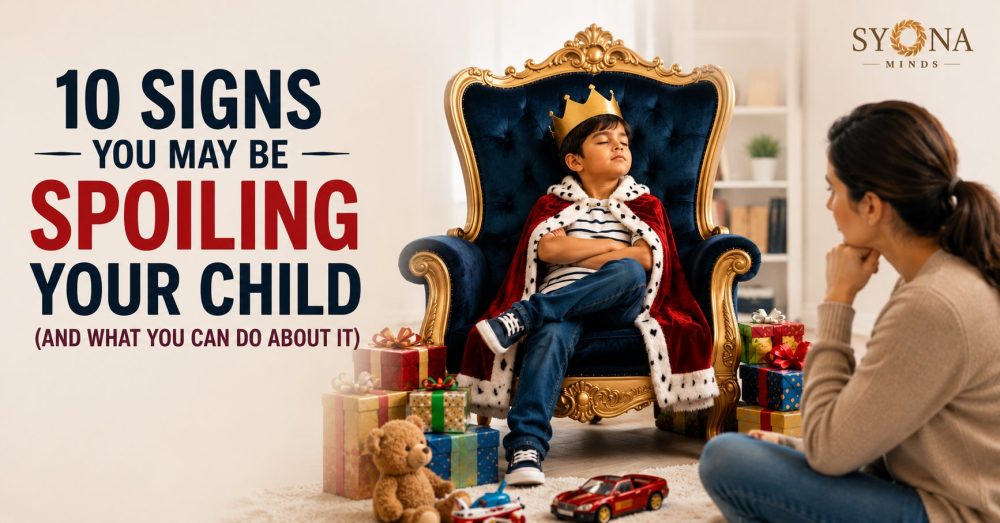
Every parent wants to give their child the very best. Love often looks like saying “yes,” solving problems, or protecting children from disappointment. But when children rarely experience limits, responsibilities, or the natural consequences of their actions, they may struggle to develop important life skills such as patience, gratitude, empathy, and resilience.
Spoiling a child is rarely about buying too many toys. More often, it happens when children are consistently shielded from challenges or when boundaries become inconsistent. Fortunately, these patterns can be changed. With warmth, structure, and realistic expectations, parents can raise children who feel loved while also becoming responsible, emotionally resilient, and independent.
This article explores ten common signs of overindulgence, explains why they happen from a psychological perspective, and offers practical ways to encourage healthier development.
Introduction
Most parents have asked themselves at some point:
“Am I giving my child too much?”
Maybe you bought another toy after a difficult day, finished their homework because they were tired, or gave in to a tantrum in the supermarket simply to avoid a scene.
These moments don’t make someone a bad parent.
In fact, they usually come from the best intentions.
Parents naturally want to protect their children from disappointment, frustration, and failure. However, psychologists explain that these uncomfortable experiences are also some of life’s greatest teachers.
Children learn patience by waiting.
They learn responsibility by making mistakes.
They learn gratitude by understanding effort.
And they develop confidence by solving problems themselves.
When parents remove every obstacle or rarely enforce boundaries, children may miss opportunities to develop these essential life skills.
The goal of parenting isn’t to make children happy every moment it’s to prepare them for a lifetime of healthy relationships, emotional wellbeing, and independence.
What Does It Really Mean to “Spoil” a Child?
Spoiling isn’t about showing love.
Love, affection, and emotional warmth are essential for healthy development.
Instead, child psychologists describe overindulgence as giving children more than they need while expecting less than they are capable of giving in return.
This may include:
- Always giving in to demands.
- Avoiding consequences.
- Solving every problem for them.
- Having few consistent household rules.
- Giving excessive material rewards instead of experiences or responsibilities.
Over time, children may begin believing that the world should always adjust to their needs instead of learning how to adapt to the world.
This isn’t because they are “bad” children, it is because children learn through repeated experiences.
Why Healthy Boundaries Matter
Children actually thrive when expectations are clear.
Boundaries help children:
- Feel emotionally secure.
- Learn self-control.
- Understand responsibility.
- Develop resilience.
- Respect other people.
- Build confidence through independence.
Research in developmental psychology consistently shows that children raised with a balance of warmth and structure, often called authoritative parenting, tend to develop stronger emotional regulation, better social skills, and greater independence than children raised with either excessive strictness or very few boundaries.
In other words, children don’t need perfect parents.
They need consistent ones.
10 Signs You May Be Overindulging Your Child
1. They Expect Everything Immediately
Does your child become upset whenever they have to wait?
Whether it’s a toy, screen time, dessert, or a new game, children who struggle with delayed gratification often expect their needs to be met instantly.
Psychologically, waiting is an important developmental skill.
Each time children practise patience, they strengthen their ability to manage frustration and regulate emotions.
Instead of immediately saying yes, try saying:
“We’ll think about it.”
“You can save for it.”
“Let’s wait until the weekend.”
These small moments teach children that good things are worth waiting for.
2. They Rarely Say “Thank You”
Gratitude doesn’t develop automatically.
Children learn appreciation by watching the adults around them and understanding the effort behind what they receive.
If gifts, privileges, or favours are always expected, children may begin taking them for granted.
Instead of focusing only on saying “thank you,” encourage conversations like:
- Who helped us today?
- What made you smile today?
- What are you thankful for before bedtime?
Gratitude becomes a habit when it is practised regularly—not only on birthdays or holidays.
3. Tantrums Often Lead to Rewards
Tantrums are a normal part of childhood, especially in toddlers.
However, when children discover that crying, shouting, or arguing changes a parent’s decision, the behaviour is unintentionally reinforced.
This doesn’t mean ignoring your child’s feelings.
Instead:
✔ Acknowledge the emotion.
✔ Stay calm.
✔ Keep the boundary.
For example:
“I know you’re disappointed because you wanted another chocolate. It’s okay to feel upset, but we’re not buying another one today.”
Children learn emotional regulation when adults model calmness during difficult moments.
4. They Believe Rules Apply to Everyone Else
Some children begin expecting special treatment.
They may interrupt conversations, ignore household rules, or believe consequences shouldn’t apply to them.
Children who understand fairness realise that:
- Everyone has responsibilities.
- Everyone makes mistakes.
- Everyone follows family rules.
Consistency helps children develop respect not fear.
When rules change depending on a child’s mood, confusion often replaces responsibility.
5. They Avoid Responsibility
Children feel proud when they contribute.
Simple household tasks help them see themselves as capable members of the family.
Responsibilities might include:
- Putting toys away.
- Making their bed.
- Feeding a pet.
- Packing their school bag.
- Helping set the table.
These jobs are not punishments.
They build competence, confidence, and independence.
Psychologists often remind parents:
Don’t do for children what they are capable of learning to do themselves.
6. They Value Things More Than Experiences
Does your child seem happiest only after getting a new toy, gadget, or expensive gift?
While it’s natural for children to enjoy new possessions, constantly relying on material rewards can unintentionally teach them that happiness comes from “getting more” rather than appreciating what they already have.
Research in positive psychology suggests that meaningful experiences, such as family outings, creative activities, cooking together, reading stories, or playing games often create stronger and longer-lasting happiness than material possessions.
Instead of asking:
“What should I buy for my child?”
Try asking:
“What memory can we create together today?”
Children may eventually forget many of the toys they received, but they often remember how their parents made them feel.
7. They Use Manipulation to Get Their Way
Children are excellent observers.
If crying, arguing, guilt, or repeated pleading consistently changes a parent’s decision, they quickly learn that these behaviours are effective.
This isn’t manipulation in the adult sense; it is simply learning through experience.
For example:
- “Please…”
- “Everyone else gets one!”
- “You never let me do anything.”
These behaviours often reflect experimentation rather than intentional misbehaviour.
Instead of reacting emotionally:
✔ Stay calm.
✔ Repeat your decision kindly.
✔ Encourage respectful communication.
You might say:
“I understand you’re disappointed. You can tell me how you feel, but my answer isn’t changing.”
Children gradually learn that honest communication is more effective than emotional pressure.
8. They Struggle to Consider Other People’s Feelings
Empathy isn’t something children automatically develop.
It grows through everyday conversations, role modelling, and opportunities to understand different perspectives.
Children who rarely think about others may:
- Interrupt conversations.
- Ignore someone’s feelings.
- Laugh when another child is upset.
- Expect everyone to accommodate them.
Fortunately, empathy can be taught.
Simple questions make a big difference:
- “How do you think your friend felt?”
- “What would you want if you were in their place?”
- “How could we help?”
Stories, books, pretend play, volunteering, and family discussions all strengthen empathy over time.
Children learn kindness by experiencing kindness.
9. They Find Sharing Difficult
Sharing can be challenging, especially for younger children.
Developmentally, toddlers are still learning that other people have different wants and needs.
However, as children grow, learning to share becomes an important social skill.
Rather than forcing children to share immediately, parents can model generosity by saying things like:
“Would you like to take turns?”
“Let’s see how sharing makes play more fun.”
Praise generous behaviour when it happens naturally.
Children are far more likely to repeat behaviours that receive positive attention than those that are demanded through pressure.
10. You Solve Every Problem for Them
Perhaps the most overlooked form of overindulgence isn’t buying too much.
It’s solving too much.
Parents naturally want to rescue their children from disappointment.
But every time adults solve every conflict, complete every project, or remove every obstacle, children lose opportunities to develop confidence in their own abilities.
Psychologists call this self-efficacy the belief that “I can handle difficult things.”
Self-efficacy grows when children:
- Solve small problems.
- Learn from mistakes.
- Try again after failing.
- Experience success through effort.
Instead of immediately stepping in, try asking:
- “What do you think you could do?”
- “What ideas have you already tried?”
- “How can I help you figure it out?”
Guidance builds confidence.
Rescuing can unintentionally reduce it.
How to Encourage Healthy Independence
If you recognised some of these behaviours, don’t panic.
Every family develops habits over time, and children are remarkably adaptable.
Positive change doesn’t require becoming stricter overnight.
Instead, focus on consistency.
Set Clear and Predictable Boundaries
Children feel safer when expectations are clear.
Simple household rules such as:
- Screen time limits
- Bedtime routines
- Respectful language
- Household responsibilities
help children understand what is expected of them.
Consistency is more important than perfection.
Teach Delayed Gratification
Waiting is a life skill.
Whether saving pocket money for a desired toy or waiting until the weekend for a special activity, children gradually learn patience through repeated practice.
Psychologists often point to the famous “Marshmallow Test”, which showed that learning to delay gratification is linked to stronger self-control and better emotional regulation later in life. While later research has shown that many factors influence outcomes, the ability to wait remains an important developmental skill.
Encourage Responsibility
Children enjoy feeling capable.
Assign responsibilities based on age.
Preschoolers
- Put toys away
- Water plants
- Help feed a pet
School-age children
- Make their bed
- Pack their school bag
- Help prepare meals
- Fold laundry
Teenagers
- Manage homework schedules
- Cook simple meals
- Budget pocket money
- Help care for younger siblings when appropriate
Responsibility teaches contribution not perfection.
Focus on Effort Rather Than Rewards
Instead of praising only results, notice effort.
Instead of saying:
“You’re so smart.”
Try:
“I noticed how hard you worked on that.”
This encourages a growth mindset, helping children see mistakes as opportunities to learn rather than evidence of failure.
Make Gratitude Part of Daily Life
Gratitude grows through practice.
Simple family rituals include:
- Sharing one good thing before dinner.
- Writing gratitude notes.
- Thanking teachers, grandparents, or neighbours.
- Talking about the effort behind everyday tasks.
Children who regularly practise gratitude tend to appreciate both people and experiences more deeply.
Common Myths About Spoiling Children
Myth 1: Loving your child too much spoils them.
Love doesn’t spoil children.
Inconsistent boundaries and excessive overprotection are far more likely to contribute to overindulgence than affection itself.
Myth 2: Saying “No” makes you a strict parent.
Healthy boundaries help children feel secure.
Children don’t need parents who always say yes they need parents whose decisions are predictable and fair.
Myth 3: Good parents prevent disappointment.
Disappointment is part of growing up.
Missing out, making mistakes, and experiencing frustration teach resilience, patience, and problem-solving.
Parents don’t need to remove every challenge.
They need to help children navigate those challenges.
A Psychological Perspective
Child psychologists often describe healthy parenting as a balance between warmth and structure.
Warmth helps children feel loved.
Structure helps them feel secure.
Too much control can create fear.
Too few boundaries can create confusion.
Children flourish when they know:
- They are loved unconditionally.
- Their feelings are accepted.
- Their behaviour has limits.
- Mistakes are opportunities to learn.
- Independence is encouraged gradually.
This balance prepares children not only for childhood but for adulthood.
Key Takeaways
✔ Spoiling is less about giving children too much and more about expecting too little from them.
✔ Healthy boundaries provide children with emotional security.
✔ Patience, gratitude, empathy, and responsibility are learned through everyday experiences.
✔ Allowing manageable failures helps children develop resilience and confidence.
✔ Consistency is more powerful than strictness.
✔ Parenting is not about avoiding every struggle it’s about helping children develop the skills to face life’s challenges.
Conclusion
Every parent wants to protect their child, and that instinct comes from a place of love. Yet one of the greatest gifts we can offer children is not a life free from disappointment, it is the confidence that they can cope with disappointment when it comes.
Children grow stronger when they are trusted with responsibilities, encouraged to solve problems, and supported through mistakes rather than shielded from them. These everyday experiences help build qualities that no toy or reward can replace: resilience, gratitude, empathy, and self-confidence.
Parenting isn’t about being perfect or saying “no” more often. It’s about finding the balance between kindness and consistency, between protection and independence. Small changes made today, such as setting a boundary, encouraging responsibility, or allowing a child to work through a challenge, can shape habits that last a lifetime.
Ultimately, raising emotionally healthy children is not about giving them everything they want. It’s about giving them the skills, values, and confidence they need to thrive in the real world, while always knowing they are deeply loved.
References
1. American Academy of Pediatrics. (2023). Effective Discipline to Raise Healthy Children.
2. Baumrind, D. (1991). The Influence of Parenting Style on Adolescent Competence and Substance Use. Journal of Early Adolescence.
3. Dweck, C. S. (2006). Mindset: The New Psychology of Success. Random House.
4. Maccoby, E. E., & Martin, J. A. (1983). Socialisation in the Context of the Family: Parent–Child Interaction.
5. Seligman, M. E. P. (2011). Flourish. Free Press.
6. Siegel, D. J., & Bryson, T. P. (2014). No-Drama Discipline. Bantam.
7. American Psychological Association. (2022). Healthy Parenting and Child Development.
8. Centre on the Developing Child, Harvard University. (2021). Serve and Return Interaction Shapes Brain Architecture.