Summary
Blended families are becoming increasingly common, bringing together parents, children, and extended families from different backgrounds into one new household. While this new beginning often brings hope, love, and fresh opportunities, it also introduces unique emotional, social, and practical challenges that every family member must learn to navigate.
Unlike traditional family structures, blended families involve adjusting to new relationships, parenting styles, household rules, family traditions, and emotional expectations. Children may struggle with divided loyalties, parents may disagree about discipline, and stepparents often find themselves unsure of their role. These challenges are normal, and they do not mean your family is failing.
Research in family psychology suggests that successful blended families are built gradually through patience, open communication, mutual respect, and realistic expectations. Strong family bonds don’t develop overnight; they grow through consistent trust, shared experiences, and understanding.
In this article, we’ll explore ten of the most common challenges faced by blended families, understand why they happen from a psychological perspective, and discover practical strategies to help every family member feel accepted, valued, and connected.
Introduction
Creating a new family marks one of life’s most significant transitions and can be an exciting opportunity for many individuals. It often serves as a second chance at happiness, ushering in a fresh chapter filled with hope, love, and new beginnings.
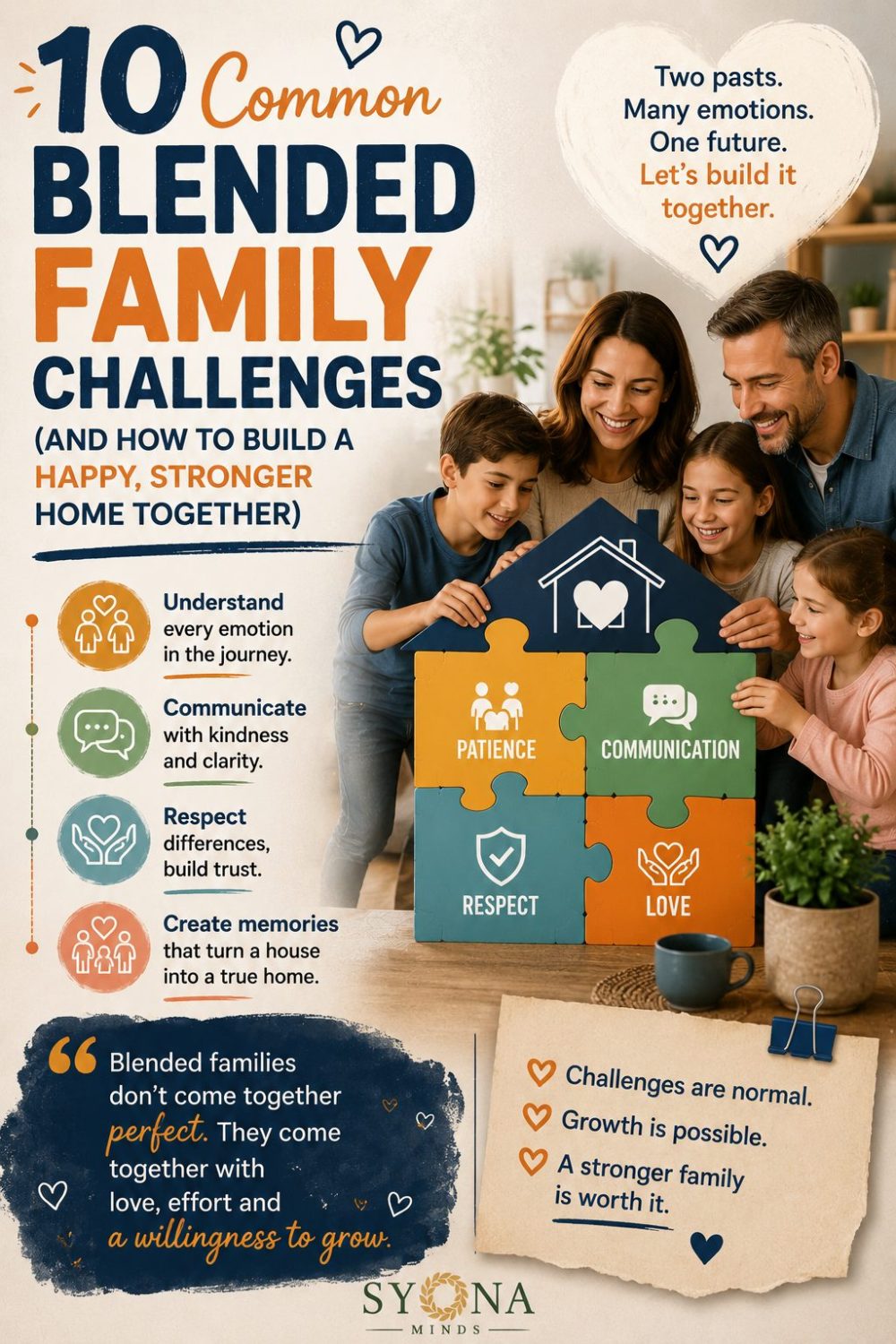
Blending families involves more than just sharing the same living space; it’s about merging diverse personalities, parenting styles, routines, memories, and emotions. Picture it like piecing together a puzzle made from two different images. At first, the pieces may seem mismatched.
Children might find themselves reminiscing about their previous routines, while parents may have differing views on discipline. Stepparents often wonder how much to engage in their new roles. Even ordinary decisions like bedtime rules, holiday celebrations, chores, or family traditions can evoke powerful emotions.
The positive aspect of these struggles is that they represent a normal part of the adjustment process rather than signs of failure. Research indicates that blended families typically require time to build trust, routines, and emotional security. Family psychologists suggest that it may take two to five years for many blended families to feel fully integrated.
Though that may seem like a lengthy period, each shared meal, open conversation, family outing, and act of kindness contributes to constructing a solid foundation.
Blending a family is not about replacing what once was; it’s about embracing the journey of creating a vibrant, united future together.
What Is a Blended Family?
A blended family, sometimes called a stepfamily, is formed when one or both partners bring children from previous relationships into a new family unit.
Some blended families include:
- A parent remarrying after divorce
- A widowed parent finding a new partner
- Couples where both partners have children
- Families with biological children and stepchildren living together
Every blended family looks different.
Some children divide time between two homes. Some live primarily with one parent. Others gain new siblings, grandparents, cousins, and traditions almost overnight. These changes can be exciting, but they also require significant emotional adjustment. Unlike biological families that grow together gradually, blended families often begin with relationships that must be built intentionally.
The Psychology Behind Blended Family Adjustment
One common misconception about blended families is that love alone can make them work. While love is vital, successfully merging two families requires more than just affection; it involves significant adjustments from all members.
Family psychologists note that each family develops its own invisible system, which includes:
- Rules: Guidelines for behavior and expectations.
- Communication Styles: How family members express feelings and resolve conflicts.
- Daily Routines: Established patterns of interaction, such as mealtimes and chores.
- Traditions: Important customs that foster family identity and unity.
- Expectations: Beliefs about responsibilities within the family.
- Emotional Roles: Implicit roles that family members adopt, such as caregiver or peacemaker.
When two families unite, these systems can clash, leading to misunderstandings. Children may wonder if they are replacing someone, if their parent will still love them the same, or how to address their stepparent. Parents, on the other hand, often struggle to ensure fairness among all children while nurturing strong relationships.
These feelings of uncertainty are completely normal. The goal in a blended family is not to erase past relationships but to create a space of emotional safety and connection in the present through open communication and mutual support.
Why Blended Families Face Unique Challenges
Unlike first families, blended families must build trust while already carrying previous life experiences.
Some members may still be grieving:
- Divorce
- Separation
- Loss of routines
- Death of a parent
- Family conflict
Others may feel excited.
Still others may feel nervous.
Different emotional timelines mean that not everyone adjusts at the same pace.
Understanding this difference helps reduce frustration and encourages greater compassion.
10 Common Challenges Faced by Blended Families
1. Different Parenting Styles
One of the earliest challenges blended families encounter is differences in parenting approaches. Perhaps one parent believes in strict routines and consistent consequences, while the other prefers flexibility and gentle guidance.
Children quickly notice these differences. When household expectations become inconsistent, confusion often follows. One child may wonder why bedtime changes depending on which parent is supervising.
Another may become frustrated if consequences seem unfair. Parents may also feel unsupported when discipline decisions are questioned.
Psychological Perspective
1. Children feel safest when expectations are predictable.
2. Consistent routines help reduce anxiety because they create a sense of stability and security.
3. When parenting styles conflict, children may unintentionally test boundaries, not because they are “bad,” but because they are trying to understand the new family system.
Helpful Strategy
Rather than trying to become identical parents, discuss important household expectations privately.
Agree on core values such as:
- Respect
- Kindness
- Safety
- Honesty
- Responsibility
Consistency matters more than perfection.
2. Sibling Rivalry and Competition
The sudden introduction of stepbrothers or stepsisters can create a whirlwind of emotions for children, often leaving them feeling overwhelmed and uncertain. For those who were previously only children, the transition can be particularly jarring as they now have to share not only their bedrooms and toys but also the attention and affection of their parents.
Even children who have grown up alongside siblings may find this new dynamic challenging. They may face entirely different personalities and routines that disrupt their established way of life. Each child brings their own habits, quirks, and needs, which can lead to confusion and difficulty in adjusting.
As a natural response to these changes, competition can arise among siblings. Children may feel the need to assert their importance and seek reassurance that they still hold a special place in their parents’ hearts. This competition can manifest in various ways, often leading to arguments and conflicts.
Interestingly, these disputes, although they might seem trivial on the surface, often point to deeper emotional needs. Issues that appear minor like a disagreement over a toy or the use of the television remote can actually reflect broader concerns about belonging, love, and the fear of being less valued in a new family structure. Understanding these underlying emotions is crucial for fostering healthy relationships among step-siblings and promoting a sense of unity within the blended family.
Psychological Perspective
1. Children have a fundamental need for belonging.
2. When family structures change, they may worry about losing their place within the family.
3. This can increase rivalry not because they dislike each other, but because they are seeking emotional security.
Helpful Strategy
Avoid comparing children. Instead, spend individual one-on-one time with each child while also creating enjoyable shared family experiences that encourage cooperation rather than competition.
3. Financial Stress and Different Spending Habits
Blending two households into one can significantly complicate financial matters. As couples navigate this new territory, several important questions come to the forefront:
- Who is responsible for covering school expenses, such as tuition, supplies, and extracurricular activities?
- How do we go about planning vacations, ensuring that everyone’s preferences and budgets are taken into account?
- Are all children treated equally in terms of financial support and opportunities, fostering a sense of fairness and balance?
- How should we divide our financial responsibilities, determining who pays for what, so that both partners feel comfortable and valued?
Even in loving relationships, these issues can lead to disagreements. Each partner may carry different attitudes and beliefs about money from their previous households, which can shape their expectations and approaches to finances in this new family unit. It’s essential to communicate openly and work together to find a common ground that respects both perspectives.
Psychological Perspective
1. Financial disagreements are rarely just about money.
2. They often represent deeper concerns about fairness, security, responsibility, and family priorities.
3. Open communication reduces misunderstandings before resentment develops.
Helpful Strategy
Create a transparent financial plan together.
Discuss expectations early and revisit them regularly as family needs change.
4. Navigating Relationships with Former Partners
For many blended families, parenting doesn’t involve only the people living in the home. Former spouses or partners often remain involved through co-parenting arrangements.
Healthy co-parenting benefits children, but ongoing conflict between adults can create stress throughout the entire family. Children should never feel pressured to choose sides.
Psychological Perspective
1. Children benefit most when they feel free to love both parents without guilt or divided loyalty.
2. Conflict between adults increases emotional stress for children, even when they appear unaffected.
Helpful Strategy
Whenever possible:
- Keep communication respectful.
- Focus conversations on children’s needs.
- Avoid discussing adult disagreements in front of children.
Children thrive when adults cooperate, even after relationships change.
5. Missing Old Family Traditions
Every family cultivates its own unique set of traditions that often define their identity and create lasting memories. These traditions can include special holiday meals that everyone looks forward to, joyous birthday celebrations filled with cake and laughter, cherished weekend routines that bring the family together, secret recipes passed down through generations, and fun movie nights that provide an opportunity for bonding.
When families blend whether through marriage, remarriage, or adoption some of these traditions naturally shift or change. Children may find themselves quietly mourning the loss of the familiar routines that once brought them comfort and joy. They may feel a sense of nostalgia for the traditions they cherished, even as adults are focused on the exciting task of creating new memories and rituals for the family. This emotional conflict can be challenging, and it is often misunderstood by those who aren’t aware of the complex feelings involved in this transition. Understanding and addressing these emotions can help families navigate the blending of traditions and foster a sense of unity and belonging.
Psychological Perspective
1. Traditions provide children with identity, comfort, and predictability.
2. Losing familiar traditions can feel similar to losing part of one’s history.
3. Creating new traditions should never require abandoning meaningful old ones.
Helpful Strategy
Instead of replacing traditions, combine them. Celebrate old family customs while gradually introducing new shared experiences that belong to everyone. Children often adjust more comfortably when they see their history being respected rather than erased.
6. Different Family Cultures and Traditions
Every family has its own unique way of doing things. Some families gather for dinner together every evening, while others have more flexible routines. Some celebrate festivals in elaborate ways, while others prefer quieter gatherings. Even simple habits, such as bedtime routines, chores, communication styles, and weekend activities, can vary significantly.
When two families come together, these differences can sometimes lead to misunderstandings. Children might wonder, “Why do they do things differently?” or “Which family traditions are important now?” Parents may also face challenges deciding which routines to maintain and which ones should change.
Psychological Perspective
1. Family traditions help children develop identity and emotional security.
2. When familiar customs suddenly disappear, children may feel as though they’ve lost an important part of themselves.
3. Rather than asking children to let go of their previous traditions, successful blended families create space for both old and new experiences.
Helpful Strategy
Celebrate everyone’s background. Create new family traditions together while continuing to honour meaningful customs from each side of the family. Children are far more likely to embrace change when they feel their personal history is respected.
7. Unclear Roles and Boundaries
One of the most confusing parts of becoming a blended family is understanding everyone’s role.
Questions often arise such as:
- Should a stepparent discipline the children?
- Should biological parents make all major decisions?
- How much authority should a stepparent have?
- What responsibilities belong to each adult?
Without clear expectations, misunderstandings become more likely.
Children may resist guidance from a stepparent simply because trust has not yet been established. Likewise, stepparents may feel rejected or unsure of how involved they should be.
Psychological Perspective
1. Trust develops gradually.
2. Children generally accept guidance more easily from adults who have first built a caring relationship with them.
3. Trying to become an authority figure too quickly may create unnecessary conflict.
Helpful Strategy
Allow relationships to develop naturally. In the early stages, biological parents often take the lead in discipline while stepparents focus on building trust, friendship, and emotional connection.
As relationships strengthen, responsibilities can gradually evolve.
8. Children Feeling Torn Between Parents
One of the most emotionally challenging experiences for children living in blended families is the profound sense of being caught between two people they love deeply. This internal struggle often arises from the fear that enjoying their time with a stepparent might somehow feel like a betrayal to their biological parent. Such worries can lead to a heightened sense of loyalty conflict, where the child feels pulled in different directions and unsure of how to navigate their feelings.
Additionally, these children may find themselves hesitating to express affection or appreciation for one household due to concerns about hurting the feelings of the other parent. For example, a child might feel guilty for laughing, having fun, or sharing happy moments with their stepparent, fearing that it diminishes their bond with their biological parent.
This invisible loyalty conflict can manifest in various emotional struggles, often resulting in feelings of sadness, guilt, anxiety, and even emotional withdrawal. As they grapple with conflicting loyalties, children may withdraw from relationships, internalize their feelings, or experience increased stress as they try to balance their love for both parents. This intricate emotional landscape can make it incredibly difficult for children to feel secure and understood in their unique family dynamics.
Psychological Perspective
1. Children naturally want permission to love every important adult in their lives.
2. When adults compete for loyalty, children often experience unnecessary emotional stress.
3. Healthy blended families reassure children that love is not limited it can grow to include many caring relationships.
Helpful Strategy
Avoid asking children to choose sides. Never criticise the other parent in front of them. Instead, remind children that it’s perfectly okay to love every important person who cares for them. That reassurance can significantly reduce emotional pressure.
9. Adjusting to Constant Change
Joining a blended family often means adjusting to multiple life changes at once.
Children may experience:
- A new home
- A new school
- New siblings
- Different routines
- Shared bedrooms
- New neighbourhoods
- Different family expectations
Even positive changes can feel overwhelming when they happen too quickly.
Psychological Perspective
1. The human brain naturally seeks predictability.
2. Major life transitions activate the brain’s stress response, making even small adjustments feel emotionally exhausting.
3. Children often need time before new routines begin to feel normal.
Helpful Strategy
Avoid making too many changes simultaneously. Maintain familiar routines whenever possible. Simple consistencies, such as bedtime rituals, favourite meals, or weekly family activities, provide emotional stability during periods of transition.
Remember: adjustment is a process, not a deadline.
10. Respecting Personal Space
Living in a shared household with new family members often entails navigating the complexities of sharing personal spaces such as bedrooms and bathrooms, as well as belongings and daily routines. This adjustment can be significant, especially for children who may have previously enjoyed their own private space. They might find themselves in a situation where they are suddenly surrounded by unfamiliar faces and personalities, which can be overwhelming as they try to adapt to this new dynamic.
Adults, too, face their own challenges in this scenario. They often have to find a delicate balance between fostering a sense of togetherness and maintaining their individual needs for personal time and space. This can lead to tensions as everyone must learn to communicate openly and establish boundaries, ensuring that all family members feel comfortable and respected in their shared environment.
Psychological Perspective
1. Everyone needs a sense of personal space to recharge emotionally.
2. Without opportunities for privacy, family members may become irritable, withdrawn, or overwhelmed.
3. Respecting boundaries helps create feelings of safety and mutual respect.
Helpful Strategy
Whenever possible, ensure every family member has a small personal space, even if it’s simply a favourite chair, reading corner, desk, or shelf that belongs only to them. Personal space supports emotional wellbeing.
How to Build a Strong, Healthy Blended Family
Blended families grow at their own pace, with no perfect formula. Research shows certain practices can strengthen family bonds.
1. Prioritize Open Communication
Create an environment where every family member feels comfortable sharing thoughts and emotions. Listen without immediately trying to solve every problem. Sometimes children simply want to feel heard.
Family meetings can provide a safe opportunity to discuss routines, celebrate successes, and resolve small issues before they become larger conflicts.
2. Build Relationships Before Enforcing Rules
Strong relationships create cooperation. Children are more likely to respect adults they trust.
Stepparents should focus on connection first through shared activities, conversations, and positive experiences. Authority becomes much easier once emotional bonds have developed.
3. Spend Quality Time Together
Relationships grow through shared experiences.
Simple activities such as:
- Family dinners
- Movie nights
- Board games
- Weekend walks
- Cooking together
- Celebrating birthdays
help create new family memories that strengthen emotional connection.
4. Respect Individual Differences
Every family member brings unique experiences, personalities, traditions, and coping styles. Rather than expecting everyone to adjust identically, appreciate these differences. Flexibility creates harmony.
5. Seek Professional Support When Needed
Family counselling is not a sign of failure. In fact, many blended families benefit from speaking with therapists who specialise in family dynamics.
Professional guidance can improve communication, reduce conflict, and help family members better understand one another.
Common Mistakes Blended Families Should Avoid
Even loving families sometimes make adjustment harder than necessary. Avoid these common mistakes:
1. Expecting Instant Love
Relationships take time.
Children should never be pressured to immediately feel close to a stepparent or new siblings.
2. Comparing Children
Every child has different strengths, personalities, and emotional needs.
Comparisons often increase resentment.
3. Ignoring Children’s Emotions
Children may appear quiet while struggling internally.
Regularly check in with them and validate their feelings.
4. Trying to Replace a Parent
A stepparent’s role is to build an additional loving relationship—not replace an existing parent.
5. Solving Every Conflict Immediately
Some disagreements are simply part of healthy adjustment.
Focus on creating respectful communication rather than expecting perfection.
Signs Your Blended Family Is Growing Stronger
Progress often happens gradually.
Positive signs include:
✔ Children beginning to laugh together.
✔ Family members communicating more openly.
✔ New traditions developing naturally.
✔ Less conflict over daily routines.
✔ Greater comfort spending time together.
✔ Family members asking each other for help.
✔ Everyone feeling increasingly accepted and valued.
Small improvements often signal significant emotional growth.
Frequently Asked Questions
How long does it take for a blended family to adjust?
Every family is different, but many experts suggest that blended families often need between two and five years to develop strong emotional connections and stable routines.
What is the biggest challenge in a blended family?
Different parenting styles, loyalty conflicts, and building trust are among the most common challenges.
Fortunately, these difficulties usually improve with patience, communication, and consistent support.
Should stepparents discipline children?
In the early stages, many family therapists recommend allowing biological parents to take the lead in discipline while stepparents focus on developing positive relationships.
As trust grows, parenting responsibilities can gradually become more balanced.
Can blended families become as close as biological families?
Absolutely.
Although blended families often require more time to build trust, many develop deep, meaningful, and lifelong relationships through shared experiences and mutual respect.
Key Takeaways
✔ Blended families face unique challenges because they combine different histories, parenting styles, and emotional experiences.
✔ Adjustment takes time, often several years.
✔ Open communication, patience, and realistic expectations strengthen relationships.
✔ Children benefit when adults cooperate and avoid loyalty conflicts.
✔ Respecting traditions, boundaries, and individual differences helps every family member feel valued.
✔ Strong blended families are built through everyday acts of kindness, trust, and consistency, not perfection.
Conclusion
Blending two families is rarely simple. It requires patience, flexibility, understanding, and a willingness to grow together. There will be moments of uncertainty. There will be misunderstandings. There will be days when family life feels messy and complicated.
That is completely normal. Strong blended families are not created because everyone adjusts instantly.
They are created because people continue choosing one another through everyday acts of love, respect, and commitment. Every shared meal, family tradition, bedtime story, honest conversation, and small act of kindness strengthens the foundation of this new family.
Over time, strangers become siblings. Stepparents become trusted adults. New traditions become treasured memories.
And a house gradually becomes a home. Remember, your blended family doesn’t need to look like anyone else’s. It simply needs to become a place where every member feels safe, accepted, and loved.
Because families aren’t defined only by biology. They’re built through connection.
References
1. American Psychological Association. (2023). Healthy Family Relationships and Child Development.
2. Ganong, L., & Coleman, M. (2017). Stepfamily Relationships: Development, Dynamics, and Interventions. Springer.
3. Papernow, P. L. (2013). Surviving and Thriving in Stepfamily Relationships. Routledge.
4. Center on the Developing Child at Harvard University. (2021). Serve and Return Interaction Shapes Brain Architecture.
5. Siegel, D. J., & Bryson, T. P. (2012). The Whole-Brain Child. Bantam Books.
6. American Academy of Pediatrics. (2023). Supporting Children Through Family Transitions.
7. The Gottman Institute. (2022). Building Healthy Stepfamily Relationships.