Summary
Children’s mental health is just as important as their physical health. As they grow, children face academic expectations, social challenges, family changes, and increasing exposure to technology all of which can influence their emotional wellbeing. While occasional stress and emotional ups and downs are a normal part of childhood, consistent opportunities to play, create, connect, and explore can help children develop the resilience and coping skills they need to thrive.
Mental health-boosting activities are more than just ways to keep children occupied. They encourage emotional expression, improve confidence, strengthen relationships, and teach valuable life skills such as problem-solving, empathy, and emotional regulation. Whether it’s playing a team sport, creating art, spending time in nature, or practicing mindfulness, these experiences help children build a strong foundation for lifelong mental wellness.
This article explores ten evidence-based activities that support children’s emotional, social, and cognitive development. You’ll also discover practical tips for choosing activities that match your child’s interests, personality, and developmental stage, helping you create an environment where your child feels supported, confident, and emotionally secure.
Introduction
When parents think about keeping their children healthy, they often focus on nutritious meals, regular exercise, and good sleep habits. While these are essential, a child’s mental health deserves equal attention.
Childhood is a time of tremendous growth. During these years, children learn how to understand emotions, build friendships, solve problems, and develop confidence. However, they may also experience stress from school, peer relationships, family transitions, or extracurricular expectations. Without healthy coping strategies, these everyday challenges can affect their emotional wellbeing.
Fortunately, promoting children’s mental health doesn’t always require formal therapy or structured interventions. Everyday activities, especially those that encourage movement, creativity, social interaction, and mindfulness, can significantly strengthen emotional resilience and self-esteem.
The key is choosing activities that are enjoyable, age-appropriate, and aligned with your child’s unique personality and interests.
Let’s explore why these experiences matter and how they contribute to healthy emotional development.
Why Mental Health Matters in Childhood
Mental health influences how children:
- Think and learn
- Understand and express emotions
- Build friendships
- Handle disappointment
- Solve problems
- Develop confidence
- Respond to challenges
Strong emotional wellbeing helps children succeed not only academically but also socially and personally.
When children develop healthy coping skills early in life, they are better prepared to navigate adolescence and adulthood with resilience.
Supporting mental health during childhood doesn’t mean preventing every challenge. Instead, it means giving children the tools they need to face challenges with confidence and adaptability.
Benefits of Mental Health-Boosting Activities
Regular participation in meaningful activities offers benefits that extend far beyond entertainment.
Improves Emotional Regulation
- Activities such as art, mindfulness, and sports teach children how to identify and manage their emotions in healthy ways.
- Rather than acting impulsively, children gradually learn to pause, reflect, and respond thoughtfully.
Builds Self-Confidence
- Learning a new skill, whether painting, swimming, coding, or playing an instrument, gives children a sense of accomplishment.
- Every small success reinforces the belief:
“I can learn. I can improve.”
- This confidence often carries over into school, friendships, and future challenges.
Group activities encourage children to:
Strengthens Social Skills
- Cooperate
- Share
- Listen
- Resolve conflicts
- Communicate respectfully
Positive peer relationships are one of the strongest protective factors for children’s mental wellbeing.
Reduces Stress
- Play naturally reduces stress hormones while increasing positive emotions.
- Activities that combine movement, creativity, or relaxation help children recharge emotionally after busy school days.
Encourages Healthy Brain Development
Engaging activities stimulate different areas of the developing brain.
Children strengthen:
- Memory
- Attention
- Creativity
- Executive functioning
- Decision-making
- Cognitive flexibility
These skills support both academic achievement and emotional resilience.
How to Choose the Right Activities
Every child is different.
Some children enjoy energetic sports, while others prefer quiet creative projects.
When selecting activities, consider:
Your Child’s Interests
Children are more likely to stay engaged when they genuinely enjoy the activity.
Personality
An outgoing child may thrive in team sports.
A quieter child may feel more comfortable with art classes, music, gardening, or coding.
Balance
Avoid overscheduling.
Children need a healthy mix of:
- Structured activities
- Free play
- Family time
- Rest
Fun First
Activities should reduce stress not become another source of pressure.
Focus on enjoyment rather than performance.
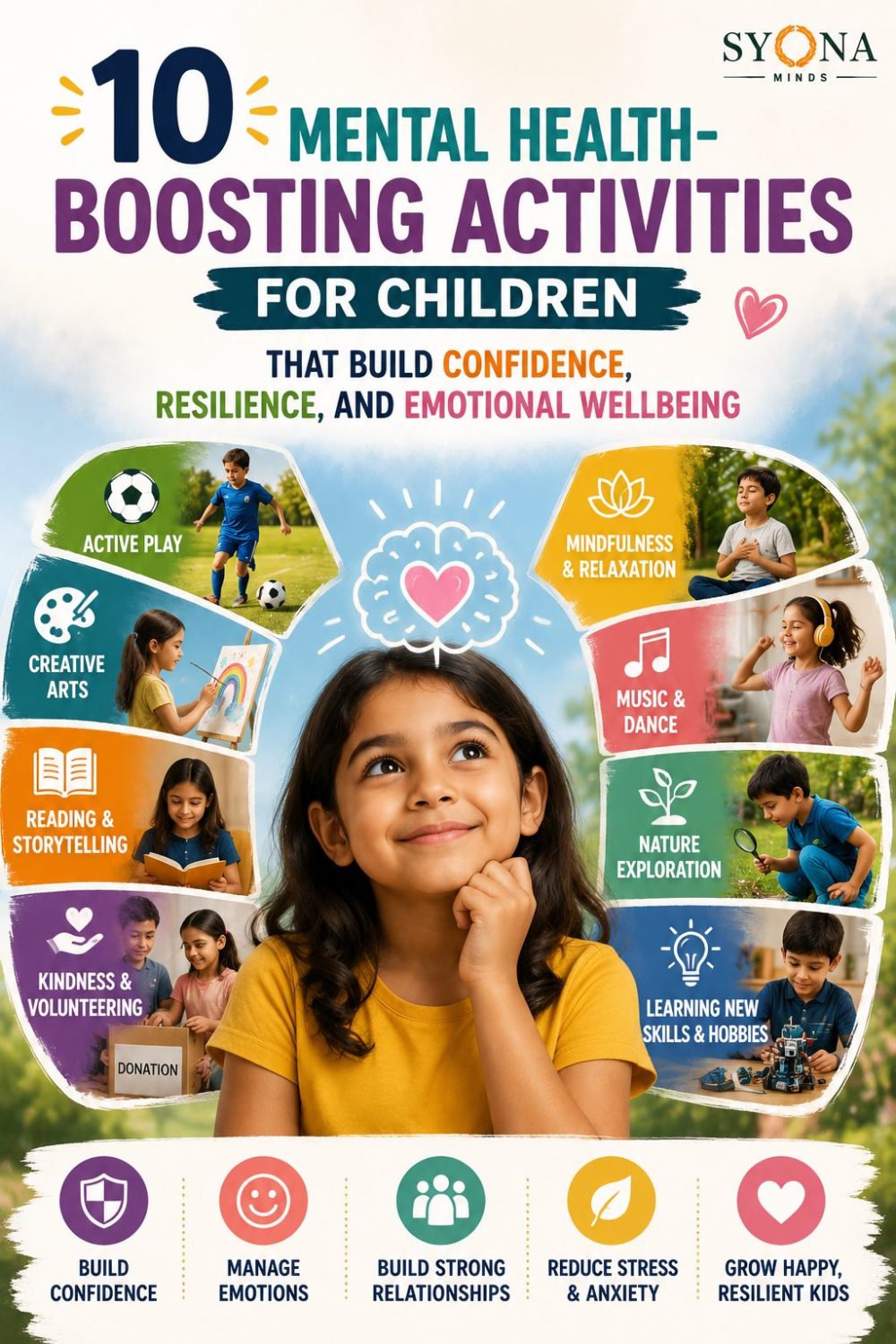
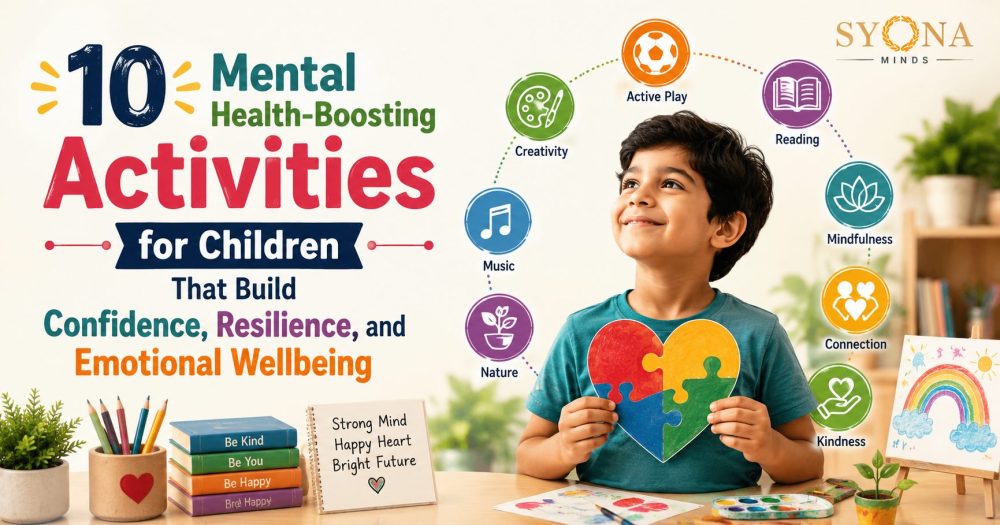
10 Mental Health-Boosting Activities for Children
1. Team Sports and Active Play
Sports provide far more than physical exercise. Whether it’s football, basketball, swimming, cricket, martial arts, or cycling, regular movement has powerful effects on children’s emotional well-being. Physical activity stimulates the release of endorphins, often called the body’s “feel-good” chemicals, which help improve mood and reduce stress.
Mental Health Benefits
Sports help children develop:
- Confidence
- Teamwork
- Resilience
- Discipline
- Emotional control
- Problem-solving
They also teach valuable lessons about winning gracefully and coping with disappointment.
Parents should emphasize effort, enjoyment, and learning rather than focusing solely on competition.
2. Creative Arts and Crafts
Art allows children to express thoughts and emotions they may struggle to describe with words.
Activities include:
- Painting
- Drawing
- Pottery
- Clay modeling
- Craft projects
- Collage making
- Photography
There is no “right” or “wrong” way to create art.
This freedom encourages imagination while reducing performance pressure.
Mental Health Benefits
Creative expression helps children:
- Process emotions
- Reduce anxiety
- Build confidence
- Improve concentration
- Strengthen fine motor skills
Art can also provide a calming break from academic demands.
3. Mindfulness and Deep Breathing
Children experience stress just as adults do. Simple mindfulness exercises teach them how to slow down and become aware of their thoughts, feelings, and bodies.
Examples include:
- Belly breathing
- Guided imagery
- Body scans
- Five-senses grounding exercises
- Mindful listening
Even five minutes of mindfulness each day can improve emotional regulation.
Mental Health Benefits
Mindfulness supports:
- Emotional awareness
- Focus
- Patience
- Reduced anxiety
- Better self-control
It also helps children respond thoughtfully instead of reacting impulsively.
4. Nature Exploration
Nature provides one of the most calming environments for children.
Simple outdoor activities include:
- Nature walks
- Gardening
- Bird watching
- Hiking
- Collecting leaves
- Exploring parks
- Planting flowers
Natural environments encourage curiosity while reducing sensory overload often associated with busy urban settings.
Mental Health Benefits
Time outdoors helps:
- Reduce stress
- Improve mood
- Increase attention
- Encourage physical activity
- Foster appreciation for the environment
Children also develop observation skills and mindfulness by engaging with nature.
5. Music, Dance, and Performing Arts
Music and movement allow children to express emotions while building confidence.
Activities include:
- Singing
- Dancing
- Playing instruments
- Drama clubs
- Puppet shows
- Storytelling
Performing arts encourage creativity while helping children communicate emotions in healthy ways.
Mental Health Benefits
Music and performing arts promote:
- Self-expression
- Emotional regulation
- Confidence
- Memory
- Social interaction
- Communication skills
Performing before others also helps many children gradually overcome shyness and develop self-assurance.
6. Reading and Storytelling Together
Books have the unique ability to help children explore emotions, understand different perspectives, and develop empathy. Whether you’re reading bedtime stories, visiting the library, or creating your own stories together, reading is a simple yet powerful way to support emotional wellbeing.
Ask your child questions like:
- “How do you think this character feels?”
- “What would you have done in that situation?”
- “Has anything like this happened to you?”
These conversations help children recognize emotions and understand that everyone experiences challenges differently.
Mental Health Benefits
Reading and storytelling encourage:
- Emotional intelligence
- Empathy
- Language development
- Problem-solving
- Imagination
- Stronger parent-child bonding
For younger children, picture books about emotions are especially effective in helping them identify and express their feelings.
7. Volunteering and Acts of Kindness
Helping others can significantly improve a child’s emotional wellbeing by fostering gratitude, compassion, and a sense of purpose.
Simple ways children can volunteer include:
- Donating toys or books
- Helping an elderly neighbor
- Participating in community clean-up events
- Collecting food for local charities
- Making greeting cards for hospital patients
- Caring for animals at a shelter (where age-appropriate)
Kindness teaches children that even small actions can positively impact someone else’s life.
Mental Health Benefits
Volunteering helps children develop:
- Empathy
- Gratitude
- Self-worth
- Social responsibility
- Positive relationships
Children who regularly help others often report greater confidence and a stronger sense of belonging.
8. Chess, Puzzles, and Strategy Games
Not every mental health activity needs to involve physical movement.
Board games and strategy-based activities challenge children to think critically while practicing patience and emotional control.
Examples include:
- Chess
- Sudoku
- Jigsaw puzzles
- Building blocks
- Logic games
- Memory games
These activities also create wonderful opportunities for family interaction.
Mental Health Benefits
Strategy games improve:
- Concentration
- Decision-making
- Patience
- Resilience
- Planning skills
- Healthy frustration tolerance
Children also learn that making mistakes is part of learning and improving.
9. Learning New Skills and Hobbies
Exploring new hobbies helps children discover their interests while building confidence through mastery.
Some ideas include:
- Cooking
- Gardening
- Photography
- Sewing
- Pottery
- Coding
- Origami
- Birdwatching
- DIY science experiments
Encourage exploration rather than perfection.
Allow children to experiment freely without worrying about making mistakes.
Mental Health Benefits
Learning new skills promotes:
- Curiosity
- Creativity
- Confidence
- Independence
- Growth mindset
- Sense of achievement
Children begin to understand that progress comes through practice and persistence.
10. Family Connection Time
Perhaps the most important mental health activity isn’t found in a class or organized program it’s spending meaningful time together as a family.
Children thrive when they feel emotionally connected to trusted adults.
Simple family activities include:
- Eating meals together
- Playing board games
- Family walks
- Cooking together
- Weekend picnics
- Gratitude sharing
- Movie nights
- Evening conversations
Even 20–30 minutes of undistracted attention each day can strengthen emotional security.
Mental Health Benefits
Quality family time helps children develop:
- Emotional security
- Self-confidence
- Trust
- Communication skills
- Healthy attachment
- Stress resilience
The greatest protective factor for children’s mental health is often a caring, supportive relationship with trusted adults.
Common Mistakes Parents Should Avoid
Supporting a child’s mental health isn’t about filling every hour with structured activities. In fact, too much pressure can have the opposite effect.
1. Overscheduling Children
- Children need free time to relax, imagine, and simply be children.
- Packing every afternoon with lessons, sports, and tutoring can increase stress rather than reduce it.
- Balance structured activities with:
- Free play
- Quiet time
- Family time
- Rest
2. Focusing Only on Achievement
- Parents sometimes unintentionally emphasize performance over enjoyment.
- Rather than asking:
“Did you win?”
- Try asking:
- “Did you have fun?”
- “What did you learn today?”
- “What made you feel proud?”
- This encourages intrinsic motivation instead of perfectionism.
3. Ignoring Your Child’s Interests
- Children are more likely to benefit from activities they genuinely enjoy.
- Avoid choosing activities solely because they seem impressive or popular.
- Observe your child’s natural curiosity and build from there.
4. Comparing Children to Others
- Every child develops at their own pace.
- Comparisons can damage confidence and increase anxiety.
- Celebrate your child’s individual strengths and progress instead of measuring them against peers.
Tips for Encouraging Participation Without Pressure
Children are more likely to stick with activities when they feel supported rather than forced.
Here are a few practical tips:
1. Offer Choices
Instead of assigning activities, let children choose between several options.
2. Participate Together
Join your child for a bike ride, art session, or nature walk. Shared experiences strengthen relationships and model healthy habits.
3. Praise Effort
Recognize persistence, curiosity, and improvement rather than focusing only on results.
4. Allow Breaks
It’s okay for children to change interests as they grow. Exploration is part of healthy development.
5. Keep It Fun
Activities should inspire joy, creativity, and connection—not become another source of stress.
When Should Parents Seek Professional Support?
While engaging activities can significantly support children’s mental wellbeing, they are not a replacement for professional care when a child is experiencing persistent emotional or behavioral difficulties.
Consider consulting a pediatrician or licensed mental health professional if your child:
- Appears persistently sad or withdrawn.
- Experiences excessive anxiety or fear.
- Shows sudden changes in behavior.
- Has ongoing difficulty sleeping or eating.
- Avoids friends or activities they once enjoyed.
- Frequently expresses hopelessness or worthlessness.
- Displays aggressive or self-harming behaviors.
Early intervention can make a meaningful difference in a child’s emotional development and long-term wellbeing.
Key Takeaways
✔ Children’s mental health is shaped by everyday experiences, relationships, and opportunities for play and learning.
✔ Activities that encourage creativity, movement, mindfulness, and connection help build resilience and emotional wellbeing.
✔ The best activity is one that matches your child’s interests, personality, and developmental stage.
✔ Quality family time is one of the strongest protective factors for children’s mental health.
✔ Encourage participation through support and curiosity not pressure or comparison.
✔ If emotional difficulties persist, seeking professional guidance is a proactive step toward helping your child thrive.
Frequently Asked Questions (FAQs)
What activities are best for improving children’s mental health?
Activities that encourage physical movement, creativity, social interaction, mindfulness, and family connection are especially beneficial. Sports, art, reading, nature exploration, music, volunteering, and board games all support emotional wellbeing.
How often should children participate in these activities?
There is no fixed rule. The goal is regular, balanced participation that fits naturally into your child’s routine without creating additional stress. Even small daily activities can have a positive impact.
Can extracurricular activities reduce anxiety in children?
Yes. Enjoyable activities can reduce stress, build confidence, encourage healthy friendships, and provide children with positive outlets for emotional expression. However, persistent anxiety should be evaluated by a qualified mental health professional.
How do I know if my child is doing too many activities?
Signs of overscheduling include frequent fatigue, irritability, sleep difficulties, declining enthusiasm, increased stress, or lack of free play. Children need time to rest and recharge.
Why is family time important for mental health?
Strong family relationships provide emotional security, trust, and consistent support. Children who feel connected to caring adults are generally better equipped to cope with life’s challenges and develop healthy emotional regulation.
Conclusion
Supporting your child’s mental health doesn’t always require grand gestures or expensive programs. Often, it’s the simple, consistent experiences playing outside, reading together, creating art, sharing family meals, or learning a new hobby that have the greatest impact on emotional well-being.
Every activity discussed in this article offers more than entertainment. They help children develop confidence, resilience, empathy, communication skills, and healthy coping strategies that will benefit them throughout life. By encouraging exploration, celebrating effort, and creating a supportive home environment, parents can nurture not only happier children but also emotionally stronger and more resilient individuals.
Remember that every child is unique. Some children find joy in sports, while others thrive through music, art, or quiet time in nature. The goal isn’t to fill every moment with structured activities but to provide opportunities that align with your child’s interests and allow them to grow at their own pace.
At Syona Minds, we believe that mental wellbeing begins with everyday moments of connection, curiosity, and compassion. By making time for meaningful activities and open conversations, you can help your child build a strong emotional foundation that supports lifelong happiness, healthy relationships, and personal growth.
References
1. American Academy of Pediatrics. (2023). The Power of Play: A Pediatric Role in Enhancing Development in Young Children.
2. Center on the Developing Child at Harvard University. (2022). Serve and Return Interaction Shapes Brain Development.
3. Ginsburg, K. R. (2007). The Importance of Play in Promoting Healthy Child Development and Maintaining Strong Parent-Child Bonds. Pediatrics, 119(1), 182–191.
4. National Association for the Education of Young Children. (2024). Developmentally Appropriate Practice.
5. World Health Organization. (2021). Guidelines on Physical Activity and Sedentary Behaviour for Children and Adolescents.