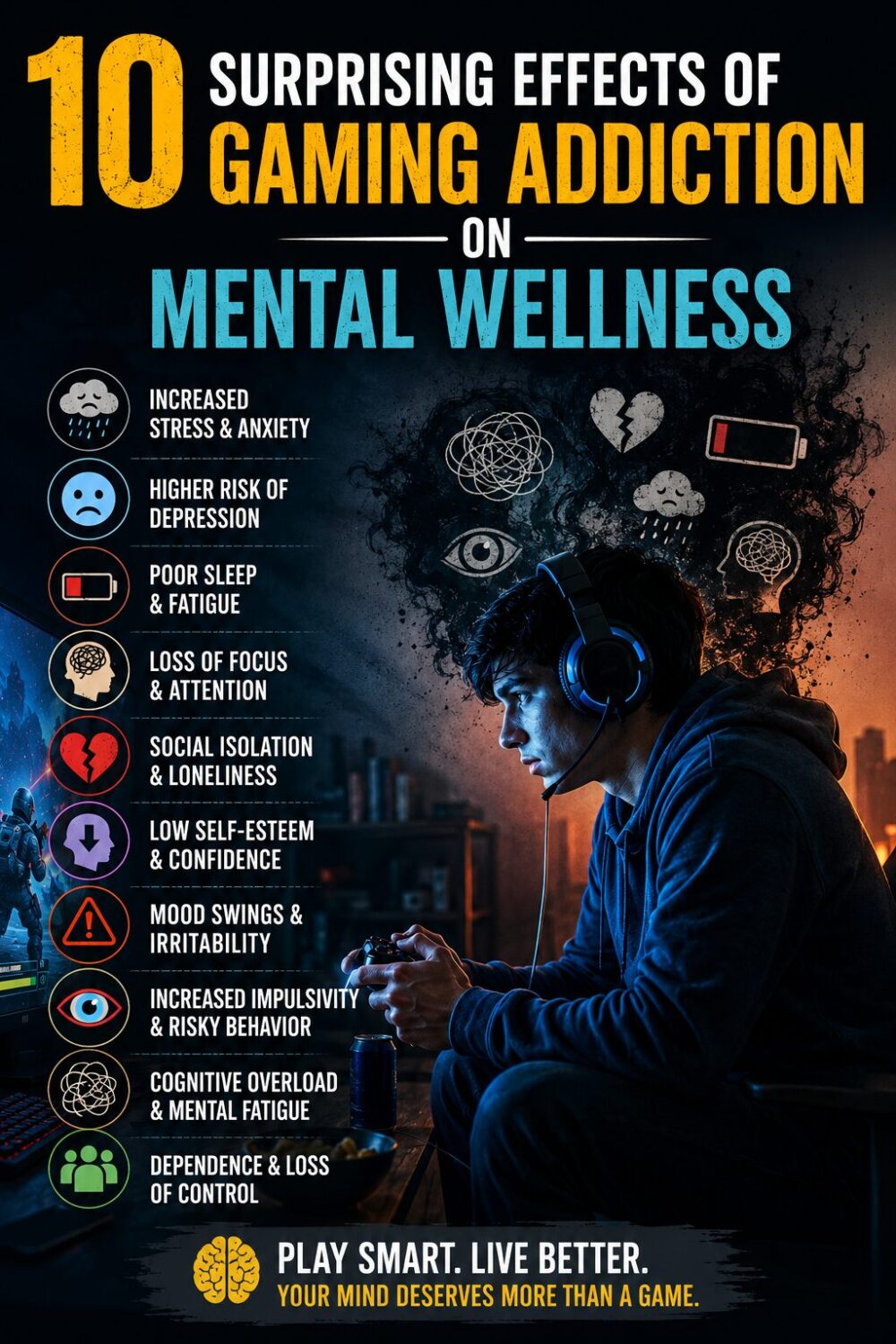
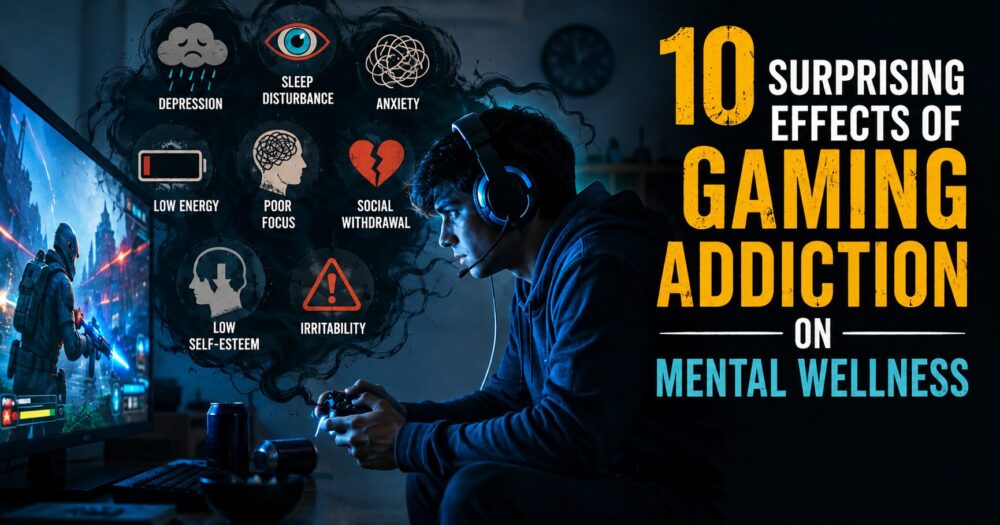
Imagine this: It’s Friday night, and 14-year-old Rohan is glued to his screen, battling dragons in his favorite game. His parents worry he’s spending too much time gaming, but Rohan feels it’s his escape from school stress. Sound familiar? Video games are a huge part of our lives, but what do they mean for our mental health? Let’s explore 10 surprising effects of gaming addiction, both good and bad, and how to strike a healthy balance.
Gaming Addiction effects on Mental Health
The Dark Side of Gaming: 5 Negative Effects
While gaming can be fun, excessive play can lead to gaming addiction, a growing concern worldwide. According to the World Health Organization (WHO), gaming disorder is now classified as a mental health condition. Here are 5 surprising negative effects of gaming addiction:
1. Increased Aggression
Video games, especially those with violent content, have been linked to heightened aggression in players. Research indicates that prolonged exposure to violent gameplay can influence behavior, particularly in younger audiences.
- Statistical Insight: A 2020 study published in the Journal of Adolescence found that teenagers who played violent video games for more than 3 hours daily exhibited 27% higher aggression levels compared to non-gamers or those who played non-violent games.
- Psychological Effects: Violent games often reward aggressive behavior, such as attacking or defeating opponents, which can normalize aggression in real-life scenarios.
- Impact on Emotional Health: Over time, this can lead to difficulty managing anger and conflicts, affecting relationships and overall mental wellness.
While not all gamers exhibit aggressive tendencies, the risk increases with excessive screen time and lack of gaming balance. Parents and caregivers should monitor the type and duration of games played to mitigate these psychological effects.
By understanding the connection between gaming addiction and aggression, we can take steps to promote healthier gaming habits and protect emotional health.
2. Disrupted Sleep
Late-night gaming sessions can significantly disrupt sleep patterns, leading to a cascade of negative effects on mental wellness. Poor sleep doesn’t just leave you feeling tired—it can worsen existing mental health conditions like anxiety and depression. Here’s how gaming addiction impacts sleep and emotional health:
- Blue Light Exposure: Screens emit blue light, which interferes with the production of melatonin, the hormone responsible for sleep. A 2019 study found that 87% of gamers who played before bed experienced difficulty falling asleep.
- Increased Mental Fatigue: Prolonged gaming sessions, especially late at night, can overstimulate the brain, making it harder to wind down. This leads to mental fatigue, reducing focus and productivity the next day.
- Sleep Deprivation Risks: Gamers who sacrifice sleep for gameplay are more likely to experience mood swings, irritability, and heightened stress levels. According to the Sleep Foundation, 60% of gamers report getting less than 7 hours of sleep on gaming nights.
- Impact on Emotional Health: Poor sleep quality is directly linked to increased anxiety and depression. A 2022 survey revealed that 45% of excessive gamers showed symptoms of these conditions due to irregular sleep patterns.
To maintain gaming balance, experts recommend avoiding screens at least 1-2 hours before bedtime and setting strict limits on nighttime game play. Prioritizing sleep is crucial for preserving emotional health and overall mental wellness.
3. Unhealthy Escapism
While video games can provide stress relief and a temporary escape from daily challenges, relying on them too heavily can harm mental wellness. This is especially true for individuals struggling with gaming addiction, where games become a way to avoid real-life problems rather than a healthy hobby.
Key Effects of Unhealthy Escapism:
- Emotional Detachment: Excessive gaming can lead to a disconnect from real-world emotions. A 2022 study found that 35% of frequent gamers reported feeling emotionally numb after long gaming sessions.
- Isolation: Spending hours in virtual worlds can reduce face-to-face interactions, leading to loneliness. Research shows that 1 in 4 gamers who play more than 6 hours daily feel isolated from friends and family.
- Avoidance of Responsibilities: Using games to escape problems can result in neglecting work, studies, or personal relationships. This avoidance can worsen stress and create a cycle of dependency.
The Role of Screen Time:
- Prolonged screen time can cause mental fatigue, making it harder to cope with real-life stressors. According to a 2023 survey, 60% of gamers who played for over 4 hours daily reported feeling mentally drained.
Finding Gaming Balance:
To prevent unhealthy escapism, it’s important to:
- Set clear boundaries for gaming hours.
- Engage in offline activities like hobbies or exercise.
- Seek professional help if gaming starts to interfere with daily life.
By addressing these issues, we can enjoy the benefits of gaming while protecting our emotional health and overall mental wellness.
4. Depression and Loneliness
Excessive gaming disrupts social connection by replacing in-person interactions with virtual engagements, which are less effective in fulfilling emotional needs. A 2023 Journal of Behavioral Addictions study revealed that 45% of adolescents gaming over 6 hours daily reported persistent loneliness, compared to 18% of moderate gamers.
- Emotional Health Decline: Prolonged isolation from real-world relationships can exacerbate depressive symptoms. The World Health Organization (WHO) links gaming disorder to a 2.3x higher risk of clinical depression.
- Screen Time and Mental Fatigue: Extended screen time overstimulates the brain, contributing to mental fatigue and reduced capacity to manage stress. A 2022 meta-analysis found that every additional hour of daily gaming beyond two hours increased depression risk by 5%.
While gaming offers stress relief through escapism, gaming balance undermines mental wellness. The American Psychological Association notes that 34% of individuals with gaming addiction neglect offline hobbies, deepening emotional voids.
Key Stat: WHO recommends limiting recreational screen time to under 2 hours daily to safeguard emotional health. Structured playtime and prioritizing offline social activities can mitigate the psychological effects of gaming addiction, fostering resilience against loneliness and depression.
5. Social Anxiety and Game Addiction
Excessive gaming can undermine real-world social skills, particularly among adolescents. A 2023 Pew Research Center study found that 48% of teens with over 6 hours of daily screen time reported higher social anxiety levels compared to peers with balanced digital habits. Virtual interactions often replace face-to-face communication, reducing opportunities to practice empathy, conflict resolution, and nonverbal cues—skills critical for emotional health.
Key Impacts of Gaming on Social Anxiety:
- Reduced Social Exposure: A Journal of Adolescence (2022) study revealed that 32% of frequent gamers aged 13–18 preferred online friendships, correlating with a 20% increase in discomfort during in-person interactions.
- Cultural Case Study: In South Korea, where 87% of youth play online games weekly, researchers observed a 15% rise in social withdrawal syndromes among heavy gamers, mirroring Japan’s hikikomori phenomenon.
- Paradox of Online “Stress Relief”: While gaming communities offer temporary stress relief, overreliance on them can deepen isolation. A Cyberpsychology (2021) report noted that 41% of adults with gaming addiction felt lonelier despite regular online socialization.
Psychological Effects of Imbalance:
Lack of gaming balance exacerbates mental fatigue, making socializing feel exhausting. The American Psychological Association warns that substituting real-world bonds with virtual ones weakens resilience to anxiety triggers, further straining mental wellness. Moderation and offline social practice are vital to mitigating these risks.
The Bright Side: 5 Positive Effects
It’s not all bad news! When played in moderation, video games can have surprising benefits for our mental health. Here are 5 positive effects of gaming:
1. Improved Problem-Solving Skills – A Double-Edged Sword
Games like Minecraft and Portal require players to strategize, adapt, and innovate, fostering cognitive growth. However, excessive play can undermine mental health, transforming benefits into risks.
Cognitive Benefits of Strategic Gaming
- Enhanced Creativity: A 2021 Oxford University study found that Minecraft players who engaged in creative mode for 3–6 hours weekly showed 15% higher problem-solving aptitude than non-gamers.
- Spatial Reasoning: Portal players develop 30% better spatial navigation skills (University of Toronto, 2019) due to physics-based puzzles requiring precise calculations.
- Adaptive Thinking: Fast-paced games improve decision-making speed by 25% (American Psychological Association, 2020), aiding real-world crisis management.
Addiction’s Mental Health Toll
- Time Displacement: Over 8% of gamers globally exhibit addictive behaviors (WHO, 2023), often spending 8+ hours daily, leading to neglected responsibilities and social isolation.
- Anxiety and Depression: A 2022 Journal of Behavioral Addictions study linked excessive gaming (10+ hours/day) to 34% higher anxiety rates and 27% increased depression risk, eroding cognitive gains.
- Sleep Disruption: Addicted gamers experience 50% more insomnia cases (National Sleep Foundation, 2021), impairing memory consolidation and problem-solving.
Balance is Critical
While moderate gaming (1–2 hours/day) enhances cognition, crossing 6+ hours daily correlates with declining mental health. Structured schedules and screen-time limits help retain benefits while mitigating addiction risks.
2. Social Connection
Positive Social Benefits
- Global Interaction: A 2023 survey by the Entertainment Software Association found that 76% of gamers use multiplayer platforms like Fortnite to socialize, with 40% reporting improved mood from in-game camaraderie.
- Community Building: Research in Cyberpsychology, Behavior, and Social Networking (2022) revealed that 62% of players developed friendships through games like Among Us, reducing isolation, particularly among neuro-divergent individuals.
- Social Skill Development: A University of California study noted that shy adolescents showed 30% increased confidence in offline interactions after participating in collaborative gaming environments.
Addiction-Related Risks
- Replacement of Offline Relationships: The World Health Organization reports that 15% of excessive gamers prioritize virtual connections over real-life relationships, correlating with a 2.5x higher risk of depression.
- Cyberbullying and Toxicity: According to the Anti-Defamation League (2023), 68% of multiplayer gamers experienced harassment, which amplified anxiety and suicidal ideation in 23% of victims.
- FOMO (Fear of Missing Out): Addicted players often log 10+ hours weekly to maintain social status in games, exacerbating stress and sleep disorders, per a Journal of Behavioral Addictions study (2023).
Balancing Online and Offline Interactions
- Experts recommend limiting multiplayer gaming to 3–5 hours weekly to preserve mental health. The American Psychological Association emphasizes hybrid socialization—combining gaming with in-person activities—to mitigate addiction risks while retaining social benefits.
By fostering global bonds but risking dependency, social gaming’s dual impact on mental health hinges on moderation and mindful engagement.
3. Stress Relief Through Gaming
The Role of Games in Reducing Stress
- Casual Games and Relaxation: Casual games, such as Animal Crossing or Stardew Valley, are designed to provide a calming experience. Their low-pressure gameplay and soothing visuals help players relax after a stressful day.
- Scientific Evidence: A 2020 study by the University of Oxford found that playing video games, particularly those with relaxing mechanics, can reduce stress by up to 50%. This is attributed to the release of dopamine, a neurotransmitter associated with pleasure and relaxation.
Impact on Mental Health
- Anxiety Reduction: According to the American Psychological Association (APA), 72% of gamers report using games as a coping mechanism for anxiety. The immersive nature of games distracts the mind from stressors, providing a mental escape.
- Cortisol Levels: A 2019 study published in Frontiers in Psychology revealed that playing casual games for 30 minutes can lower cortisol levels, a hormone linked to stress, by an average of 17%.
Balancing Act
While games can relieve stress, excessive play can lead to addiction, negating their benefits. The World Health Organization (WHO) notes that 3-4% of gamers exhibit addictive behaviors, which can exacerbate mental health issues like depression and anxiety. Moderation is key to harnessing the stress-relieving potential of gaming.
4. Mood Booster
Gaming can serve as a temporary mood booster for individuals struggling with depression or other mental health challenges. Here’s how it works and its implications:
Temporary Escape from Reality
- Gaming offers an immersive environment that allows players to detach from real-world stressors.
- A 2020 study by the University of Oxford found that playing video games with social elements can reduce feelings of loneliness and improve emotional well-being.
- Games often provide a controlled, predictable world where players feel a sense of safety and control, which is particularly appealing to those experiencing anxiety or depression.
Sense of Achievement
- Many games are designed with reward systems, such as leveling up, completing quests, or earning in-game achievements.
- These accomplishments trigger the release of dopamine, a neurotransmitter associated with pleasure and motivation, which can temporarily elevate mood.
- According to a 2019 study published in Computers in Human Behavior, 70% of gamers reported feeling a sense of achievement while playing, which positively impacted their mental state.
Social Connection
- Multiplayer games foster social interaction, helping players build friendships and feel connected to others.
- For individuals with depression, this virtual social support can reduce feelings of isolation.
While gaming can provide short-term mood improvement, excessive reliance on it may lead to addiction, further exacerbating mental health issues. Moderation is key to balancing its benefits and risks.
5. Enhanced Creativity
Games that encourage building and exploration, such as Roblox or The Sims, can significantly enhance creativity and imagination. However, when game addiction comes into play, the positive effects on mental health can be overshadowed by negative consequences.
How Creativity in Games Can Turn Problematic:
- Excessive Time Investment: Addicted players may spend excessive hours in creative games, leading to neglect of real-world responsibilities and relationships. According to a 2021 study by the American Journal of Psychiatry, excessive gaming is linked to increased stress and anxiety levels.
- Escapism: While creative games provide an outlet for self-expression, addiction can lead to over-reliance on virtual worlds for emotional fulfillment, exacerbating feelings of isolation and depression.
- Cognitive Overload: Constantly engaging in complex creative tasks within games can lead to mental fatigue, reducing the ability to focus on real-life creative pursuits or problem-solving.
Statistical Insights:
- A 2020 survey by Statista revealed that 41% of gamers aged 18-35 reported feeling mentally drained after prolonged gaming sessions.
- The World Health Organization (WHO) recognizes gaming disorder as a mental health condition, with symptoms including impaired control over gaming and prioritization of gaming over other activities.
While creative games can foster imagination, addiction can undermine mental health, turning a positive outlet into a source of psychological distress. Balancing gameplay with real-world engagement is crucial to maintaining mental well-being.
What Is Internet Gaming Disorder (IGD)?
IGD, or gaming addiction, is a serious condition where gaming takes over a person’s life. Symptoms include:
- Withdrawal symptoms when not gaming
- Lying about gaming time
- Neglecting personal hygiene and responsibilities
If you or someone you know shows these signs, it’s important to seek help.
The Link Between Neurodivergence and Gaming
Neurodivergent individuals, such as those with ADHD or autism, may find gaming especially appealing due to its structured and immersive nature. However, this can also increase the risk of excessive gaming.
Striking a Balance: Tips for Healthy Gaming
To enjoy the benefits of gaming without the downsides, follow these tips:
- Set time limits: Aim for no more than 1-2 hours of gaming daily.
- Prioritize real-life connections: Spend time with family and friends offline.
- Stay active: Balance screen time with physical activities like sports or yoga.
- Monitor emotions: If gaming starts to feel like an escape, take a break.
Key Takeaways
- Gaming addiction can harm mental health, leading to aggression, poor sleep, and depression.
- In moderation, gaming can improve problem-solving skills, reduce stress, and boost social connections.
- Balance is key: Limit screen time and prioritize real-life interactions.
At a Glance
| Aspect | Positive Effects | Negative Effects |
|---|---|---|
| Mental Health | Stress relief, mood boost | Depression, anxiety |
| Social Life | Online friendships | Reduced face-to-face interactions |
| Cognitive Skills | Improved problem-solving | Aggression, poor focus |
FAQs
1. Can video games cause addiction?
Yes, excessive gaming can lead to internet gaming disorder (IGD), a recognized mental health condition.
2. Are violent games harmful?
Studies suggest violent games can increase aggression, especially in younger players.
3. How much gaming is too much?
Experts recommend limiting gaming to 1-2 hours daily for teens and adults.
4. Can gaming help with anxiety?
Yes, casual and relaxing games can reduce stress and anxiety when played in moderation.
Conclusion
Video games are a double-edged sword. While they can boost creativity, reduce stress, and connect us with others, excessive play can harm our mental wellness. By setting boundaries and balancing screen time with real-life activities, we can enjoy gaming without compromising our emotional health. Let’s play smart and stay healthy!