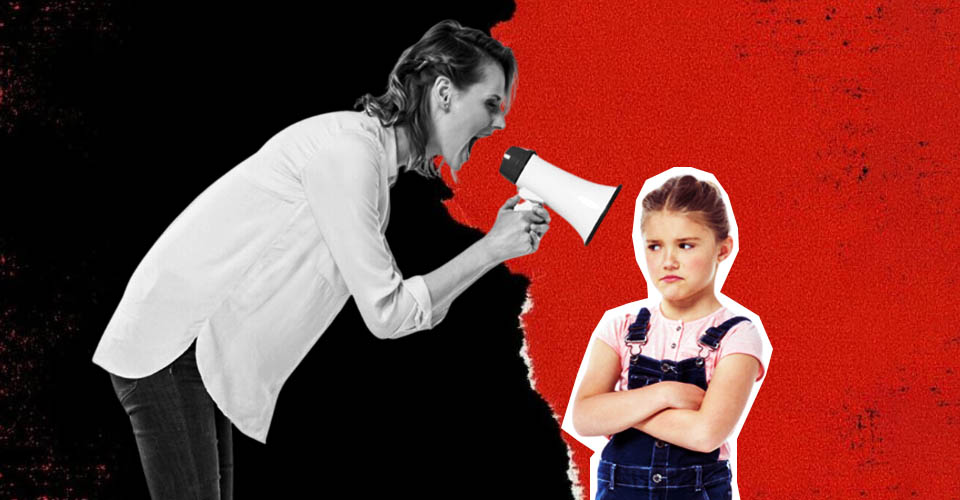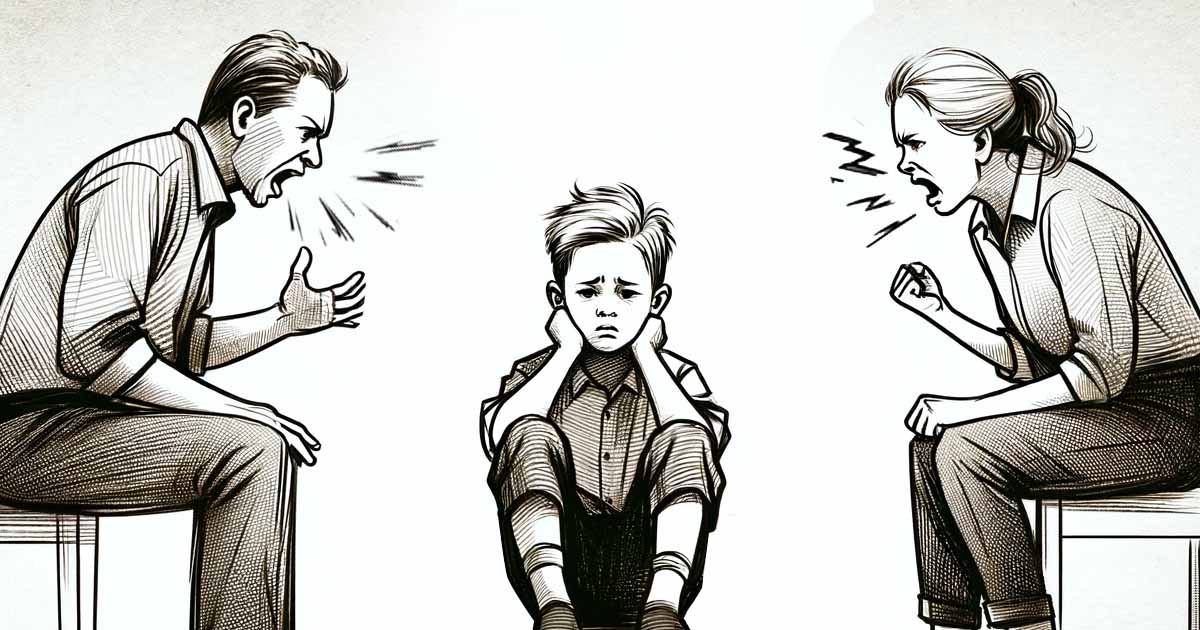
“I only yelled because you made me angry.”
“I’m doing this because I love you.”
“You should be grateful—I had it much worse growing up.”
If you’ve ever heard these statements, you’re not alone.
One of the most damaging aspects of childhood abuse isn’t always the abuse itself—it’s the stories that surround it.
Toxic or abusive parents rarely describe their behavior as abusive. Instead, they explain it away with excuses that shift blame, minimize the harm, or make the child question their own reality.
Over time, these repeated justifications can become a form of psychological manipulation, causing children to internalize guilt, doubt their memories, and believe they deserved the mistreatment.
Psychologists refer to this as cognitive distortion and, in some cases, gaslighting—a pattern in which someone manipulates another person into questioning their own experiences or perceptions.
Research over the last two decades has consistently shown that adverse childhood experiences (ACEs), including emotional abuse, physical abuse, neglect, and exposure to chronic family conflict, are associated with increased risks of depression, anxiety, post-traumatic stress, substance misuse, relationship difficulties, and chronic physical health conditions later in life. Importantly, these outcomes are linked to the abuse itself—not to the child’s behavior. (CDC)
It’s equally important to recognize that many abusive parents are dealing with genuine struggles such as financial stress, mental illness, addiction, or unresolved trauma. These factors can increase the risk of abusive behavior, but they do not excuse it. Understanding why abuse happens is different from justifying it. (CDC)
This article explores ten of the most common excuses toxic parents use, why they’re psychologically misleading, and what healthier parenting looks like instead.
Why Do Toxic Parents Make Excuses?
Most abusive parents don’t wake up intending to harm their children.
Instead, they often develop psychological defense mechanisms that protect them from feelings of guilt or shame.
These may include:
- Denial
- Rationalization
- Projection
- Blame-shifting
- Minimization
- Emotional manipulation
These defenses allow parents to preserve a positive self-image while avoiding accountability.
Unfortunately, children—especially younger children—are naturally wired to trust their caregivers. Instead of questioning the parent, they often conclude:
“It must be my fault.”
This belief can follow them into adulthood, affecting self-esteem, relationships, and mental health for years.
1. “You Made Me Do It.”
This is perhaps the most common excuse used by abusive parents.
Instead of accepting responsibility, they transfer the blame onto the child.
Examples include:
- “If you had listened, I wouldn’t have hit you.”
- “Look what you made me do.”
- “You always know how to push my buttons.”
- “You deserved it.”
At first glance, these statements may sound like discipline.
Psychologically, however, they teach something very different:
Your emotions are responsible for another person’s behavior.
Children cannot control an adult’s anger.
Adults are responsible for regulating their own emotions.
Blaming children for adult violence teaches them that love is conditional and that they must constantly monitor other people’s emotions to stay safe.
Many survivors later develop:
- chronic guilt
- people-pleasing tendencies
- anxiety
- fear of conflict
- difficulty setting boundaries
This pattern is commonly seen in trauma survivors who grew up in unpredictable households.
Healthy alternative:
Healthy parents separate the child’s behavior from their own emotional regulation.
Instead of saying,
“You made me angry.”
they might say,
“I’m feeling frustrated, so I need a moment before we talk.”
That small difference teaches emotional responsibility instead of fear.
2. “I’m Only Doing This Because I Love You.”
This excuse is particularly damaging because it confuses love with control.
Parents may say:
- “Everything I do is for your own good.”
- “You’ll thank me one day.”
- “This hurts me more than it hurts you.”
- “I’m protecting you.”
Sometimes these statements accompany reasonable parenting.
But when they’re used to justify:
- humiliation
- intimidation
- excessive punishment
- emotional abuse
- physical violence
- controlling behavior
they become emotionally manipulative.
Children begin associating affection with fear.
Psychologists call this traumatic bonding, where positive and painful experiences become intertwined, making it difficult for a child to recognize unhealthy relationships later in life.
As adults, survivors may confuse jealousy for love, control for protection, or emotional volatility for passion because those dynamics were normalized during childhood.
Healthy love protects.
Control dominates.
The two are not the same.
3. “I Had It Worse Growing Up.”
Intergenerational trauma is real.
Many abusive parents experienced abuse themselves.
However, trauma is an explanation—not a permission slip.
Parents often say:
- “My father beat me every day.”
- “At least I don’t do what my parents did.”
- “You have no idea how lucky you are.”
This shifts the conversation away from the child’s pain and toward the parent’s suffering.
Psychologically, this is known as comparative suffering.
It invalidates the child’s emotions by implying that someone else’s pain matters more.
Modern trauma research paints a more nuanced picture. Adults who experienced abuse or neglect in childhood may be at greater risk of struggling with parenting, particularly if they never received support for their own trauma. Yet many people with difficult childhoods become deeply nurturing parents. In other words, a painful upbringing increases vulnerability—it does not determine destiny. (CDC)
Breaking the cycle begins with accountability.
Healthy parents might say:
“I grew up in an unhealthy home, and I’m working hard not to repeat those patterns.”
That response acknowledges personal history without using it to excuse present-day harm.
4. “I’m Just Disciplining You.”
Discipline and abuse are often confused.
They are not the same.
Healthy discipline aims to teach.
Abuse aims to control through fear.
Discipline asks:
“How can I help my child learn?”
Abuse asks:
“How can I make my child obey?”
Warning signs that punishment has crossed into abuse include:
- humiliation
- threats
- name-calling
- excessive fear
- unpredictable punishments
- physical violence
- emotional withdrawal
- using affection as a reward
Research increasingly supports positive, consistent, and emotionally responsive parenting over harsh punishment. The CDC identifies harsh corporal punishment, high parenting stress, inconsistent discipline, and negative communication patterns as risk factors associated with child maltreatment, while safe, stable, and nurturing relationships help protect children and promote healthy development. (CDC)
Children learn best when they feel safe—not when they feel terrified.
5. “I’m Under Too Much Stress.”
Stress is one of the most common explanations abusive parents give for harmful behavior.
You might hear statements like:
- “I’ve had a terrible day.”
- “You don’t know how hard my life is.”
- “I’m exhausted.”
- “You pushed me over the edge.”
There’s no denying that parenting can be overwhelming. Financial strain, work pressures, relationship problems, caregiving responsibilities, and health concerns can all affect a parent’s emotional capacity.
However, stress explains behavior—it doesn’t excuse abuse.
One of the biggest misconceptions about abusive parenting is the belief that losing control is inevitable under pressure.
In reality, millions of stressed parents never resort to emotional or physical abuse.
Psychologists explain this using the concept of emotional regulation—the ability to recognize, understand, and manage one’s emotional responses.
Children are still developing these skills.
Adults are expected to model them.
When parents repeatedly blame stress, children begin believing they are responsible for reducing their parent’s emotional burden.
This creates a pattern known as parentification, where children feel obligated to manage adult emotions instead of simply being children.
Long-term effects on children
Children raised this way often become adults who:
- Constantly apologize
- Feel guilty for saying “no”
- Ignore their own needs
- Become chronic caretakers
- Fear upsetting other people
They may also struggle to recognize unhealthy relationships because they’ve learned that love means absorbing someone else’s emotional distress.
Healthy alternative
Instead of exploding in anger, emotionally healthy parents might say:
“I’m feeling overwhelmed right now. I need ten minutes to calm down before we continue.”
This teaches children something invaluable:
Strong emotions are normal. Hurting others because of them is not.
6. “It’s Because of My Mental Health.”
Mental illness is real.
Depression, anxiety disorders, bipolar disorder, PTSD, personality disorders, and other conditions can affect how people think, feel, and behave.
But mental illness alone does not make someone abusive.
This distinction is incredibly important.
Research consistently shows that most people living with mental illness are not violent or abusive. Suggesting otherwise contributes to stigma and may discourage people from seeking help.
Some toxic parents may say:
- “I can’t help it.”
- “It’s my depression.”
- “It’s because of my anxiety.”
- “My trauma made me this way.”
While untreated mental health conditions can impair emotional regulation, they do not remove personal responsibility.
From a psychological perspective, the difference lies in accountability.
A parent who says:
“I’m struggling with my mental health, so I’m getting therapy because I don’t want it to affect you.”
is taking responsibility.
A parent who says:
“My depression is why I scream at you.”
without seeking change is using mental illness as a shield against accountability.
Why this excuse harms children
Children naturally empathize with their parents.
Many begin sacrificing their own emotional needs because they feel guilty.
Instead of asking,
“Why is this happening to me?”
they ask,
“How can I make Mom or Dad feel better?”
Over time, they become emotionally hypervigilant, constantly monitoring the moods of everyone around them.
7. “I Was Drunk.”
Alcohol and drugs frequently appear in abusive households.
Parents may later say:
- “I didn’t mean it.”
- “I was drunk.”
- “I wasn’t myself.”
- “I don’t remember.”
Substance use can lower inhibitions and intensify aggression, but it does not create abusive beliefs from nowhere.
More importantly, intoxication does not erase the impact on the child.
Imagine two children.
One is hit by a sober parent.
The other is hit by a drunk parent.
The trauma isn’t less severe because alcohol was involved.
Children remember the fear—not the blood alcohol level.
The psychological impact
Growing up with addiction often creates unpredictable environments.
Children never know:
- Which version of their parent will come home.
- Whether tonight will be peaceful.
- Whether affection or violence is coming.
This uncertainty activates the brain’s stress response repeatedly.
Many survivors later describe always feeling “on edge,” even in safe environments.
This chronic state of alertness is known as hypervigilance, a common feature of complex trauma.
Recovery starts with ownership
Parents recovering from addiction can absolutely rebuild trust.
But rebuilding begins with statements like:
“What I did hurt you. I take responsibility.”
—not—
“It wasn’t really me.”
8. “This Is Just How Our Culture Works.”
Perhaps one of the most misunderstood excuses involves culture.
Some parents justify harsh treatment by saying:
- “This is how we were raised.”
- “Respect your elders.”
- “Our culture believes in strict discipline.”
- “Everyone in our family does this.”
Culture shapes parenting.
It influences values, traditions, expectations, and family roles.
However, culture should never be used to excuse abuse.
Around the world, attitudes toward physical punishment have shifted dramatically as research has demonstrated its association with poorer mental health, increased aggression, and damaged parent-child relationships.
Healthy cultural traditions promote:
- respect
- responsibility
- family connection
- resilience
Abuse promotes:
- fear
- shame
- silence
- control
Those are fundamentally different.
Why this excuse is powerful
Children often feel trapped.
They worry that speaking up means betraying:
- their family
- their religion
- their community
- their cultural identity
As adults, many survivors struggle with intense guilt simply for establishing healthy boundaries.
Psychologists often help clients understand an important distinction:
You can honor your culture without accepting harmful behavior.
Respecting heritage does not require tolerating abuse.
9. “Nobody Will Believe You Anyway.”
This is one of the most dangerous forms of psychological abuse.
Unlike physical violence, this excuse attacks reality itself.
Parents may say:
- “Everyone thinks I’m a wonderful parent.”
- “You’re lying.”
- “You’re too sensitive.”
- “You’re imagining things.”
- “Who do you think they’ll believe?”
This is classic gaslighting.
Gaslighting is a pattern of manipulation in which someone repeatedly causes another person to doubt their own memories, perceptions, or emotions.
Children are especially vulnerable because they depend on parents to help them understand the world.
When the very people who shape reality begin denying it, children may start questioning themselves.
Over time they may think:
- Maybe I’m exaggerating.
- Maybe I deserved it.
- Maybe I’m remembering wrong.
This confusion often lasts decades.
Many adult survivors enter therapy saying:
“I don’t even know if what happened to me counts as abuse.”
That uncertainty is often evidence of just how effective the manipulation was.
Reality matters
Healthy parents may disagree with a child’s perspective.
Abusive parents erase it.
There is a profound difference.
10. “After Everything I’ve Done for You…”
This excuse disguises abuse as sacrifice.
Parents may say:
- “I gave up everything for you.”
- “You owe me.”
- “After all I’ve done…”
- “You should be grateful.”
Gratitude is healthy.
Emotional debt is not.
Children never choose to be born.
Providing:
- food
- shelter
- clothing
- education
- safety
is a parent’s responsibility—not a favor that children must repay with lifelong obedience.
When parents constantly remind children of their sacrifices, love becomes transactional.
The unspoken message becomes:
“You earn my love by meeting my expectations.”
Children raised this way often struggle with:
- perfectionism
- fear of disappointing others
- low self-worth
- difficulty saying no
- unhealthy romantic relationships
Many continue trying to “earn” love well into adulthood.
Healthy families don’t keep emotional scorecards.
Love is given freely—not exchanged for compliance.
The Lasting Psychological Effects of Growing Up With Toxic Parents
Many people assume that childhood abuse only affects children while they’re young.
Psychology tells a different story.
Our earliest relationships become the blueprint for how we see ourselves, other people, and the world. When those relationships are marked by fear, manipulation, humiliation, or emotional neglect, the effects often extend well into adulthood.
This doesn’t mean every survivor will experience the same outcomes. People are remarkably resilient, and healing is possible. But research consistently shows that chronic childhood adversity can shape emotional development, relationships, and even physical health.
Adults who grew up with emotionally or physically abusive parents may experience:
1. Low Self-Esteem
Children naturally believe their parents.
If a child repeatedly hears:
- “You’re useless.”
- “You’re too sensitive.”
- “You’ll never succeed.”
those messages often become part of their internal dialogue.
Even decades later, many survivors continue criticizing themselves with the same words they heard growing up.
2. Chronic Anxiety
Growing up in an unpredictable household teaches the brain that danger can appear at any moment.
Many survivors remain constantly alert.
They may:
- overthink conversations
- expect conflict
- struggle to relax
- fear making mistakes
- panic over minor criticism
Their nervous system learned that staying alert meant staying safe.
3. Difficulty Trusting Others
When the people who were supposed to provide safety become the source of fear, trust becomes complicated.
Some adults avoid intimacy altogether.
Others become overly dependent on relationships because they fear abandonment.
Both are understandable responses to early attachment wounds.
4. People-Pleasing
Many survivors become experts at keeping everyone else happy.
As children, pleasing others reduced conflict.
As adults, the pattern often continues.
They may:
- apologize excessively
- struggle to say no
- ignore personal boundaries
- feel guilty for prioritizing themselves
What once served as protection eventually becomes emotional exhaustion.
5. Emotional Dysregulation
Children learn emotional regulation from caregivers.
When caregivers model screaming, intimidation, silent treatment, or emotional withdrawal, children may never develop healthy coping strategies.
Some adults become emotionally numb.
Others feel overwhelmed by even small stressors.
Neither response is a character flaw.
They’re adaptations learned in childhood.
6. Repeating Unhealthy Relationship Patterns
One of the most heartbreaking effects of childhood abuse is familiarity.
Humans naturally gravitate toward what feels familiar—even when it isn’t healthy.
Someone raised in chaos may mistake emotional instability for passion.
Someone raised with criticism may believe constant judgment is normal.
Someone raised to earn love through obedience may continue seeking approval from controlling partners.
Healing involves learning that familiar doesn’t always mean healthy.
Why Children Often Defend Abusive Parents
One question survivors frequently ask is:
“Why did I keep defending them?”
The answer lies in survival.
Children depend on caregivers for:
- food
- shelter
- protection
- emotional connection
Accepting that the caregiver is unsafe can feel psychologically unbearable.
Instead, children often conclude:
“They love me.”
or
“I must deserve this.”
Psychologists sometimes refer to this as trauma bonding or attachment preservation.
Believing that the parent is good feels safer than believing the world is unpredictable and dangerous.
This coping mechanism often continues into adulthood.
It’s why many survivors minimize their experiences by saying:
- “They did their best.”
- “It wasn’t that bad.”
- “Other people had it worse.”
Showing compassion for a parent’s struggles is possible.
Ignoring your own pain is not.
Both truths can exist at the same time.
What Healthy Parenting Looks Like Instead
Healthy parents aren’t perfect.
They lose patience.
They make mistakes.
They become frustrated.
The difference is that healthy parents take responsibility.
Instead of saying:
❌ “You made me angry.”
They say:
✅ “I became angry, and I shouldn’t have spoken to you like that.”
Instead of:
❌ “Because I said so.”
They explain:
✅ “Here’s why this rule exists.”
Instead of:
❌ “Stop crying.”
They say:
✅ “I can see you’re upset. Let’s talk about it.”
Instead of:
❌ “You’re embarrassing me.”
They say:
✅ “Let’s figure this out together.”
Healthy parenting isn’t about never making mistakes.
It’s about repairing them.
Research shows that children don’t need perfect parents.
They need caregivers who are emotionally available, consistent, willing to apologize, and committed to helping them feel safe.
How to Begin Healing If You Grew Up With Toxic Parents
Healing isn’t about pretending the past never happened.
It’s about understanding how the past continues to influence the present.
Here are evidence-informed steps that many survivors find helpful.
1. Name What Happened
Many survivors spend years wondering:
“Was it really abuse?”
Giving language to your experiences can reduce self-blame and help make sense of confusing emotions.
Emotional abuse, manipulation, neglect, intimidation, and chronic criticism can all have lasting effects, even if there were no visible injuries.
2. Challenge Internalized Beliefs
Ask yourself:
- Is this belief truly mine?
- Or was it taught to me?
Examples include:
- “I’m difficult.”
- “I’m selfish.”
- “I’m impossible to love.”
Often these beliefs originated from repeated messages received in childhood rather than objective truth.
3. Learn Healthy Boundaries
Boundaries are not punishments.
They’re guidelines for protecting your emotional and physical well-being.
Healthy boundaries might include:
- limiting conversations that become abusive
- declining unreasonable demands
- leaving situations where you’re being mistreated
- deciding how much contact feels emotionally safe
Every family is different. The goal isn’t to encourage distance for everyone but to help people make choices that support their well-being.
4. Seek Professional Support
Working with a qualified mental health professional can help survivors process trauma, develop healthier coping strategies, and build more secure relationships.
Approaches such as trauma-focused cognitive behavioral therapy (TF-CBT), EMDR for trauma, and other evidence-based therapies may be helpful depending on a person’s needs.
Seeking help is not a sign of weakness.
It’s an investment in your future.
5. Build Safe Relationships
Healing often happens in relationships.
Friends, partners, mentors, support groups, and therapists can provide experiences that challenge old beliefs about trust and safety.
Healthy relationships don’t require you to earn love.
They allow you to experience it.
When Should You Seek Immediate Help?
If abuse is currently happening—whether to you or to a child—you don’t have to face it alone.
Consider reaching out to:
- a trusted family member or friend
- a licensed mental health professional
- your child’s school counselor
- local child protection services if a child is in danger
- emergency services if there is an immediate risk of serious harm
If you’re unsure whether a situation is abusive, speaking with a qualified professional can help you understand your options and prioritize safety.
Frequently Asked Questions
Can parents abuse their children without realizing it?
Yes. Some parents repeat unhealthy behaviors they experienced growing up without recognizing the impact. However, unintentional harm still deserves attention, accountability, and change.
Is emotional abuse as harmful as physical abuse?
Emotional abuse can have profound and lasting effects on mental health, self-esteem, relationships, and emotional development. While the experiences differ, emotional abuse should never be dismissed simply because it leaves no physical marks.
Why do abusive parents blame their children?
Blaming the child is often a way to avoid guilt or responsibility. It can also be a form of psychological manipulation that keeps the child confused and easier to control.
Can abusive parents change?
Some do—but meaningful change requires genuine accountability, a willingness to acknowledge the harm caused, and sustained effort, often with professional support. Promises alone are not enough.
How can I tell the difference between strict parenting and abuse?
Healthy discipline is intended to teach while preserving a child’s dignity and sense of safety. Abuse relies on fear, humiliation, intimidation, or harm to gain control.
Final Thoughts
One of the greatest myths about abuse is that it always looks obvious.
In reality, it often hides behind familiar phrases:
“I did it because I love you.”
“You made me do it.”
“I’m your parent.”
“You’ll understand when you’re older.”
When repeated over time, these excuses can distort a child’s understanding of love, responsibility, and self-worth.
Recognizing these patterns isn’t about encouraging people to hate or reject their parents. It’s about separating explanations from excuses. A parent’s stress, trauma, addiction, or difficult childhood may help explain how harmful behaviors developed, but none of these factors erase the impact on a child or remove the responsibility to change.
The encouraging news is that awareness is the first step toward breaking the cycle. Whether you’re reflecting on your own childhood, supporting someone else, or striving to become a healthier parent yourself, understanding these dynamics creates an opportunity to build relationships rooted in empathy, accountability, and emotional safety.
Every child deserves to grow up feeling respected, protected, and valued, not because they have earned it, but because that is the foundation of healthy parenting.