Introduction
In today’s digital world, video games have become an integral part of childhood. From educational apps to immersive multiplayer games, gaming offers entertainment, creativity, and opportunities to connect with friends. When enjoyed in moderation, video games can even improve problem-solving skills, teamwork, and hand-eye coordination.
However, problems begin when gaming shifts from being a fun pastime to becoming a child’s primary focus. Excessive gaming can interfere with school performance, sleep, physical activity, family relationships, and emotional wellbeing. Many parents find themselves asking, “How much gaming is too much?” or “Is my child addicted to video games?”
These concerns are becoming increasingly common. As online gaming becomes more engaging through rewards, social interaction, and competitive gameplay, some children struggle to regulate the amount of time they spend playing.
The good news is that gaming itself isn’t the enemy. The goal isn’t to eliminate video games entirely—it is to help children develop a healthy relationship with technology while maintaining a balanced lifestyle.
In this comprehensive guide, we’ll explore what video game addiction in kids is, how to recognize its warning signs, why it happens, and the most effective, psychology-backed strategies parents can use to encourage healthier gaming habits.
What Is Video Game Addiction?
Video game addiction, also referred to as problematic gaming or gaming disorder, is a pattern of gaming behavior in which a child loses control over their gaming habits despite experiencing negative consequences in daily life.
Children affected by excessive gaming may continue playing even when it begins to interfere with:
- School performance
- Physical health
- Sleep quality
- Family relationships
- Friendships
- Personal hygiene
- Emotional wellbeing
- Daily responsibilities
Unlike children who simply enjoy playing games after school, those struggling with gaming addiction often prioritize gaming over almost everything else. They may become irritable when asked to stop, constantly think about gaming, or lose interest in activities they once enjoyed.
Gaming addiction isn’t about the number of hours alone. Instead, mental health professionals look at how gaming affects a child’s overall functioning and quality of life.
Is Video Game Addiction a Real Mental Health Condition?
Yes—but with important distinctions.
The World Health Organization (WHO) officially recognizes Gaming Disorder in the International Classification of Diseases (ICD-11). According to the WHO, Gaming Disorder is characterized by:
- Impaired control over gaming
- Increasing priority given to gaming over other activities
- Continuing to game despite negative consequences
These behaviors typically persist for at least 12 months and cause significant impairment in personal, educational, family, or social functioning.
Meanwhile, the American Psychiatric Association (APA) identifies Internet Gaming Disorder (IGD) as a condition requiring further research in the Diagnostic and Statistical Manual of Mental Disorders (DSM-5-TR). While not yet classified as an official mental disorder by the APA, many psychologists recognize that problematic gaming can significantly impact children’s mental health and daily functioning.
It’s important to remember that not every child who enjoys gaming has an addiction. Many children play enthusiastically without experiencing negative consequences. The concern arises when gaming begins replacing healthy habits, relationships, learning, and emotional wellbeing.
How Common Is Video Game Addiction in Kids?
The popularity of gaming has grown dramatically over the last decade. Millions of children worldwide regularly play online games on smartphones, tablets, computers, and gaming consoles.
Research suggests that only a small percentage of young gamers develop clinically significant gaming-related problems. However, many more children experience problematic gaming behaviors, such as excessive screen time, difficulty stopping, emotional dependence on gaming, or neglecting other responsibilities.
Children may be at greater risk if they:
- Spend several hours gaming every day
- Primarily play highly competitive online multiplayer games
- Have limited offline hobbies
- Experience loneliness, anxiety, or low self-esteem
- Use gaming as an escape from stress or emotional challenges
- Have little parental monitoring of screen use
Early recognition allows parents to intervene before gaming begins affecting their child’s emotional, academic, or social development.
Signs Your Child May Be Addicted to Video Games
Every child enjoys spending time on activities they love. The challenge for parents is distinguishing between healthy enthusiasm and problematic gaming behavior.
Here are some common warning signs that may indicate gaming has become unhealthy.
1. Gaming Becomes the Top Priority
Your child consistently chooses video games over schoolwork, hobbies, outdoor play, family activities, or spending time with friends.
2. Difficulty Stopping
Even after agreeing to stop, your child struggles to end gaming sessions and often says:
- “Just five more minutes.”
- “I’m almost done.”
- “One last game.”
Those few minutes frequently turn into much longer gaming sessions.
3. Irritability When Unable to Play
Children may become unusually angry, anxious, frustrated, or upset when gaming is interrupted or restricted.
Some may even experience mood swings or emotional outbursts when devices are taken away.
4. Declining Academic Performance
One of the earliest warning signs is a noticeable drop in school performance.
Parents may observe:
- Incomplete homework
- Reduced concentration
- Falling grades
- Missed assignments
- Lack of motivation toward learning
5. Sleep Problems
Late-night gaming often disrupts healthy sleep patterns.
Children who game excessively may:
- Stay awake well past bedtime
- Wake up feeling tired
- Struggle to concentrate during school
- Sleep fewer hours than recommended for their age
Poor sleep can also contribute to irritability, emotional regulation difficulties, and reduced academic performance.
6. Loss of Interest in Other Activities
A child who once enjoyed sports, reading, art, music, or outdoor play may gradually stop participating in these activities because gaming feels more rewarding.
7. Social Withdrawal
Although many games involve online interaction, virtual friendships should not replace meaningful real-life relationships.
Children experiencing problematic gaming may:
- Avoid family gatherings
- Decline invitations from friends
- Spend most of their free time alone in their room
- Prefer online interactions over face-to-face conversations
8. Hiding Gaming Habits
Some children begin lying about how long they have played or secretly continue gaming after parents believe they have stopped.
This behavior often indicates they recognize that gaming has become excessive but struggle to control it.
9. Neglecting Personal Care
Excessive gaming may lead some children to overlook basic daily routines, such as:
- Bathing
- Brushing teeth
- Eating regular meals
- Completing household responsibilities
10. Gaming to Escape Difficult Emotions
One of the strongest psychological warning signs is using games as a way to avoid uncomfortable emotions.
Children may turn to gaming whenever they feel:
- Lonely
- Stressed
- Sad
- Anxious
- Angry
- Bored
While gaming can temporarily distract from these feelings, it does not address their underlying causes and may reinforce unhealthy coping patterns over time.
Why Do Children Become Addicted to Video Games?
Many parents assume that children play video games simply because they’re fun. While enjoyment is certainly part of the appeal, the psychology behind gaming is far more complex. Modern video games are intentionally designed to keep players engaged through reward systems, social interaction, competition, and a constant sense of achievement.
For some children, gaming becomes more than just entertainment—it becomes a way to meet emotional needs that aren’t being fulfilled elsewhere.
Understanding why your child is drawn to gaming is the first step toward helping them build healthier habits.
1. The Brain’s Reward System
One of the biggest reasons video games are so engaging is that they activate the brain’s reward system.
Every completed mission, unlocked achievement, or level-up provides a small sense of accomplishment. These experiences trigger the release of dopamine, a neurotransmitter associated with motivation, learning, and reward.
Unlike older games, many modern online games provide rewards every few minutes, making children want to keep playing “just one more level.”
Over time, some children begin to crave these quick rewards more than slower, real-life achievements like studying, practicing a sport, or learning a musical instrument.
2. Escaping Stress or Difficult Emotions
Children don’t always have the emotional vocabulary to express what they’re feeling.
Some may turn to gaming as a way to escape:
- Academic pressure
- Family conflict
- Bullying
- Loneliness
- Social anxiety
- Low self-esteem
- Feelings of failure
Inside a game, they may feel confident, capable, and accepted—experiences they might struggle to find in everyday life.
While gaming can provide temporary relief, it doesn’t solve the underlying emotional challenges. Instead, it can become an unhealthy coping mechanism if it’s the child’s only way of dealing with stress.
3. Social Connection
Many parents think gaming isolates children, but for today’s generation, games are often social spaces.
Children play with classmates, cousins, and friends through voice chat and multiplayer platforms.
For some, logging into a game feels similar to meeting friends at a playground.
The challenge arises when these online interactions begin replacing face-to-face friendships, family time, or participation in community activities.
4. Lack of Alternative Activities
Children naturally seek activities that are stimulating and enjoyable.
If they don’t have access to sports, creative hobbies, outdoor play, or family activities, gaming can quickly become the easiest and most exciting way to spend their free time.
Boredom often fuels excessive gaming.
5. Unlimited Access to Devices
Smartphones, tablets, gaming consoles, and computers are now part of everyday life.
Without consistent boundaries, it’s easy for children to spend hours gaming without realizing how much time has passed.
When devices are always available, self-control becomes even more difficult—especially for younger children whose ability to regulate impulses is still developing.
6. Game Design That Encourages Longer Play
Many popular games are intentionally designed to encourage players to stay engaged through features such as:
- Daily login rewards
- Limited-time events
- Competitive rankings
- Achievement badges
- Seasonal updates
- Multiplayer challenges
- In-game purchases
- Endless progression systems
These features create a “fear of missing out” (FOMO), making children feel they need to keep playing to avoid falling behind their peers.
How Excessive Gaming Can Affect Children
Gaming itself isn’t harmful. In moderation, it can support learning, creativity, strategic thinking, and social interaction.
However, when gaming begins replacing essential parts of daily life, it can affect multiple areas of a child’s development.
Physical Health
Children who spend excessive hours gaming may experience:
- Poor sleep quality
- Eye strain and headaches
- Neck, back, and shoulder pain
- Reduced physical activity
- Weight gain due to prolonged sitting
- Irregular eating habits
Sleep deserves special attention. Blue light from screens and stimulating gameplay close to bedtime can make it harder for children to fall asleep, affecting mood, attention, and learning the following day.
Emotional Wellbeing
Problematic gaming may contribute to:
- Increased irritability
- Emotional outbursts
- Anxiety
- Low mood
- Reduced frustration tolerance
- Difficulty managing disappointment
It’s important to note that gaming doesn’t necessarily cause these challenges. In many cases, children who already feel anxious or overwhelmed may use gaming to cope, creating a cycle that’s difficult to break.
Social Development
Children learn valuable life skills through everyday interactions—sharing, resolving conflicts, reading facial expressions, and building empathy.
When most social interactions happen online, children may miss opportunities to develop these important interpersonal skills.
Excessive gaming can also lead to:
- Reduced family communication
- Less participation in household activities
- Fewer offline friendships
- Increased social withdrawal
Academic Performance
As gaming takes priority, school responsibilities often begin to suffer.
Parents may notice:
- Missed homework
- Poor concentration
- Reduced classroom participation
- Lower grades
- Difficulty completing assignments
- Less interest in learning
Children who stay up late gaming are also more likely to struggle with attention and memory during school hours.
Can Video Games Ever Be Beneficial?
Absolutely.
It’s important not to label all gaming as harmful. Research suggests that age-appropriate gaming, when balanced with other activities, can offer several benefits.
Healthy gaming may help children:
- Improve problem-solving skills
- Develop strategic thinking
- Strengthen hand-eye coordination
- Practice teamwork and communication
- Build creativity through sandbox games
- Learn persistence and goal-setting
- Connect socially with friends
The key difference is balance.
Gaming should complement a child’s life—not replace sleep, learning, relationships, physical activity, or emotional wellbeing.
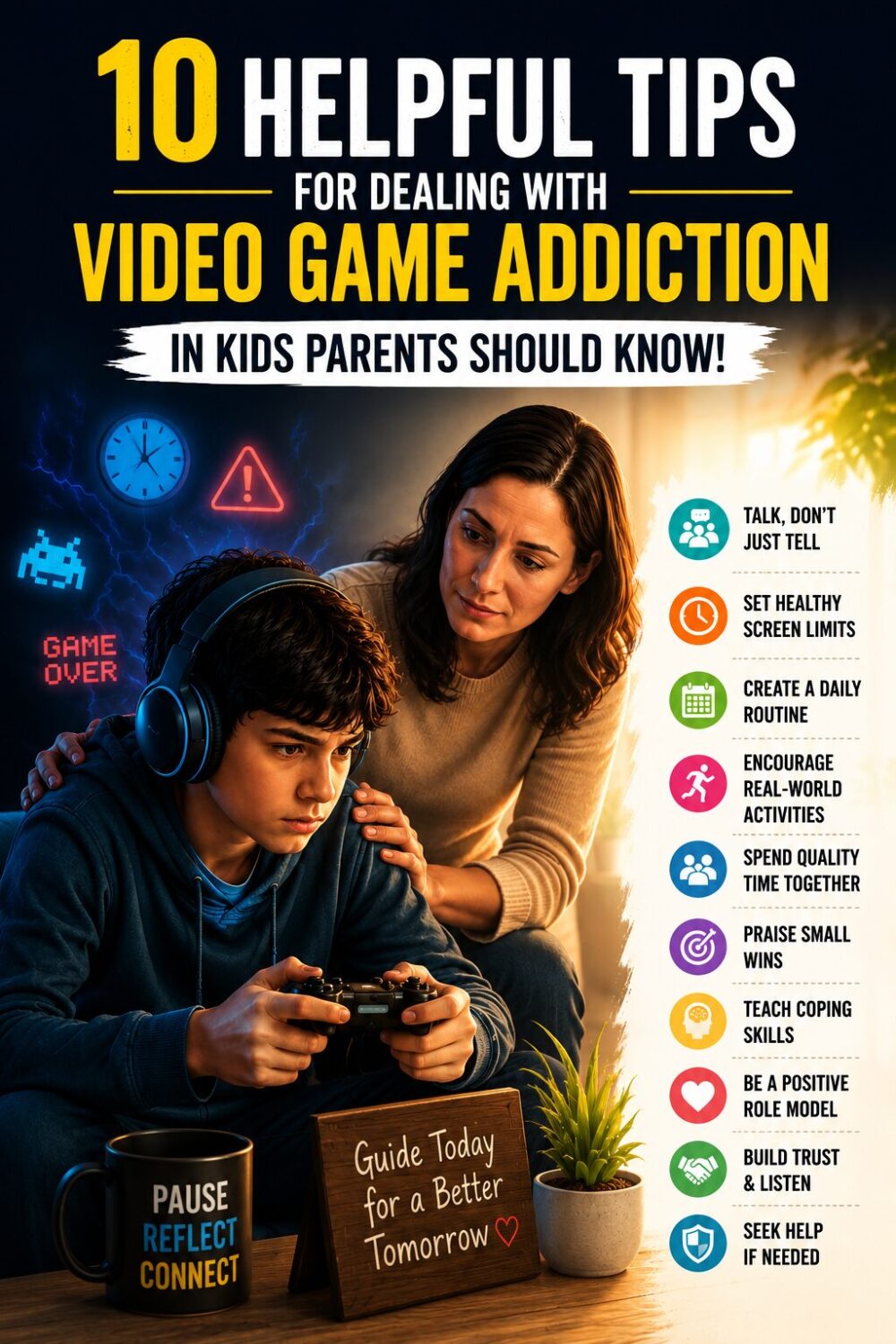
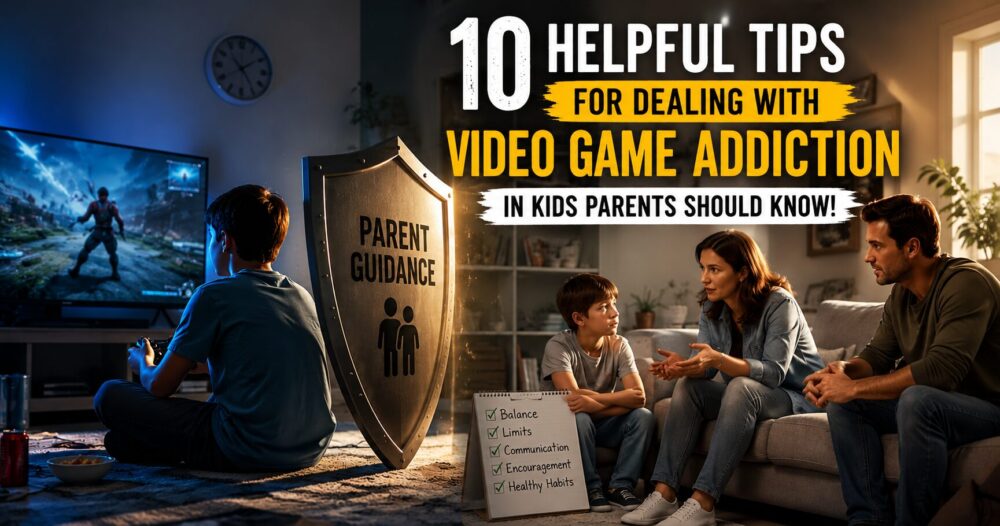
10 Helpful Tips for Dealing with Video Game Addiction in Kids
1. Create Clear and Consistent Family Gaming Rules
Instead of imposing sudden restrictions, involve your child in creating family guidelines around gaming.
When children participate in setting rules, they’re often more willing to follow them.
Consider discussing:
- Which games are appropriate
- Daily or weekly gaming limits
- Screen-free times
- Expectations around homework before gaming
- Weekend gaming schedules
Keep the rules realistic, consistent, and appropriate for your child’s age.
Tip: Write the agreement down and place it somewhere visible, such as the refrigerator or a family notice board.
2. Encourage a Healthy Daily Routine Before Gaming
Gaming should come after essential daily responsibilities—not before them.
Help your child understand that important activities take priority, including:
- Schoolwork
- Reading
- Outdoor play
- Physical exercise
- Family meals
- Household responsibilities
- Adequate sleep
A simple principle many families find helpful is:
Responsibilities first, recreation second.
This approach teaches children time management and reinforces that gaming is one part of a balanced lifestyle.
3. Keep Gaming Devices in Shared Family Spaces
Where children play often matters just as much as how long they play.
Gaming in communal areas, such as the living room, naturally increases parental awareness without making children feel constantly monitored.
Keeping consoles and computers out of bedrooms can help:
- Reduce excessive gaming
- Prevent late-night play
- Encourage family interaction
- Make it easier to enforce agreed-upon limits
It also creates more opportunities for parents to show interest in what their child is playing, opening the door for positive conversations about gaming.
4. Set Healthy Screen-Time Boundaries
Rather than relying on repeated reminders, use built-in parental controls or device settings to establish consistent limits.
Many gaming consoles, smartphones, and tablets allow parents to:
- Schedule gaming hours
- Limit daily screen time
- Require breaks
- Monitor playtime
- Restrict age-inappropriate content
Technology can support your family’s rules—but it works best when combined with open communication rather than punishment.
5. Make Bedrooms Screen-Free at Night
Sleep is one of the first areas affected by excessive gaming.
Encourage the entire family—not just your child—to leave phones, tablets, and gaming devices outside the bedroom before bedtime.
Creating a shared family routine sends a powerful message that healthy sleep is important for everyone.
Instead of gaming before bed, encourage relaxing alternatives such as:
- Reading
- Listening to calming music
- Journaling
- Gentle stretching
- Talking about the day
A consistent bedtime routine improves not only sleep quality but also mood, attention, and emotional regulation.
6. Foster Open and Honest Conversations About Gaming
When parents become concerned about their child’s gaming habits, the first instinct is often to impose stricter rules or take away devices. While this may stop gaming temporarily, it rarely addresses why the child is drawn to gaming in the first place.
Instead of beginning the conversation with criticism or punishment, approach it with curiosity and empathy.
Ask open-ended questions such as:
- “What do you enjoy most about this game?”
- “How does gaming make you feel?”
- “Do you ever find it difficult to stop playing?”
- “What do you like better about gaming than other activities?”
Listening without interrupting helps children feel understood rather than judged. It also gives parents valuable insight into whether gaming is being used for entertainment, social connection, stress relief, or emotional escape.
Remember, the goal isn’t to win an argument—it’s to build trust. Children are far more likely to cooperate when they feel heard.
Parent Tip: Avoid statements like “You’re addicted!” or “Gaming is ruining your life.” Instead, focus on the specific behaviors you’ve noticed, such as staying up late, missing homework, or becoming upset when asked to stop playing.
7. Replace Screen Time with Activities Your Child Actually Enjoys
One of the biggest mistakes parents make is removing gaming without offering meaningful alternatives.
If gaming is simply replaced with boredom, children will naturally gravitate back to their screens.
Instead, help your child discover activities that provide enjoyment, challenge, and a sense of achievement.
Some ideas include:
- Playing outdoor sports
- Cycling or swimming
- Learning a musical instrument
- Drawing, painting, or pottery
- Reading adventure books
- Coding or robotics
- Cooking or baking together
- Gardening
- Photography
- Board games with family
- Volunteering in community programs
Rather than forcing a hobby, allow your child to explore different interests until they find something they genuinely enjoy.
Children who feel successful in multiple areas of life are less likely to rely solely on gaming for satisfaction.
8. Encourage Real-Life Friendships and Family Time
Online gaming often fulfills a child’s need for belonging. If we simply reduce gaming without strengthening real-world relationships, children may feel isolated.
Create opportunities for meaningful offline interactions.
For younger children:
- Arrange playdates.
- Visit parks or playgrounds.
- Join hobby clubs.
- Participate in sports teams.
For older children and teenagers:
- Encourage group projects.
- Support extracurricular activities.
- Promote volunteering opportunities.
- Help them reconnect with friends beyond gaming.
Equally important is family time.
Simple traditions such as:
- Family dinners
- Weekend outings
- Movie nights
- Card or board games
- Cooking together
help children feel emotionally connected and reduce their dependence on digital entertainment.
Research consistently shows that strong family relationships are associated with healthier technology use among children and adolescents.
9. Teach Healthy Digital Habits Instead of Demonizing Technology
Technology is an unavoidable part of modern life.
Instead of teaching children that screens are “bad,” teach them how to use technology responsibly.
Help your child understand:
- Why sleep matters more than another game.
- How excessive screen time affects concentration.
- Why physical movement keeps both the brain and body healthy.
- How balancing online and offline activities improves overall wellbeing.
Encourage children to become mindful of their own habits by asking questions like:
- “How do you feel after playing for three hours?”
- “Do you think you would enjoy a break?”
- “What else would you like to do today?”
These conversations promote self-awareness and self-regulation—skills that will benefit them throughout life.
10. Seek Professional Support When Needed
Sometimes, despite a family’s best efforts, gaming continues to significantly interfere with a child’s wellbeing.
If your child is experiencing persistent emotional distress, academic decline, severe conflict at home, or difficulty functioning without gaming, seeking professional guidance may be beneficial.
A qualified mental health professional can help identify whether gaming is the primary concern or whether it is connected to underlying challenges such as:
- Anxiety
- Depression
- ADHD
- Autism spectrum differences
- Social anxiety
- Bullying
- Family stress
- Low self-esteem
Treatment does not usually involve banning games completely.
Instead, professionals often work with children and families to:
- Improve emotional regulation
- Develop healthier coping skills
- Strengthen communication
- Create realistic technology boundaries
- Address underlying psychological concerns
Seeking support early can prevent gaming-related problems from becoming more difficult to manage over time.
Common Mistakes Parents Should Avoid
Managing excessive gaming can be challenging, especially when emotions run high. While every family is different, certain approaches tend to create more conflict than positive change.
Here are a few common mistakes to avoid:
❌ Suddenly banning all video games
Abruptly removing gaming without explanation can lead to frustration, secrecy, or power struggles.
A gradual, collaborative approach is often more effective.
❌ Using gaming as the only reward or punishment
If video games become the primary bargaining tool, they may become even more desirable.
Instead, encourage a variety of rewards, such as family outings, creative activities, or special one-on-one time.
❌ Ignoring your own screen habits
Children learn by observing adults.
If parents are constantly checking phones during meals or spending hours on screens, it’s harder to expect children to behave differently.
Healthy digital habits should be a family effort.
❌ Comparing your child to others
Statements like:
- “Your cousin never plays this much.”
- “Other kids don’t behave like this.”
can damage self-esteem and reduce open communication.
Focus on your child’s individual needs and progress instead.
❌ Assuming gaming is the only problem
Excessive gaming is often a symptom rather than the root cause.
Ask yourself:
- Is my child feeling lonely?
- Are they overwhelmed at school?
- Are they struggling with friendships?
- Have there been recent changes at home?
Addressing the underlying issue often makes it easier to reduce excessive gaming naturally.
Building Healthy Gaming Habits for the Long Term
The objective isn’t to eliminate video games forever. Instead, it’s to help children develop lifelong digital wellbeing skills.
Here are some practical habits families can build together:
Create Screen-Free Zones
Keep bedrooms and dining tables free from screens whenever possible.
These spaces encourage better sleep, conversation, and family connection.
Schedule Regular Physical Activity
Aim for at least 60 minutes of moderate to vigorous physical activity each day, as recommended for school-age children. Exercise supports physical health, improves mood, and can naturally reduce excessive screen use.
Prioritize Sleep
Establish a consistent bedtime routine and avoid stimulating games close to bedtime.
Well-rested children are generally better able to manage emotions, focus at school, and regulate screen use.
Encourage Variety
Help children experience a balanced week that includes:
- Learning
- Exercise
- Creative hobbies
- Social interaction
- Family time
- Relaxation
- Gaming in moderation
The more fulfilling a child’s offline life becomes, the less likely gaming is to dominate it.
Model Healthy Technology Use
Children pay close attention to how adults use technology.
Consider creating family habits such as:
- No phones during meals.
- Device-free conversations.
- Family walks without screens.
- Screen-free evenings once a week.
When parents model balance, children are more likely to follow.
Key Takeaway
Helping a child reduce excessive gaming isn’t about taking away something they love—it’s about helping them discover that a fulfilling life includes many sources of enjoyment, achievement, and connection.
By combining clear boundaries with empathy, consistent routines, and positive alternatives, parents can guide their children toward healthier digital habits that support their mental, emotional, and physical wellbeing.
Final Thoughts
Video games are not inherently harmful. In fact, when enjoyed in moderation, they can encourage creativity, strategic thinking, teamwork, and even social connection. The real challenge begins when gaming starts replacing the experiences children need for healthy growth—quality sleep, physical activity, learning, family relationships, and face-to-face friendships.
As a parent, it’s natural to worry if your child seems glued to a screen. However, approaching the situation with empathy rather than fear can make all the difference. Instead of asking, “How do I stop my child from gaming?” consider asking, “What is my child getting from gaming that they may be missing elsewhere?”
Children who feel emotionally supported, have consistent routines, enjoy meaningful offline activities, and understand healthy digital boundaries are far more likely to develop a balanced relationship with technology.
Progress doesn’t happen overnight. There may be setbacks, negotiations, and moments of frustration. What matters most is maintaining open communication, setting realistic expectations, and working together as a family.
Remember, your goal isn’t to raise a child who never plays video games—it’s to raise a child who knows how to enjoy technology without letting it take over their life.
A Word from Syona Minds
At Syona Minds, we believe that technology should enhance life—not replace it.
Children today are growing up in a digital world where screens are woven into education, entertainment, and social interaction. Rather than viewing technology as the enemy, we encourage families to build healthy digital habits that support emotional wellbeing, resilience, and meaningful real-world connections.
Every child is different. Some may simply need clearer routines and healthier boundaries, while others may be using gaming to cope with stress, anxiety, loneliness, or other emotional challenges. Understanding the why behind a child’s gaming habits is often the first step toward meaningful change.
If you’re concerned about your child’s relationship with gaming, remember that you don’t have to navigate it alone. Early guidance, supportive conversations, and professional help when needed can make a significant difference.
At Syona Minds, our mission is to empower individuals and families with evidence-based mental wellness resources, practical tools, and compassionate support. Together, we can help children build healthier relationships with technology while nurturing their emotional, social, and psychological wellbeing.
Because every child deserves the opportunity to thrive—both online and offline.
Frequently Asked Questions (FAQs)
1. What is video game addiction in kids?
Video game addiction, also known as problematic gaming or Gaming Disorder, is a pattern of excessive gaming that interferes with a child’s daily life. It may affect school performance, sleep, relationships, emotional wellbeing, and other responsibilities. The concern isn’t simply how long a child plays, but whether gaming consistently takes priority over important aspects of life.
2. What are the warning signs of video game addiction?
Some common signs include:
- Constantly thinking about gaming
- Difficulty stopping play
- Irritability when unable to play
- Declining academic performance
- Poor sleep habits
- Loss of interest in hobbies
- Social withdrawal
- Neglecting responsibilities or personal hygiene
- Using games to cope with stress or difficult emotions
If these behaviors persist and significantly affect daily functioning, it may be time to seek professional guidance.
3. How much gaming is considered too much?
There is no universal number of hours that defines addiction. The quality of gaming matters more than the quantity. A child who plays for an hour or two after completing responsibilities may be managing their time well, whereas another child who spends less time gaming but neglects school, sleep, or relationships may be experiencing problematic gaming.
Focus on whether gaming is disrupting your child’s overall wellbeing rather than watching the clock alone.
4. Why do children become addicted to video games?
Children may be drawn to excessive gaming for many reasons, including:
- The rewarding nature of games
- Social interaction with friends
- Escaping stress or anxiety
- Feelings of loneliness
- Academic pressure
- Limited offline hobbies
- Easy access to gaming devices
Understanding the underlying reason can help parents choose the most effective way to support their child.
5. Are all video games harmful for children?
No. Many age-appropriate games can support creativity, teamwork, strategic thinking, and problem-solving skills. The key is maintaining balance and ensuring gaming doesn’t interfere with sleep, education, physical activity, or healthy relationships.
6. Should parents completely ban video games?
In most cases, a complete ban isn’t necessary and may even increase conflict or secrecy. A better approach is to establish clear boundaries, encourage other interests, and involve children in creating healthy gaming routines.
7. How can I reduce my child’s screen time without arguments?
Instead of focusing only on restrictions:
- Create family gaming rules.
- Offer enjoyable offline activities.
- Maintain consistent routines.
- Keep devices out of bedrooms at night.
- Spend quality time together as a family.
- Model healthy technology use yourself.
Children are more likely to cooperate when they understand the reasons behind family rules.
8. Can excessive gaming affect mental health?
Research suggests that problematic gaming may be associated with increased emotional distress, anxiety, depression, sleep difficulties, and social withdrawal in some children. However, the relationship is complex. In many cases, existing emotional challenges may contribute to excessive gaming, making it important to consider the child’s overall wellbeing.
9. When should parents seek professional help?
Consider consulting a qualified mental health professional if your child:
- Cannot control gaming despite repeated attempts
- Shows significant emotional distress when gaming is limited
- Experiences declining academic performance
- Withdraws from family and friends
- Neglects personal care or daily responsibilities
- Uses gaming as their primary way of coping with emotions
Early intervention can help children develop healthier coping strategies and improve overall wellbeing.
10. Can children recover from video game addiction?
Yes. With supportive parenting, healthy routines, positive alternatives, and professional guidance when necessary, most children can develop a healthier relationship with gaming. The goal is not to eliminate technology but to help children use it in a balanced and responsible way.
Key Takeaways
✔ Video games are not inherently harmful, but excessive gaming can affect a child’s emotional, social, physical, and academic wellbeing.
✔ Gaming Disorder is recognized by the World Health Organization (WHO), while Internet Gaming Disorder is identified by the American Psychiatric Association as a condition requiring further study.
✔ Warning signs include difficulty stopping gaming, sleep problems, declining grades, irritability, and withdrawal from offline activities.
✔ Healthy gaming habits are built through consistent boundaries, open communication, positive role modelling, and enjoyable alternatives—not punishment alone.
✔ Professional support may be helpful if gaming begins significantly interfering with a child’s daily functioning or emotional wellbeing.
References
The following sources informed the evidence-based guidance in this article:
UNICEF. Children in a Digital World.
American Psychiatric Association. Diagnostic and Statistical Manual of Mental Disorders (DSM-5-TR). American Psychiatric Publishing.
World Health Organization. International Classification of Diseases 11th Revision (ICD-11): Gaming Disorder.
American Academy of Pediatrics. Guidance on children’s media use and healthy digital habits.
Przybylski, A. K., & Weinstein, N. (2017). A Large-Scale Test of the Goldilocks Hypothesis: Quantifying the Relations Between Digital-Screen Use and the Mental Well-Being of Adolescents.