Summary
Every parent wants to raise kind, responsible, and confident children. One of the most effective ways to encourage positive behavior is through positive reinforcement recognizing and rewarding actions you want to see repeated. Contrary to popular belief, rewarding children doesn’t have to mean buying expensive toys, giving candy, or offering money. In fact, the most meaningful rewards are often experiences, praise, quality time, and opportunities that strengthen your relationship with your child.
Research in child psychology shows that when children receive consistent, age-appropriate rewards for positive behavior, they are more likely to repeat those behaviors. Rewards also help children build self-confidence, develop intrinsic motivation, and understand the value of effort and responsibility. However, it’s equally important to use rewards thoughtfully. Overusing material rewards or rewarding every small task may unintentionally reduce a child’s internal motivation.
This article explores why rewards are important, explains the difference between rewards and bribery, and shares ten creative, low-cost reward ideas that inspire good behavior without creating dependency on gifts. Whether your child is learning responsibility, completing homework, helping around the house, or practicing kindness, these reward ideas can make positive parenting more enjoyable for the whole family.
Introduction
Parenting often involves finding the right balance between guidance, discipline, and encouragement.
When children behave well, complete their responsibilities, or show kindness, many parents naturally want to recognize their efforts. But deciding how to reward positive behavior can be confusing.
Should you buy a toy?
Offer extra screen time?
Give sweets?
Or simply say, “Good job”?
The truth is that effective rewards are about much more than material gifts.
Children thrive when they feel appreciated, understood, and encouraged. Thoughtful rewards communicate an important message: “Your effort matters.” This helps children connect positive behavior with positive experiences, making them more likely to repeat those actions in the future.
Psychologists describe this process as positive reinforcement, a well-established learning principle that encourages desirable behaviours by following them with something meaningful and enjoyable.
However, rewards work best when they are intentional. They should celebrate effort, build confidence, and gradually encourage children to become motivated from within rather than depending on external prizes.
Let’s explore why rewarding children matters and discover creative ways to motivate them while nurturing independence, resilience, and emotional wellbeing.
Why Rewards Matter in Child Development
Children are constantly learning from the world around them.
They observe how adults respond to their actions and gradually understand which behaviors receive attention, appreciation, or consequences.
Positive rewards help reinforce behaviors such as:
- Helping others
- Completing homework
- Sharing with siblings
- Following family rules
- Practicing kindness
- Taking responsibility
- Showing perseverance
Unlike punishment, which focuses on correcting mistakes, rewards emphasize what children are doing well.
This positive approach creates an encouraging environment where children feel safe to learn, make mistakes, and keep improving.
Rewards vs. Bribes: Understanding the Difference
Many parents worry that rewarding children might “spoil” them.
The key difference lies in when and why the reward is given.
A Reward
A reward is given after a child demonstrates positive behavior.
Example:
“You worked hard on your homework all week. Let’s celebrate with a family movie night.”
The child learns that effort leads to positive outcomes.
A Bribe
A bribe is offered before a behavior to persuade a child to stop misbehaving or cooperate.
Example:
“If you stop crying right now, I’ll buy you chocolate.”
This teaches children that disruptive behavior may earn desirable rewards.
Understanding this distinction helps parents use rewards as a teaching tool rather than a bargaining strategy.
Benefits of Using Positive Reinforcement
1. Encourages Positive Behavior
Children naturally repeat behaviors that lead to pleasant experiences.
When positive actions receive recognition, they become habits over time.
For example, a child praised for putting away their toys is more likely to continue doing so without constant reminders.
2. Builds Self-Confidence
Recognition tells children:
“I believe in you.”
This strengthens self-esteem and encourages them to tackle increasingly challenging tasks.
Rather than fearing failure, children begin to view effort as something worthwhile.
3. Teaches Goal Setting
Reward systems help children understand the relationship between effort and achievement.
Whether it’s reading every evening for a week or completing household responsibilities, children learn that consistent effort leads to meaningful outcomes.
These lessons prepare them for future academic, professional, and personal success.
4. Strengthens the Parent–Child Relationship
Rewards that involve quality time create lasting memories.
Unlike material gifts, experiences such as baking together, visiting a park, or reading an extra bedtime story strengthen emotional connections and improve communication.
Children often remember these shared experiences far longer than toys.
5. Creates a Positive Home Environment
Homes that focus on encouragement rather than constant criticism tend to feel safer and more supportive.
Children become more willing to try new things because they know mistakes are viewed as opportunities to learn not reasons for punishment.
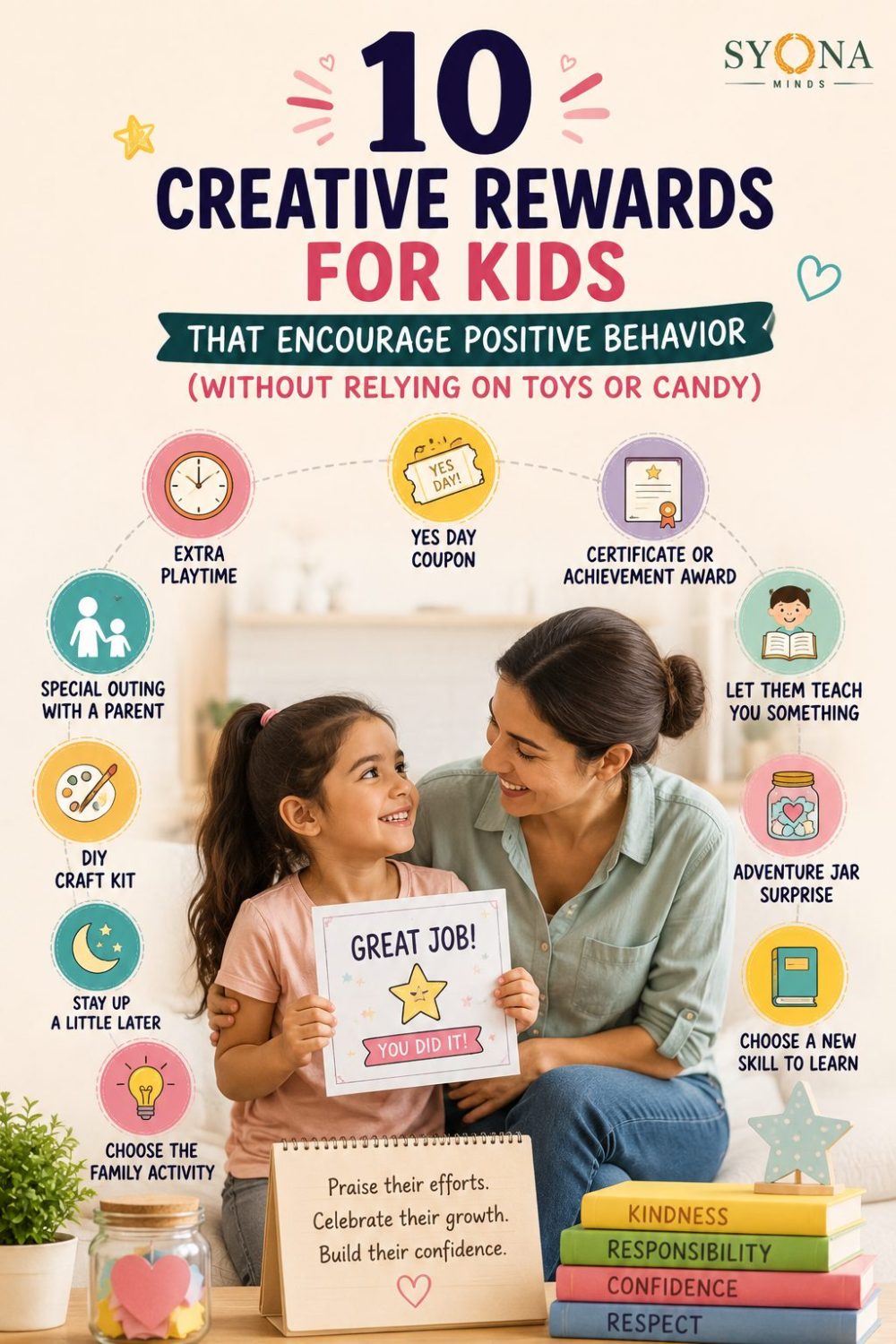
10 Creative Rewards for Kids That Actually Work
1. Extra Playtime
Children naturally learn through play. Offering an extra 20–30 minutes of free play is one of the simplest and most effective rewards available.
Rather than relying on screens, encourage activities such as:
- Building with blocks
- Outdoor games
- Pretend play
- Drawing
- Board games
Why It Works
Play promotes:
- Creativity
- Problem-solving
- Social skills
- Emotional regulation
Because children already enjoy playing, extending playtime feels meaningful without costing anything.
2. One-on-One Parent Time
For many children, undivided attention is the most valuable reward of all.
Set aside time for an activity chosen by your child.
Ideas include:
- Visiting a park
- Baking together
- Going for ice cream
- Reading books
- Taking a nature walk
- Playing a favorite game
Psychological Benefit
Children who regularly receive quality time often feel:
- More emotionally secure
- Better understood
- More connected to their parents
Relationship-based rewards also strengthen trust and communication.
3. Let Your Child Choose the Family Activity
Children love feeling that their opinions matter.
Reward positive behavior by allowing them to plan a family activity.
Examples:
- Choosing the weekend movie
- Picking dinner
- Selecting a board game
- Planning a picnic
- Deciding the next family outing
Why It Works
This reward builds:
- Decision-making skills
- Responsibility
- Confidence
- Leadership
It also teaches children to consider the needs and preferences of others.
4. A Creative Craft Day
Instead of buying another toy, reward your child with an opportunity to create something.
Gather inexpensive materials such as:
- Colored paper
- Paint
- Clay
- Stickers
- Recycled materials
- Fabric scraps
Then spend time creating together.
Developmental Benefits
Craft activities strengthen:
- Fine motor skills
- Patience
- Creativity
- Concentration
- Problem-solving
Children often value something they’ve created themselves more than something purchased.
5. Stay Up a Little Later
For younger children, staying up 20–30 minutes past bedtime can feel like an exciting privilege.
Use this extra time for calming activities such as:
- Reading together
- Playing a board game
- Stargazing
- Telling family stories
- Listening to relaxing music
Why It Works
Children experience a sense of maturity and trust while still maintaining healthy routines.
Avoid making late bedtimes a frequent reward so sleep schedules remain consistent.
6. Create a “Yes Day” Coupon
One of the most exciting rewards for children is receiving a special “Yes Day” coupon. On this day, your child gets to make a few age-appropriate choices, while parents set clear and safe boundaries.
For example, your child might choose:
- Breakfast or dinner
- A family game
- A weekend activity
- Their favorite bedtime story
- A picnic location
The goal isn’t to say “yes” to everything but to give children a sense of autonomy and trust.
Why It Works
Children naturally crave independence. Giving them opportunities to make decisions helps develop:
- Confidence
- Problem-solving skills
- Responsibility
- Decision-making abilities
When children feel heard, they’re often more cooperative in everyday situations.
7. A Special Certificate or Achievement Award
Children love being recognized for their efforts.
Instead of buying a reward, create a colorful certificate celebrating their achievement.
Examples include:
- Kindness Champion
- Homework Hero
- Responsibility Star
- Reading Rockstar
- Helpful Hands Award
- Super Listener Certificate
You can even frame certificates or create a “Wall of Achievements” at home.
Psychological Benefit
Recognition boosts intrinsic motivation because it focuses on effort rather than possessions.
Children begin to associate positive behavior with personal pride instead of expecting material rewards.
8. Let Them Teach You Something
Children feel incredibly proud when adults genuinely value their knowledge.
Reward your child by allowing them to become the “teacher” for the day.
They might teach you:
- A dance routine
- A card game
- How to draw a favorite character
- A magic trick
- A sport
- A new hobby
Why It Works
Teaching reinforces learning while building:
- Communication skills
- Confidence
- Leadership
- Emotional connection
Children love feeling capable and respected.
9. Adventure Jar Surprise
Create a family “Adventure Jar” filled with enjoyable experiences written on small slips of paper.
Ideas include:
- Visit the zoo
- Go cycling
- Build a blanket fort
- Have a picnic
- Visit the library
- Bake cookies together
- Play at the park
- Family karaoke night
- Treasure hunt at home
- Stargazing evening
When your child reaches a behavioral goal, let them draw one surprise adventure.
Psychological Benefit
Unexpected rewards activate curiosity and excitement.
Unlike predictable prizes, surprise experiences often become cherished family memories.
10. Let Them Choose a New Skill to Learn
Rather than rewarding children with objects, reward them with opportunities for growth.
Ask:
“What’s something you’ve always wanted to learn?”
Perhaps it’s:
- Painting
- Gardening
- Photography
- Baking
- Chess
- Coding
- Dancing
- Music
- Pottery
- Origami
Supporting a child’s interests encourages lifelong learning while strengthening intrinsic motivation.
Why It Works
Children begin viewing rewards as opportunities rather than possessions.
This mindset promotes curiosity, resilience, and a genuine love of learning.
Common Mistakes Parents Make When Using Rewards
Rewards are most effective when used thoughtfully. Certain mistakes can reduce their impact or unintentionally encourage the wrong behaviors.
Rewarding Every Small Task
If every simple responsibility receives a reward, children may begin expecting external motivation for everyday activities.
For example, brushing teeth, making the bed, or saying “thank you” should gradually become normal habits rather than behaviors that always earn prizes.
Instead, reserve rewards for:
- Consistent effort
- New responsibilities
- Personal growth
- Acts of kindness
- Achieving meaningful goals
Using Rewards as Bribes
As discussed earlier, rewards celebrate positive behavior after it happens.
Offering gifts during tantrums or negotiations teaches children that misbehavior leads to desirable outcomes.
Instead of saying:
“Stop shouting and I’ll buy you candy.”
Try:
“I noticed how calmly you handled that situation today. I’m proud of you.”
Focusing Only on Results
Children don’t always succeed the first time.
If rewards are based only on winning, getting perfect grades, or achieving flawless performance, children may become afraid of failure.
Instead, praise:
- Effort
- Persistence
- Improvement
- Responsibility
- Problem-solving
- Kindness
This approach encourages a growth mindset, where mistakes are viewed as opportunities to learn rather than signs of failure.
Overusing Material Rewards
Constantly giving toys, gadgets, or money can reduce intrinsic motivation.
Research suggests that children who are always rewarded with material items may become less interested in the activity itself.
Experiences, praise, privileges, and quality time often create stronger and longer-lasting motivation.
How to Create an Effective Reward System
A successful reward system should be simple, consistent, and age-appropriate.
1. Set Clear Expectations
Children should know exactly which behaviors are being encouraged.
For example:
- Completing homework before screen time
- Speaking respectfully
- Helping with chores
- Practicing a musical instrument
- Reading daily
Clear expectations reduce confusion and frustration.
2. Make Goals Achievable
Young children especially benefit from small, realistic goals. Instead of expecting perfect behavior all week, begin with goals they can accomplish within a day or two. Success builds confidence and encourages continued effort.
3. Use Visual Progress Trackers
Sticker charts, colorful calendars, or token systems help children see their progress. Watching their achievements grow reinforces motivation and provides a sense of accomplishment.
4. Celebrate Progress
Not every reward needs to be reserved for reaching the final goal. Recognize improvement along the way.
For example:
“You remembered to put away your toys three days in a row that’s fantastic progress!”
Small celebrations help children stay motivated.
5. Gradually Reduce External Rewards
As behaviors become habits, slowly replace tangible rewards with:
- Praise
- Encouragement
- Personal pride
- Increased responsibility
Ultimately, the goal is for children to behave positively because they understand its value not because they expect a prize.
When Rewards Stop Working
Parents sometimes notice that a reward system loses effectiveness over time.
This often happens when:
- Rewards become predictable.
- Expectations are unclear.
- Rewards are too frequent.
- The child has outgrown the system.
- External rewards replace intrinsic motivation.
If this happens:
- Introduce new experiences instead of objects.
- Involve your child in choosing rewards.
- Focus more on encouragement than prizes.
- Adjust goals to match your child’s developmental stage.
Remember that positive relationships remain the strongest motivator.
Key Takeaways
✔ Rewards are most effective when they encourage effort, responsibility, and positive behavior.
✔ Experiences, praise, and quality time often motivate children more than expensive gifts.
✔ Positive reinforcement strengthens confidence and emotional wellbeing.
✔ Rewards should never be confused with bribery.
✔ As children mature, gradually shift motivation from external rewards to internal satisfaction and personal pride.
✔ Every child is unique, so reward systems should be flexible and adapted to individual personalities and developmental stages.
Frequently Asked Questions
Do rewards spoil children?
Not when used appropriately. Rewards that recognize genuine effort, kindness, or responsibility help reinforce positive behavior. Overusing material rewards or rewarding every small task, however, may reduce their effectiveness.
At what age should parents start using reward systems?
Simple reward systems can be introduced as early as 2–3 years of age, using praise, stickers, or small privileges. Older children may respond better to goal charts, tokens, or experience-based rewards.
What are the best non-material rewards for kids?
Some of the most meaningful rewards include extra playtime, one-on-one parent time, choosing a family activity, adventure outings, certificates, special privileges, and opportunities to learn something new.
Should good grades always be rewarded?
Rather than rewarding grades alone, focus on rewarding consistent effort, perseverance, study habits, and improvement. This encourages a healthy attitude toward learning rather than placing pressure solely on results.
How long should a reward system last?
Reward systems are intended to help establish positive habits. As behaviors become consistent, parents should gradually reduce external rewards and encourage children to take pride in their own achievements.
Conclusion
Rewarding children is about much more than giving toys, treats, or privileges it is about nurturing the behaviors, values, and life skills that will help them thrive. When used thoughtfully, rewards become powerful tools for teaching responsibility, kindness, perseverance, and self-confidence.
The most meaningful rewards are often those that strengthen relationships rather than fill toy boxes. A family picnic, extra bedtime stories, choosing a weekend adventure, or simply hearing, “I’m proud of how hard you worked,” can leave a lasting impression on a child’s emotional development.
Parents should remember that the ultimate goal is not to create children who behave well only when a reward is offered. Instead, rewards should gradually help children discover the internal satisfaction that comes from making good choices, helping others, and achieving personal goals.
Every child is unique, and what motivates one child may not motivate another. By staying patient, consistent, and responsive to your child’s individual needs, you can build a positive home environment where encouragement replaces criticism, effort is celebrated, and confidence continues to grow.
In the end, the greatest reward you can offer your child isn’t found in a store it’s your time, your attention, your belief in their potential, and the love you show every single day.
References
1. American Academy of Pediatrics. (2023). Positive Parenting Tips.
2. Center on the Developing Child at Harvard University. (2022). Serve and Return Interaction Shapes Brain Development.
3. Dweck, C. S. (2016). Mindset: The New Psychology of Success. Random House.
4. Kazdin, A. E. (2008). The Kazdin Method for Parenting the Defiant Child. Houghton Mifflin.
5. Skinner, B. F. (1953). Science and Human Behavior. Macmillan.