Summary
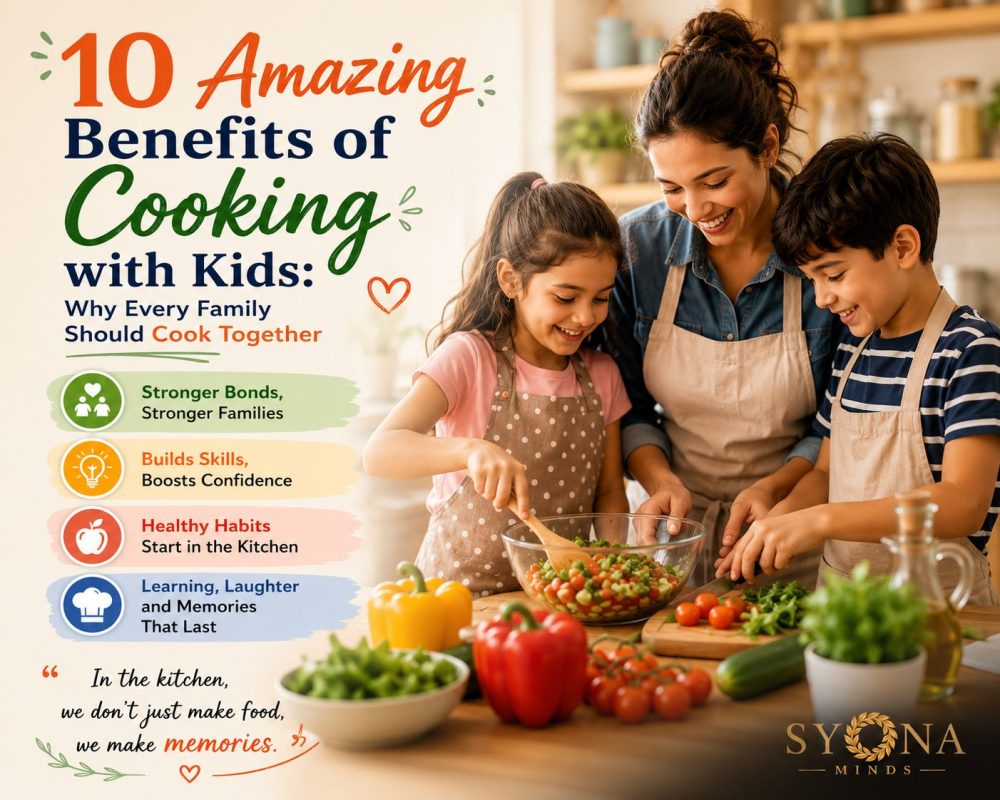
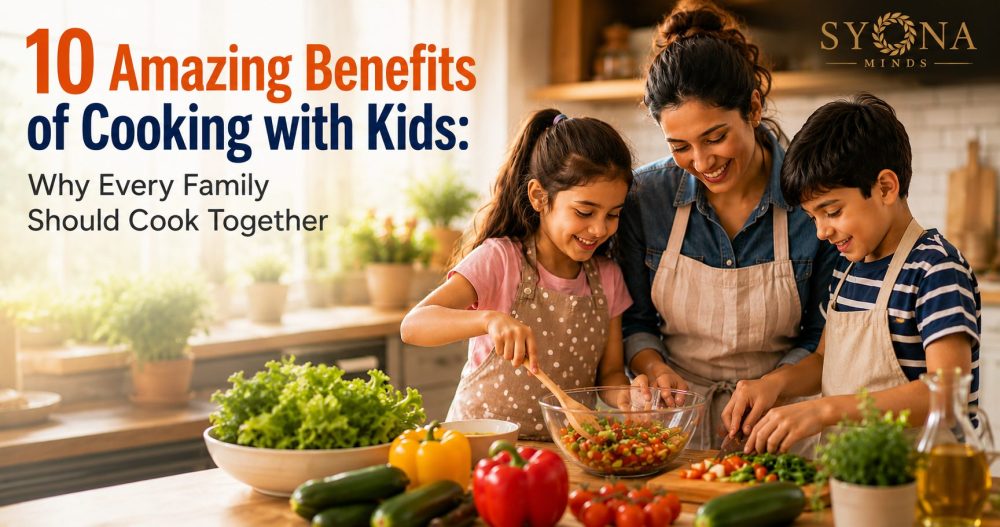
Cooking with children is much more than preparing meals it is an opportunity to nurture confidence, strengthen family relationships, and teach valuable life skills that last well beyond childhood. Every time a child measures flour, stirs batter, washes vegetables, or helps prepare dinner, they are learning far more than a recipe. They are developing patience, problem-solving skills, emotional resilience, teamwork, creativity, and healthy eating habits.
Research in child development suggests that everyday family activities play an important role in shaping children’s cognitive, emotional, and social growth. The kitchen naturally combines science, mathematics, communication, sensory exploration, and practical life skills into one enjoyable experience. It also provides a screen-free environment where meaningful conversations and shared memories can flourish.
Whether your child is a curious toddler eager to mix ingredients or an older child learning to prepare simple meals independently, involving them in cooking can have lasting benefits for their confidence, wellbeing, and relationship with food.
In this article, we’ll explore ten science-backed benefits of cooking with children, practical tips to make the experience enjoyable, and why the kitchen may be one of the most valuable classrooms your child will ever have.
Introduction
Picture this.
It’s a quiet Sunday afternoon. Flour dusts the kitchen counter, cookie cutters are scattered everywhere, and your child proudly announces that today’s pancakes are “their special recipe.”
The pancakes may not be perfectly round. There may be eggshells in the bowl and flour on the floor.
But something far more important is happening than simply making breakfast.
Your child is learning.
They’re measuring ingredients, solving problems, following instructions, practising patience, expressing creativity, and spending meaningful time with someone they love.
These seemingly ordinary moments often become extraordinary childhood memories.
In today’s busy world, families are juggling work, school, extracurricular activities, and increasing screen time. Finding meaningful opportunities to connect can feel difficult. Cooking together offers something beautifully simple; it slows everyone down while creating opportunities to talk, laugh, learn, and grow.
Developmental psychologists often describe everyday family routines as “hidden classrooms.” The kitchen is one of the richest of these learning environments because it naturally combines education, emotional development, and practical life skills in a way that feels fun rather than formal.
Cooking isn’t about creating perfect meals.
It’s about creating capable, confident, and connected children.
Why Cooking Is More Than Just Preparing Food
Many parents think of cooking as a household chore.
Children, however, experience it very differently.
For them, cooking is an adventure filled with colours, smells, textures, sounds, and discoveries.
Every recipe becomes an opportunity to ask questions:
“Why does the dough rise?”
“Why did the butter melt?”
“Why does the cake change colour in the oven?”
These moments naturally stimulate curiosity, one of the most powerful drivers of learning.
Cooking also activates multiple areas of child development simultaneously, including:
- Cognitive development
- Language development
- Fine motor coordination
- Executive functioning
- Emotional regulation
- Sensory processing
- Social communication
- Decision-making
Few everyday activities provide such a rich combination of learning opportunities.
The Psychology Behind Cooking with Children
Child psychologists emphasise that children learn best through active participation rather than passive observation.
Cooking is a perfect example of experiential learning, learning by doing.
Rather than memorising information, children experiment, make mistakes, adapt, and immediately see the results of their actions.
This process strengthens neural connections in the developing brain and encourages long-term learning.
Cooking also supports what psychologists call self-efficacy, a child’s belief that they are capable of completing meaningful tasks.
Each successful recipe becomes evidence that:
“I can do difficult things.”
That confidence gradually extends into school, friendships, sports, and everyday problem-solving.
10 Incredible Benefits of Cooking with Kids
1. Cooking Strengthens Parent–Child Relationships
Few activities encourage quality conversation as naturally as cooking.
Unlike watching television or using digital devices, cooking places parents and children side by side, working toward a shared goal.
There is no pressure.
No competition.
Simply shared experiences.
While preparing meals together, families naturally begin talking about:
- School
- Friends
- Feelings
- Favourite memories
- Future dreams
- Daily challenges
Many children also find it easier to open up while doing an activity rather than sitting down for a serious conversation.
Psychologists explain that these relaxed interactions strengthen what is known as secure attachment the trusting emotional bond between children and caregivers.
Children who experience consistent emotional connection often develop stronger confidence, better emotional regulation, and healthier relationships later in life.
Sometimes the most meaningful conversations happen while washing vegetables or decorating cupcakes.
2. Cooking Teaches Practical Life Skills
One of the greatest gifts parents can give children is independence.
Cooking provides countless opportunities to develop practical skills they will use throughout adulthood.
Children gradually learn how to:
- Follow instructions
- Organise tasks
- Measure ingredients
- Plan ahead
- Clean up afterwards
- Work safely
- Prepare simple meals
These abilities contribute to executive functioning the collection of mental skills responsible for planning, organisation, attention, and self-control.
Unlike many academic lessons, these are skills children will use every day for the rest of their lives.
3. Cooking Builds Confidence and Self-Esteem
Imagine the pride a child feels when the family enjoys a meal they helped prepare.
That feeling matters.
Psychologists describe confidence as growing through repeated experiences of competence.
Each successful task whether stirring pancake batter or decorating a pizza—teaches children:
“My effort makes a difference.”
Even small accomplishments encourage children to take on new challenges.
Instead of focusing on perfect results, celebrate participation.
Praise comments like:
“You measured those ingredients carefully.”
“You kept trying even when it became difficult.”
These types of encouragement promote a growth mindset, helping children believe that skills improve through practice rather than natural talent alone.
4. Cooking Encourages Healthier Eating Habits
Many parents struggle to introduce vegetables or unfamiliar foods.
Interestingly, research shows that children are significantly more willing to taste foods they helped prepare.
When children wash carrots, mix salad ingredients, or decorate fruit platters, they develop curiosity about what they have created.
This reduces food-related anxiety and encourages more adventurous eating.
Cooking together also provides opportunities to discuss:
- Balanced nutrition
- Colourful fruits and vegetables
- Whole grains
- Protein sources
- Healthy snacks
- Portion awareness
Instead of telling children what they should eat, parents help them discover healthy eating through experience.
Food becomes something to enjoy—not something to fear.
5. Cooking Makes Math and Science Come Alive
The kitchen is one of the world’s most enjoyable science laboratories.
Every recipe introduces children to mathematical and scientific thinking without feeling like homework.
While cooking, children naturally practise:
Mathematics
- Counting
- Measuring
- Fractions
- Weighing
- Comparing quantities
- Timing
Science
- Melting
- Freezing
- Boiling
- Mixing
- Chemical reactions
- States of matter
Questions such as:
“Why does bread rise?”
“Why does chocolate melt?”
“What happens when baking soda reacts with vinegar?”
transform ordinary recipes into fascinating science lessons.
Learning becomes memorable because children experience concepts firsthand rather than simply reading about them.
10 Amazing Benefits of Cooking with Kids: How Time in the Kitchen Builds Confidence, Creativity, and Lifelong Skills
Part 2
6. Cooking Encourages Creativity and Imagination
The kitchen is one of the few places where children can safely experiment, explore, and express their creativity.
Unlike activities with only one correct answer, cooking allows children to make choices:
- Which fruits should go into the smoothie?
- How should we decorate the cookies?
- What vegetables should we add to our pizza?
- Which herbs smell best?
These simple decisions encourage flexible thinking and creative problem-solving.
Perhaps the pancakes aren’t perfectly round.
Maybe the sandwich has a funny face.
Maybe the fruit salad becomes a rainbow.
These moments remind children that creativity doesn’t have to be perfect—it simply has to be their own.
Psychological Perspective
Creative activities stimulate divergent thinking, which helps children generate multiple solutions to problems rather than searching for only one “correct” answer.
This type of thinking supports innovation, confidence, and adaptability throughout life.
7. Cooking Improves Fine Motor Skills and Coordination
Cooking is filled with small movements that strengthen muscles in children’s hands and fingers.
Activities such as:
- Stirring batter
- Pouring liquids
- Kneading dough
- Rolling cookies
- Peeling bananas
- Sprinkling herbs
- Cracking eggs
- Using cookie cutters
all improve fine motor coordination.
These same muscles later support:
- Writing
- Drawing
- Buttoning clothes
- Tying shoelaces
- Using school tools
Children often don’t realise they’re practising these important developmental skills because they’re having fun.
8. Cooking Teaches Teamwork and Communication
Preparing a meal is rarely a one-person job.
Families naturally divide responsibilities.
Someone washes vegetables.
Someone mixes ingredients.
Someone sets the table.
Someone serves the meal.
Children quickly discover that successful cooking depends on cooperation.
They learn to:
- Listen carefully
- Wait their turn
- Share responsibilities
- Ask for help
- Offer help
- Solve small disagreements respectfully
These social skills extend far beyond the kitchen.
They become valuable during school projects, sports, friendships, and eventually the workplace.
Psychological Perspective
Cooperative activities strengthen children’s sense of belonging.
Working toward a shared goal also helps children understand empathy, responsibility, and mutual respect.
9. Cooking Introduces Children to Different Cultures
Food tells stories.
Every family recipe carries traditions, memories, and cultural heritage.
Cooking meals from different countries allows children to discover the diversity of the world without leaving home.
One week you might prepare homemade pasta from Italy.
Another week you might explore tacos from Mexico, sushi-inspired rolls from Japan, or traditional Indian dishes with colourful spices.
As children cook together, they naturally begin asking questions about:
- Different cultures
- Languages
- Celebrations
- Traditions
- Geography
- Family customs
This encourages curiosity rather than fear of differences.
Psychological Perspective
Exposure to diverse cultures from an early age promotes open-mindedness, empathy, and respect for people with different backgrounds.
Food becomes a bridge between cultures.
10. Cooking Creates Joyful Childhood Memories
Years later, children may not remember every toy they received.
But many will remember baking cookies with a grandparent.
Making birthday cakes together.
Decorating festive treats.
Laughing after accidentally spilling flour everywhere.
These experiences become part of a family’s emotional story.
Research consistently shows that positive shared experiences strengthen family relationships and contribute to children’s overall wellbeing.
Cooking transforms ordinary evenings into meaningful traditions.
The recipe may eventually change.
The memories rarely do.
The Hidden Mental Health Benefits of Cooking Together
Beyond practical skills, cooking supports children’s emotional wellbeing in surprising ways.
It Reduces Stress
Simple, repetitive activities like mixing, kneading dough, or decorating food have a calming effect on many children.
These sensory experiences encourage mindfulness by keeping attention focused on the present moment.
It Encourages Emotional Expression
Children often talk more openly while doing activities side by side.
Preparing meals creates a relaxed environment where conversations happen naturally.
Many parents find that children share worries, school experiences, or friendships while chopping fruit or stirring soup.
It Strengthens Emotional Regulation
Recipes require patience.
Children learn to:
- Wait for food to bake.
- Follow steps carefully.
- Try again after mistakes.
- Accept that not everything turns out perfectly.
These experiences gently strengthen frustration tolerance and emotional regulation.
5 Practical Tips for Cooking Successfully with Children
1. Create a Safe Cooking Environment
Safety always comes first.
Before cooking:
- Wash hands together.
- Tie back long hair.
- Keep sharp knives out of reach for younger children.
- Supervise around hot surfaces.
- Use child-friendly utensils whenever possible.
A calm, organised workspace allows children to participate with confidence.
2. Match Tasks to Your Child’s Age
Children enjoy cooking most when tasks match their developmental abilities.
Toddlers (2–4 years)
- Wash fruits
- Tear lettuce
- Stir ingredients
- Sprinkle cheese
Young Children (5–8 years)
- Measure ingredients
- Crack eggs with assistance
- Mash vegetables
- Roll dough
Older Children (9+ years)
- Chop soft vegetables safely
- Read recipes
- Use kitchen timers
- Prepare simple meals with supervision
Age-appropriate tasks prevent frustration while encouraging independence.
3. Prepare Before You Begin
Gather ingredients beforehand.
Measure difficult ingredients in advance if necessary.
Read the recipe together.
This reduces stress and allows children to focus on learning instead of waiting.
Preparation also helps maintain attention, especially for younger children with shorter concentration spans.
4. Celebrate Effort, Not Perfection
Children don’t need perfect cupcakes.
They need encouragement.
Instead of correcting every mistake, celebrate participation.
Try saying:
“I love how carefully you mixed that.”
“You didn’t give up when it became tricky.”
Mistakes become valuable learning opportunities rather than reasons to stop trying.
5. Focus on the Experience More Than the Meal
Some recipes won’t turn out exactly as planned.
That’s okay.
The true success isn’t the finished dish.
It’s the confidence built while making it.
Laugh together.
Take photos.
Tell family stories.
Play music.
Enjoy the process.
Because children remember experiences far longer than recipes.
Common Mistakes Parents Should Avoid
Even with good intentions, some habits can reduce children’s enjoyment of cooking.
Doing Everything Yourself
It may feel faster, but children learn by participating, not watching.
Expecting Perfection
Messes are part of learning.
Growth often looks untidy.
Giving Tasks That Are Too Difficult
Choose challenges that build confidence rather than frustration.
Criticising Mistakes
Instead of:
“That’s wrong.”
Try:
“Let’s figure it out together.”
Learning thrives in supportive environments.
Frequently Asked Questions
At what age can children start cooking?
Children can begin helping as early as two or three years old with simple supervised tasks such as washing vegetables, stirring ingredients, or decorating food.
Does cooking improve children’s confidence?
Yes.
Successfully completing meaningful tasks helps children develop self-confidence, independence, and a stronger belief in their own abilities.
Can cooking help picky eaters?
Research suggests children are more likely to taste foods they helped prepare because they feel involved in the process.
Participation often reduces resistance to trying new foods.
Is cooking educational?
Absolutely.
Cooking combines mathematics, science, reading, creativity, communication, problem-solving, and life skills within one enjoyable activity.
Key Takeaways
✔ Cooking strengthens family relationships through shared experiences.
✔ It builds confidence by allowing children to complete meaningful tasks.
✔ Children naturally develop practical life skills and independence.
✔ Cooking encourages healthier eating habits and curiosity about food.
✔ Mathematical, scientific, and problem-solving skills become easier to understand through hands-on learning.
✔ Creativity, teamwork, communication, and emotional regulation all improve through regular participation.
✔ The kitchen may be one of the richest learning environments a child experiences.
Conclusion
Cooking together is about much more than preparing meals. It is about creating opportunities for children to grow, explore, and connect in meaningful ways.
Every recipe teaches something valuable. Measuring ingredients strengthens mathematical thinking. Mixing batter develops coordination. Waiting for cookies to bake encourages patience. Solving unexpected kitchen mishaps builds resilience. Sharing meals nurtures gratitude and togetherness.
Most importantly, cooking reminds children that learning doesn’t only happen in classrooms. Some of life’s greatest lessons are discovered while standing beside someone who believes in them.
As parents and caregivers, we often search for activities that help children become more confident, responsible, and emotionally resilient. Sometimes the answer isn’t found in expensive educational programs or complicated routines. Sometimes it’s found in something as simple as preparing dinner together.
Years from now, children may forget exactly what they cooked.
But they’ll remember how they felt.
They’ll remember laughing while kneading dough, proudly serving a meal they helped prepare, and spending uninterrupted time with the people they love.
Those moments become the ingredients of lifelong confidence, stronger relationships, and treasured family memories.
Because in the end, the greatest recipe isn’t the one written in a cookbook.
It’s the one created together in the heart of the home.
References
1. American Academy of Pediatrics. (2023). HealthyChildren.org: Healthy Eating and Family Mealtimes.
2. Bandura, A. (1997). Self-Efficacy: The Exercise of Control. W. H. Freeman.
3. Center on the Developing Child at Harvard University. (2021). Executive Function & Self-Regulation.
4. Dweck, C. S. (2006). Mindset: The New Psychology of Success. Random House.
5. Ginsburg, K. R. (2007). The Importance of Play in Promoting Healthy Child Development. Pediatrics, 119(1), 182–191.
6. Siegel, D. J., & Bryson, T. P. (2012). The Whole-Brain Child. Bantam Books.
7. UNICEF. (2022). Early Childhood Development and Positive Parenting.
8. World Health Organization. (2023). Healthy Diet Factsheet.