Summary
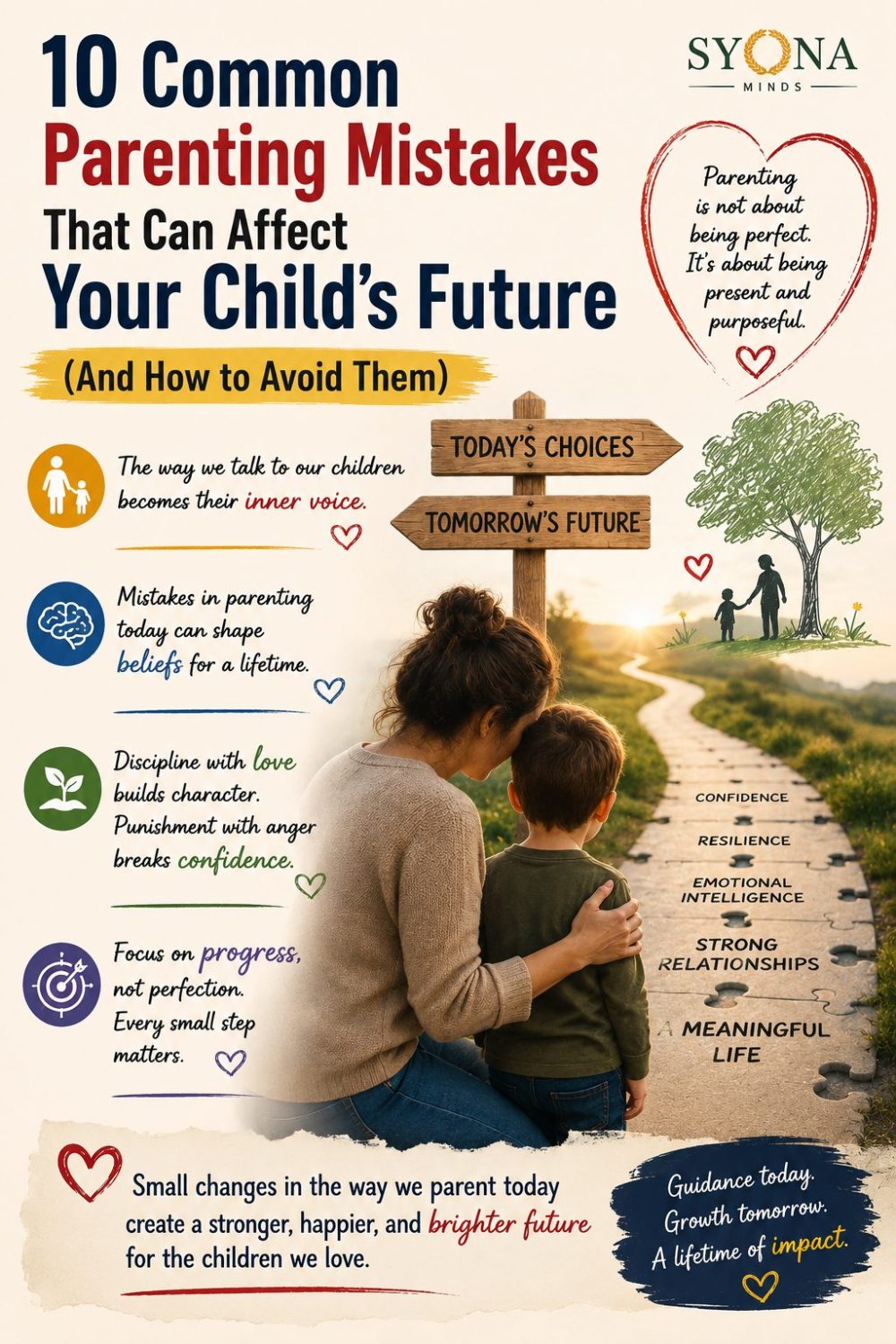
Every parent wants to raise a happy, confident, and emotionally healthy child. Yet parenting doesn’t come with a manual, and even the most loving parents make mistakes along the way. Fortunately, making mistakes doesn’t mean you’re a bad parent it simply means you’re human.
The challenge lies not in making mistakes, but in recognising patterns that may unintentionally affect a child’s emotional, social, and psychological development. Small everyday habits such as solving every problem for your child, avoiding difficult conversations, or expecting perfection can shape how children see themselves and the world around them.
Research in developmental psychology shows that childhood experiences play a crucial role in building self-esteem, emotional regulation, resilience, and healthy relationships. Children who are given opportunities to learn from failure, express emotions, develop responsibility, and experience appropriate independence are generally better equipped to navigate adulthood with confidence.
This article explores ten common parenting mistakes, explains why they matter from a psychological perspective, and offers practical strategies to help parents foster resilience, emotional intelligence, and lifelong wellbeing. Parenting isn’t about being perfect it’s about growing alongside your child.
Introduction
Ask any parent what they want most for their child, and you’ll probably hear similar answers.
“I want them to be happy.”
“I want them to be kind.”
“I want them to succeed.”
“I want them to feel loved.”
These hopes are universal. Yet parenting is one of the few roles in life where there are no perfect instructions. Every child is different, every family is unique, and situations constantly change. Because of this, even caring and attentive parents sometimes develop habits that unintentionally hold children back.
“Perhaps it’s rescuing them too quickly when they struggle”.
“Perhaps it’s expecting too much”.
“Perhaps it’s protecting them from every disappointment”.
While these actions often come from love, they may prevent children from developing important life skills such as resilience, responsibility, emotional regulation, and independence.
The encouraging news is that parenting isn’t about never making mistakes. Children don’t need perfect parents. They need parents who are willing to learn, adapt, apologise when necessary, and continue growing.
Understanding common parenting mistakes allows families to replace unhelpful patterns with healthier habits that support long-term emotional wellbeing.
Why Parenting Mistakes Are Normal
Every generation of parents faces different challenges.
Today’s parents balance work responsibilities, technology, academic pressures, social media, financial concerns, and countless parenting opinions available online.
With so much conflicting advice, it’s easy to question every decision. Psychologists emphasise that mistakes are actually part of healthy parenting. Children benefit from seeing parents solve problems, repair relationships, and demonstrate flexibility.
In fact, researchers describe the concept of the “good enough parent,” introduced by pediatrician and psychoanalyst Donald Winnicott. According to this idea, children don’t require flawless parenting they need caregivers who are consistently loving, responsive, and emotionally available.
Occasional mistakes, followed by repair and learning, can actually strengthen parent-child relationships.
The Psychology Behind Effective Parenting
Children learn far more from daily experiences than from occasional lectures.
According to Albert Bandura’s Social Learning Theory, children observe the behavior of trusted adults and gradually imitate those patterns.
This means they learn:
- How to handle disappointment.
- How to communicate respectfully.
- How to solve problems.
- How to manage emotions.
- How to treat other people.
- How to respond to success and failure.
Neuroscience also shows that positive relationships with caregivers help shape brain development during childhood. Warmth, consistency, emotional safety, and healthy boundaries all contribute to stronger emotional regulation and resilience later in life.
When parents understand how everyday interactions influence development, they become better equipped to guide children toward emotional health.
10 Common Parenting Mistakes
1. Shielding Children From Responsibility
Many parents avoid giving children household responsibilities because they believe childhood should be carefree. Others simply find it faster to complete tasks themselves.
While understandable, constantly removing responsibility can unintentionally limit a child’s confidence and independence. Children feel capable when they contribute to family life.
Simple responsibilities teach them that they are trusted, needed, and able to make meaningful contributions. Age-appropriate chores also help children develop organization, accountability, and problem-solving skills.
Psychological Perspective
- According to developmental psychologists, responsibility contributes to the development of self-efficacy a child’s belief that they are capable of handling challenges.
- Children who regularly contribute at home often develop stronger confidence and greater independence as they grow older.
What Parents Can Do Instead
Assign simple, age-appropriate responsibilities such as:
- Putting away toys.
- Feeding a pet.
- Helping prepare meals.
- Setting the dining table.
- Organizing school materials.
Praise effort rather than perfection. Children learn through practice.
2. Preventing Children From Experiencing Failure
Watching children struggle is emotionally difficult. Naturally, parents want to protect them from disappointment. However, constantly rescuing children from mistakes can prevent them from learning one of life’s most valuable lessons:
- Failure is part of growth.
- Whether it’s forgetting homework, losing a game, or performing poorly on a test, these experiences help children develop resilience.
- When adults immediately fix every problem, children may begin believing they cannot solve challenges independently.
Psychological Perspective
- Psychologist Carol Dweck’s research on growth mindset shows that children who view mistakes as opportunities to learn become more motivated, confident, and persistent than children who fear failure.
- Resilience develops through overcoming manageable difficulties, not by avoiding them altogether.
What Parents Can Do Instead
Instead of asking,
“How can I fix this?”
try asking,
“What do you think you could do differently next time?”
Guide rather than rescue. Allow children to experience natural consequences whenever appropriate and safe.
3. Discouraging Emotional Expression
Many parents feel uncomfortable when children become angry, frustrated, or sad.
To reduce distress, they may say things like:
“Stop crying.”
“You’re fine.”
“It’s not a big deal.”
Although these responses often come from good intentions, they can unintentionally teach children that difficult emotions should be ignored or hidden. Children need to understand that all emotions are normal. What matters is learning healthy ways to express them.
Psychological Perspective
- Emotional validation plays a major role in developing emotional intelligence.
- Children who learn to recognize, name, and regulate emotions are generally better equipped to build healthy relationships and cope with stress later in life.
- Suppressing emotions does not make them disappear.
- Instead, they often emerge in other ways, including anxiety, withdrawal, or behavioral difficulties.
What Parents Can Do Instead
Rather than dismissing emotions, try saying:
- “I can see you’re disappointed.”
- “That must have been frustrating.”
- “It’s okay to feel angry. Let’s figure out what happened.”
Helping children name emotions is the first step toward managing them.
4. Encouraging a Victim Mindset Instead of Problem-Solving
Life inevitably presents unfair situations. Children may face rejection, disappointment, conflict, or setbacks. If parents consistently emphasise how unfair life is without offering solutions, children may come to believe they have little control over their future.
This can lead to feelings of helplessness.
Instead, children benefit from learning that while they cannot control every situation, they can usually control how they respond.
Psychological Perspective
- Psychologists describe this as developing an internal locus of control the belief that personal choices and actions influence outcomes.
- Children with a stronger internal locus of control often display greater confidence, motivation, and resilience.
What Parents Can Do Instead
When children encounter problems, ask questions like:
- “What options do you have?”
- “What could you try next?”
- “What did you learn from this experience?”
Focus on solutions rather than dwelling exclusively on problems.
5. Being Overprotective
Every parent wants to keep their child safe. However, protecting children from every challenge can unintentionally communicate an important message:
“You can’t handle this on your own.”
Children develop confidence by successfully navigating manageable risks. Whether climbing playground equipment, speaking in class, making new friends, or solving disagreements, these experiences teach independence.
Psychological Perspective
- Research shows that moderate challenges help children develop resilience, emotional regulation, and confidence.
- Excessive protection may increase anxiety because children have fewer opportunities to discover their own abilities.
- Healthy independence grows gradually through supported experiences—not complete protection.
What Parents Can Do Instead
Allow children to:
- Solve age-appropriate problems.
- Make simple decisions.
- Experience natural consequences.
- Take healthy risks within safe boundaries.
Offer encouragement without immediately taking control.
Children often become stronger than parents expect when given the opportunity.
6. Expecting Perfection Instead of Progress
Every parent wants their child to do well. Encouraging children to aim high can be motivating, but expecting perfection can create unnecessary pressure and anxiety.
Children who constantly feel that they must earn perfect grades, win every competition, or never make mistakes may begin to believe that their worth depends entirely on their achievements. Over time, this can affect their confidence and willingness to try new things.
Perfectionism often leads to fear of failure rather than a love of learning. A child who believes mistakes are unacceptable may avoid challenges altogether because they fear disappointing themselves or their parents.
Psychological Perspective
Psychologist Carol Dweck’s Growth Mindset Theory explains that children develop greater resilience when they believe abilities can improve through effort and practice. Praising effort, persistence, and learning encourages confidence far more effectively than praising perfection.
Children who develop a growth mindset are more likely to:
- Take healthy risks.
- Persevere through challenges.
- Enjoy learning.
- Recover from setbacks more quickly.
What Parents Can Do Instead
Instead of saying:
“You must get 100%.”
Try saying:
“I’m proud of how hard you worked.”
Celebrate improvement, determination, and curiosity not just outcomes.
Remember that progress is far more valuable than perfection.
7. Confusing Discipline With Punishment
Many people use the words discipline and punishment interchangeably, but they have very different purposes.
Punishment often focuses on making a child suffer for a mistake.
Discipline focuses on teaching.
For example, yelling, harsh criticism, or humiliating a child may stop unwanted behavior temporarily, but it rarely teaches better decision-making. Instead, children often become fearful, defensive, or resentful.
Positive discipline helps children understand why their behavior was inappropriate and how they can make better choices in the future.
Psychological Perspective
- Research consistently shows that children learn best in environments where they feel emotionally safe.
- Calm, respectful discipline encourages self-regulation because children begin understanding the consequences of their actions rather than simply fearing punishment.
- This approach also strengthens the parent-child relationship.
What Parents Can Do Instead
Use logical and natural consequences whenever possible.
For example:
- If toys are left outside, they are put away for the day.
- If homework is forgotten, the child experiences the natural consequence at school.
- If siblings argue, encourage problem-solving rather than assigning blame.
Always explain expectations calmly and consistently. The goal is not control; it is learning.
8. Ignoring Problems and Hoping They’ll Disappear
Every child experiences challenging behaviors from time to time.
- Tantrums.
- Sleep difficulties.
- School refusal.
- Aggression.
- Anxiety.
- Social struggles.
Sometimes parents hope these issues will simply resolve with time. While many childhood behaviours are temporary, persistent concerns deserve attention.
Ignoring emotional or behavioral difficulties may delay opportunities for early support.
Psychological Perspective
- Early intervention is one of the strongest protective factors in child development.
- Whether a child is struggling with learning, emotions, attention, friendships, or behavior, receiving appropriate guidance early often improves long-term outcomes.
- Seeking support is a sign of strength not failure.
What Parents Can Do Instead
Notice patterns rather than isolated incidents. If concerns continue over several weeks or begin affecting daily life, speak with:
- Your pediatrician.
- A child psychologist.
- A school counselor.
- A developmental specialist.
Early support helps children build confidence and coping skills before difficulties become more significant.
9. Getting Pulled Into Constant Power Struggles
Every family experiences disagreements. However, frequent arguments, shouting matches, or endless negotiations can unintentionally reinforce negative behaviors. Some children discover that arguing gains attention.
Others learn that persistence eventually changes their parents’ decisions. Over time, daily conflicts become exhausting for everyone involved.
Psychological Perspective
- Children naturally test boundaries as part of healthy development.
- What matters is how parents respond.
- Remaining calm, consistent, and emotionally regulated teaches children far more than reacting impulsively.
- When adults stay composed, children gradually learn emotional self-control by observing them.
What Parents Can Do Instead
Choose your battles wisely. Offer limited choices when appropriate.
For example:
“Would you like to brush your teeth before or after putting on your pajamas?”
Both options accomplish the goal while allowing children to feel some control. Avoid lengthy arguments. State expectations clearly and follow through consistently.
Perhaps the most important parenting lesson is this:
10. Forgetting That Children Learn More From What You Do Than What You Say
Children are always watching. Parents often spend time teaching values like honesty, kindness, respect, patience, and responsibility. But children pay even closer attention to whether these values are actually demonstrated.
- If parents apologize after making mistakes…
- Children learn accountability.
- If parents speak respectfully during disagreements…
- Children learn healthy communication.
- If parents manage stress constructively…
- Children learn emotional regulation.
- Role modelling quietly shapes children’s beliefs every single day.
Psychological Perspective
- According to Albert Bandura’s Social Learning Theory, children imitate behaviors they observe in trusted adults.
- Parents are usually their most influential role models.
- Small everyday interactions often leave deeper impressions than formal lessons.
What Parents Can Do Instead
Model the behaviors you hope to see.
- Show kindness.
- Admit mistakes.
- Express gratitude.
- Manage frustration respectfully.
- Practice empathy.
Children learn character by witnessing it.
Simple Positive Parenting Habits That Make a Big Difference
Healthy parenting doesn’t require dramatic changes. Small, consistent habits often have the greatest impact.
Try incorporating these into everyday life:
- Spend at least 15–20 minutes of uninterrupted one-on-one time with your child each day.
- Listen without immediately correcting or solving every problem.
- Praise effort, persistence, and kindness more often than achievements.
- Encourage curiosity by asking open-ended questions.
- Read together regularly.
- Eat family meals whenever possible.
- Establish predictable routines.
- Teach emotional vocabulary by naming feelings.
- Allow children to solve age-appropriate problems independently.
- Apologize sincerely when you make mistakes.
These simple habits strengthen trust, confidence, and emotional security.
Key Takeaways
✔ Every parent makes mistakes what matters is learning and growing from them.
✔ Children develop resilience when they experience responsibility, manageable challenges, and opportunities to solve problems.
✔ Emotional validation helps children develop emotional intelligence and healthy coping skills.
✔ Positive discipline teaches better behavior more effectively than punishment.
✔ Children benefit from progress-focused encouragement rather than perfectionistic expectations.
✔ Early support for emotional or behavioral concerns can make a significant difference.
✔ Parents remain the most influential role models in their children’s lives.
✔ Small everyday interactions shape children’s future more than occasional big moments.
Frequently Asked Questions
Are parenting mistakes normal?
Yes.
Every parent makes mistakes. Healthy parenting isn’t about being perfect—it’s about being responsive, reflective, and willing to learn.
Can parenting mistakes be corrected?
Absolutely.
Children are remarkably resilient.
Positive changes in communication, consistency, emotional support, and family relationships can improve outcomes at any stage of development.
How can parents become more confident?
Focus on progress instead of perfection.
Seek reliable parenting information, ask for professional guidance when needed, and remember that strong relationships matter more than flawless parenting.
What’s the difference between discipline and punishment?
Discipline teaches children how to make better choices through guidance and logical consequences.
Punishment focuses primarily on imposing suffering for mistakes.
Research consistently supports discipline as the more effective long-term approach.
When should parents seek professional help?
If emotional, behavioral, developmental, or learning concerns continue for several weeks, interfere with daily life, or significantly affect family functioning, consulting a pediatrician or child mental health professional is recommended.
Early intervention often leads to better outcomes.
Conclusion
Parenting is one of life’s greatest responsibilities, but it is also one of its greatest learning experiences. No parent gets everything right all the time, and that’s okay. Children don’t need perfect parents; they need parents who are present, patient, and willing to grow.
The everyday choices parents make, listening without judgment, encouraging independence, validating emotions, setting healthy boundaries, and modelling kindness create the foundation for a child’s future emotional wellbeing.
While mistakes are inevitable, they also offer valuable opportunities to repair relationships and teach resilience. In fact, children often learn some of life’s most important lessons by watching how adults respond after making mistakes themselves.
Remember, the absence of challenges doesn’t measure parenting. It’s measured by the willingness to keep learning, adapting, and showing up with love and consistency.
Small changes today can have a lifelong impact on your child’s confidence, relationships, and happiness tomorrow.
By focusing on connection over perfection, guidance over control, and growth over guilt, parents can create a nurturing environment where children feel safe to explore, learn, and become the best version of themselves.
References
American Academy of Pediatrics. (2023). Positive Parenting Tips.
Bandura, A. (1977). Social Learning Theory. Prentice Hall.
Center on the Developing Child at Harvard University. (2021). Serve and Return Interaction Shapes Brain Architecture.
Dweck, C. S. (2006). Mindset: The New Psychology of Success. Random House.
Siegel, D. J., & Bryson, T. P. (2012). The Whole-Brain Child. Bantam Books.
Winnicott, D. W. (1953). Transitional Objects and Transitional Phenomena.
World Health Organization. (2023). Nurturing Care for Early Childhood Development.