Summary
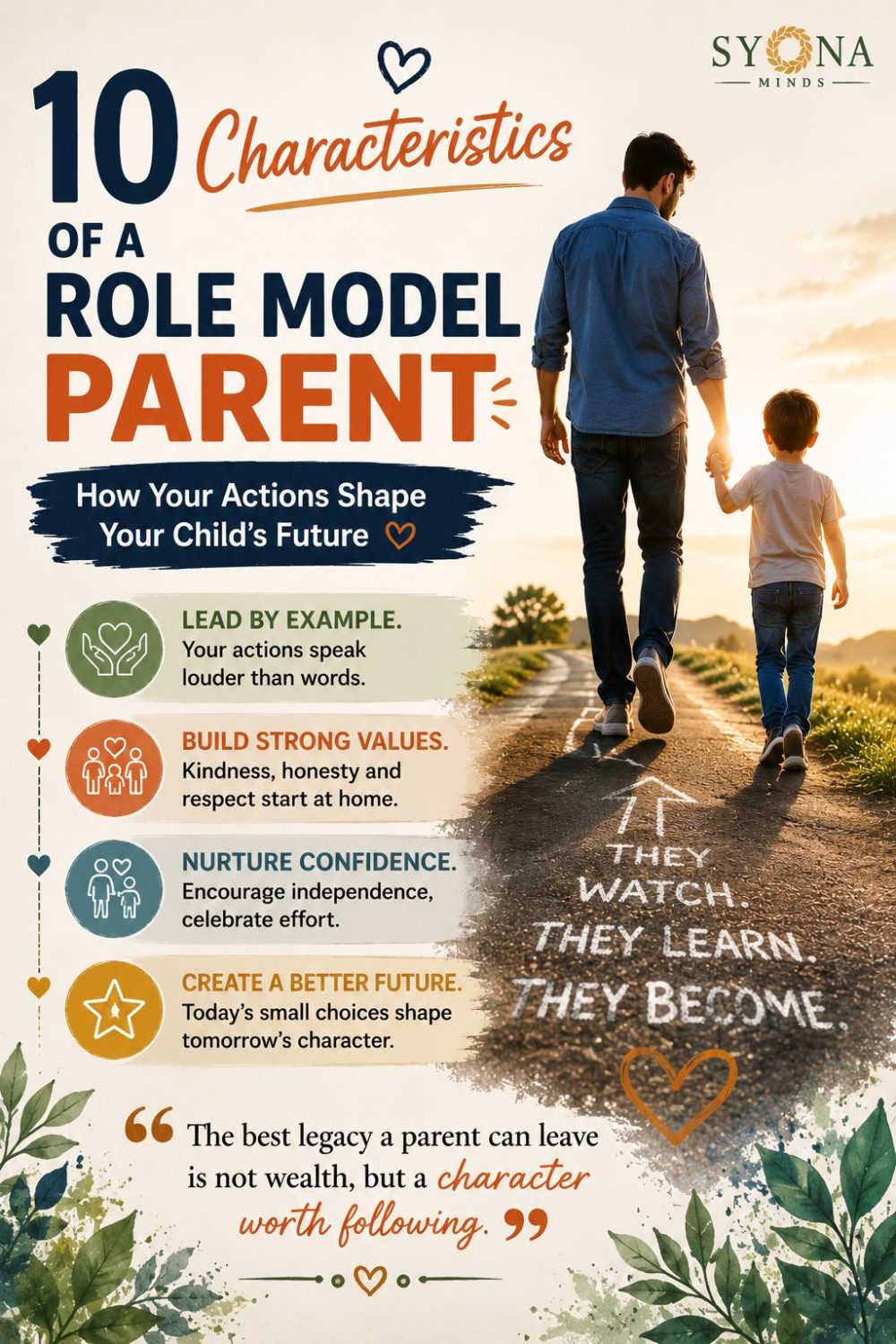
Children are always watching.
Long before they understand lectures about honesty, kindness, or responsibility, they observe how the adults around them behave. Every conversation, decision, reaction, and habit becomes part of the silent lessons that shape their understanding of the world.
Parents are often described as a child’s first teachers, but they are much more than that—they are their child’s first role models. Whether it’s showing kindness to a stranger, admitting a mistake, handling disappointment calmly, or celebrating someone else’s success, children absorb these everyday moments and gradually turn them into their own beliefs and behaviors.
Research in developmental psychology consistently shows that children learn more through observation than instruction. This means that the values parents demonstrate every day often leave a stronger impression than the advice they give. Becoming a positive role model doesn’t require perfection. Instead, it involves being authentic, emotionally available, respectful, and willing to learn alongside your child.
In this article, we’ll explore why role modelling is one of the most powerful parenting tools, the psychology behind observational learning, and ten essential characteristics that help parents raise confident, compassionate, resilient, and emotionally healthy children.
Introduction
Take a moment to reflect on your childhood memories. While it’s likely that specific rules your parents established have faded from your mind, the profound impact of their behavior remains vivid. You might recall how they treated those around them, the warmth in their interactions, or the kindness they extended to friends and strangers alike.
Consider their reactions during challenging moments: did they remain calm or show frustration? How did they celebrate moments of success, whether big or small, and what values did they express during those times? The way they spoke about themselves, filled with confidence or perhaps self-doubt, also shaped your perception of self-worth. Most importantly, think about how their actions made you feel safe, loved, valued, or perhaps even uncertain.
Children are not mere listeners to their parents’ words; they are keen observers of their actions. Each day unfolds as a lesson in life’s intricacies, with young minds quietly absorbing valuable information. They notice how parents navigate life’s complexities, solving problems with creativity, managing emotions with grace, and expressing love with authenticity. They watch closely how their parents handle stress, interact with family members, connect with friends, and even engage with passersby in the world around them.
These daily interactions and observations serve as a blueprint for the children’s future behavior and attitudes. This is why parenting is often described as “teaching without speaking.” It’s a form of silent instruction that deeply influences a child’s understanding of social principles.
Through experiencing kindness in their everyday lives, children learn to be kind themselves. They develop patience by witnessing it in practice, learning that waiting and understanding are essential parts of healthy relationships.
Being a positive role model doesn’t mean that parents must be infallible; in fact, acknowledging and owning up to one’s mistakes can provide invaluable lessons. Demonstrating how to rectify errors and grow from them teaches resilience and accountability.
Perfection in parenting is an unrealistic expectation no one is flawless. Yet, what truly matters is the presence of positive role models who show their children the way through their actions, values, and heartfelt guidance. Honesty, too, becomes a clear lesson when they see it demonstrated consistently around them.
Why Being a Role Model Matters More Than You Think
Many parents spend time telling children what they should do.
“Be respectful.”
“Tell the truth.”
“Be kind.”
“Don’t give up.”
These lessons are important.
But children are far more influenced by what parents do than by what parents say. Imagine a parent encouraging honesty while frequently telling small lies. Or teaching emotional control while regularly shouting during disagreements.
Children notice these contradictions. Psychologists call this observational learning, the process through which children imitate behaviours they consistently observe in significant adults. This means that everyday actions become silent lessons. Helping a neighbour. Thanking a waiter. Apologising after an argument. Managing disappointment calmly. Showing empathy toward others.
Each small moment teaches children something about the kind of person they can become.
The Psychology Behind Role Modelling
One of the most influential theories in child psychology is Albert Bandura’s Social Learning Theory.
Bandura proposed that children learn not only through direct experience but also by watching others.
According to this theory, children observe:
- Behaviors
- Emotional reactions
- Problem-solving strategies
- Communication styles
- Coping skills
They then decide which behaviors are worth copying.
Parents become the most powerful models because children naturally view them as trusted sources of information.
Modern neuroscience supports this idea.
During childhood, the brain rapidly develops connections based on repeated experiences.
Positive interactions strengthen pathways associated with empathy, emotional regulation, resilience, and social understanding.
Simply put:
Children become what they repeatedly experience.
10 Characteristics of a Role Model Parent
1. Authenticity: Being Genuine Instead of Perfect
One of the greatest gifts parents can offer is authenticity. Children don’t need flawless parents. They need real ones. Authentic parents are honest about their feelings, admit mistakes, and live according to their values. Rather than pretending to have every answer, they demonstrate that learning is a lifelong process.
For example, saying:
“I was wrong, and I’m sorry.”
teaches far more about responsibility than insisting on always being right.
Psychological Perspective
1. Authenticity builds trust.
2. When children see parents accepting imperfections, they become less afraid of making mistakes themselves.
3. This supports healthier self-esteem and reduces perfectionistic thinking.
How to Practice It
- Admit mistakes openly.
- Keep promises whenever possible.
- Speak honestly in age-appropriate ways.
- Let children see that growth continues throughout life.
2. Empathy: Understanding Before Judging
Empathy is the ability to understand another person’s feelings and perspective.
Role model parents don’t immediately dismiss emotions with phrases like:
“Stop crying.”
“It’s not a big deal.”
Instead, they pause.
They listen.
They acknowledge feelings before offering solutions. Children who experience empathy learn to offer it to others.
Psychological Perspective
1. Research on emotional intelligence suggests that children who feel emotionally understood develop stronger emotional regulation, healthier friendships, and greater resilience.
2. Empathy also strengthens secure attachment, the emotional bond between parents and children.
How to Practice It
- Listen without interrupting.
- Validate emotions before solving problems.
- Ask questions with curiosity rather than criticism.
- Help children name their feelings.
3. Resilience: Showing That Challenges Can Be Overcome
Every family experiences setbacks. Jobs change. Plans fail. People become ill.
Disappointments happen. Role model parents don’t pretend life is always easy. Instead, they demonstrate healthy ways of responding to adversity.
Rather than giving up, they adapt. Instead of blaming others, they look for solutions.
Children watching this process learn one of life’s most valuable lessons: Difficult moments are temporary.
Psychological Perspective
1. Children develop resilience by observing resilient adults.
2. When parents respond calmly to setbacks, children learn that problems can be managed rather than feared.
3. This reduces anxiety while increasing confidence.
How to Practice It
- Talk openly about overcoming challenges.
- Focus on problem-solving instead of blame.
- Celebrate effort, not only success.
- Model optimism grounded in reality.
4. Integrity: Doing the Right Thing Even When It’s Difficult
Integrity means behaving according to your values, even when nobody is watching.
Children quickly notice whether parents’ actions match their words. A parent who values honesty but cheats whenever convenient sends confusing messages.
Conversely, consistently acting with fairness, honesty, and respect teaches children that character matters.
Psychological Perspective
1. Children develop moral reasoning through repeated observation.
2. Integrity strengthens trust, responsibility, and ethical decision-making.
3. Over time, these experiences become part of children’s own identity.
How to Practice It
- Keep your commitments.
- Admit mistakes honestly.
- Treat everyone with respect.
- Demonstrate fairness during disagreements.
5. Empowerment: Helping Children Believe in Themselves
Role model parents don’t solve every problem for their children. Instead, they provide guidance while encouraging independence.
They ask:
“What do you think?”
“How would you solve this?”
“Would you like to try first?”
These questions communicate trust.
Children gradually develop confidence because they experience success through their own efforts.
Psychological Perspective
1. Psychologist Albert Bandura described self-efficacy as a person’s belief in their ability to succeed.
2. Children develop self-efficacy when adults encourage them to try, learn, and recover from mistakes instead of rescuing them from every challenge.
How to Practice It
- Encourage age-appropriate independence.
- Allow manageable mistakes.
- Praise effort and perseverance.
- Celebrate progress rather than perfection.
6. Inclusivity: Teaching Respect Through Everyday Actions
Children are not born with prejudice they learn attitudes about people from the environment around them.
Role model parents demonstrate respect for people of different cultures, religions, abilities, genders, and backgrounds. More importantly, they model kindness through their daily interactions rather than simply talking about equality.
For example, children notice how parents speak about neighbors, domestic workers, colleagues, strangers, or people with different beliefs. These seemingly ordinary conversations shape children’s understanding of acceptance and respect.
Psychological Perspective
1. Developmental psychologists explain that children begin forming social attitudes from an early age.
2. When parents consistently demonstrate inclusion, empathy, and fairness, children are more likely to develop tolerance, compassion, and healthy interpersonal relationships.
3. Children who grow up in accepting environments often become adults who value diversity and communicate respectfully with others.
How to Practice It
- Speak respectfully about people from different backgrounds.
- Encourage friendships with diverse peers.
- Read books and watch stories that celebrate different cultures.
- Teach children to appreciate differences instead of fearing them.
7. A Love for Lifelong Learning
One of the most valuable lessons parents can teach is that learning never truly ends.
Children naturally become curious when they see adults reading books, learning new skills, asking questions, or trying unfamiliar experiences.
Parents who continue learning send a powerful message:
“Growth doesn’t stop when school ends.”
Whether learning a new language, trying a recipe, taking a course, gardening, or developing a hobby, children observe that curiosity is something to celebrate.
Psychological Perspective
1. Children often imitate attitudes toward learning more than academic ability itself.
2. When parents display curiosity instead of fear of failure, children develop what psychologist Carol Dweck calls a growth mindset—the belief that abilities improve through effort and practice.
3. This mindset is strongly associated with resilience, motivation, and long-term success.
How to Practice It
- Read regularly where your children can see you.
- Learn a new skill together.
- Encourage questions rather than always giving immediate answers.
- Celebrate learning instead of only focusing on grades.
8. Generosity: Showing That Kindness Matters
Generosity isn’t only about giving money. It includes giving time, attention, encouragement, forgiveness, and compassion.
Children observe how parents treat people who cannot offer anything in return. Holding the door for someone. Helping an elderly neighbour.
Volunteering, sharing food and listening patiently.
These everyday acts teach children that kindness is a way of living rather than a special occasion.
Psychological Perspective
1. Research in positive psychology shows that generous behavior increases empathy, strengthens social relationships, and promotes emotional wellbeing for both the giver and the receiver.
2. Children who regularly witness acts of kindness are more likely to engage in prosocial behaviors themselves.
How to Practice It
- Involve children in small acts of kindness.
- Volunteer together as a family.
- Encourage sharing without forcing it.
- Express gratitude openly every day.
9. Healthy Boundaries: Teaching Respect for Yourself and Others
Many parents believe saying “yes” all the time demonstrates love. In reality, children feel safer when they experience clear, consistent, and respectful boundaries.
Role model parents balance warmth with structure.
They communicate expectations calmly, explain rules when appropriate, and follow through consistently.
Children learn that boundaries are not punishments—they are expressions of care, safety, and mutual respect.
Psychological Perspective
1. Children thrive in what psychologists call authoritative parenting, a style that combines emotional warmth with appropriate limits.
2. This parenting approach has been consistently linked to higher self-esteem, better emotional regulation, stronger academic performance, and healthier social relationships.
How to Practice It
- Set clear household expectations.
- Follow through consistently.
- Say “no” when necessary without guilt.
- Teach children to respect both their own boundaries and those of others.
10. Living a Balanced Life
Perhaps one of the most overlooked qualities of a role model parent is self-care. Children notice whether parents constantly neglect themselves or maintain healthy balance.
Parents who prioritise:
- Sleep
- Healthy eating
- Exercise
- Emotional wellbeing
- Friendships
- Hobbies
- Rest
teach children that caring for oneself is not selfish it is responsible. When parents are emotionally and physically healthier, they are often more patient, attentive, and emotionally available.
Psychological Perspective
1. Children develop lifelong attitudes toward health by observing family routines.
2. Parents who model healthy habits increase the likelihood that children will carry those habits into adulthood.
3. Self-care also reduces parental stress, improving the overall emotional climate within the home.
How to Practice It
- Schedule regular family meals.
- Prioritise sleep routines.
- Spend time outdoors together.
- Let children see you enjoying healthy hobbies.
- Practice emotional self-care alongside physical health.
Common Parenting Mistakes That Send Mixed Messages
Even the most loving parents sometimes model behaviors they never intended.
Recognising these patterns is the first step toward positive change.
Saying One Thing but Doing Another
Children quickly notice inconsistency.
Teaching honesty while frequently telling “little lies” creates confusion.
Expecting Perfection
Parents who are overly critical of themselves often unintentionally teach children to fear mistakes.
Instead, model self-compassion and learning from failure.
Constantly Solving Every Problem
Helping children is important.
Rescuing them from every challenge prevents them from developing confidence and problem-solving skills.
Ignoring Your Own Emotional Wellbeing
Children notice chronic stress, emotional exhaustion, and burnout.
Taking care of yourself teaches children that mental health matters.
Forgetting That Everyday Moments Matter
Role modelling doesn’t happen only during major life lessons.
It happens while driving, cooking, apologising, handling disappointment, and speaking to others.
The smallest moments often leave the biggest impression.
Simple Daily Habits That Make You a Better Role Model
Becoming a positive role model doesn’t require dramatic changes.
Small, consistent habits have the greatest impact.
Try to:
✔ Apologise when you’re wrong.
✔ Read regularly.
✔ Express gratitude each day.
✔ Speak respectfully—even during disagreements.
✔ Show curiosity and continue learning.
✔ Keep promises whenever possible.
✔ Spend uninterrupted time with your children.
✔ Celebrate effort more than perfection.
✔ Demonstrate healthy ways to manage stress.
✔ Practice kindness—even when nobody is watching.
Children notice all of these habits.
Eventually, many of them become their own.
Frequently Asked Questions
Why is being a role model important for parents?
Parents are children’s first and most influential teachers. Through observation, children learn values, behaviors, emotional responses, and social skills that shape their future relationships and decision-making.
Can parents still be good role models if they make mistakes?
Absolutely.
In fact, admitting mistakes, apologising sincerely, and showing how to repair relationships teaches children valuable lessons about accountability, resilience, and emotional maturity.
How do children learn by observing parents?
According to Social Learning Theory, children imitate behaviors they repeatedly see in trusted adults. Daily routines, conversations, emotional reactions, and problem-solving strategies all influence children’s development.
What is the most important quality of a role model parent?
There is no single perfect quality, but authenticity, empathy, integrity, emotional availability, and consistency are among the strongest predictors of healthy child development.
Key Takeaways
✔ Children learn more from what parents do than from what they say.
✔ Positive role modelling shapes emotional wellbeing, confidence, empathy, and resilience.
✔ Authenticity is more valuable than perfection.
✔ Healthy boundaries, kindness, and lifelong learning are powerful lessons children naturally absorb.
✔ Small daily actions create lifelong influences.
✔ The goal is not to become a perfect parent but to become a consistent, caring, and emotionally available one.
Conclusion
Every parent hopes to leave their child with something valuable.
Some leave financial security.
Some leave family traditions.
Some leave treasured memories.
But perhaps the greatest gift any parent can leave is an example worth following.
Children may not remember every conversation or every piece of advice they receive, but they will remember how their parents treated others, responded to challenges, expressed love, handled mistakes, and cared for themselves.
Those memories quietly become the foundation of their own character.
Being a role model isn’t about never failing. It’s about showing children what growth looks like. It’s about apologising after mistakes. Choosing kindness when it’s difficult.
Remaining curious.
Treating people with respect.
And continuing to learn throughout life.
Remember, your children are watching far more than they are listening.
Every ordinary day offers another opportunity to teach honesty, courage, empathy, resilience, and compassion not through lectures, but through your own example.
Because in the end, the strongest lessons parents ever teach are the ones they live.
References
1. American Academy of Pediatrics. (2023). Positive Parenting Tips.
2. Bandura, A. (1977). Social Learning Theory. Prentice Hall.
3. Bandura, A. (1997). Self-Efficacy: The Exercise of Control. W. H. Freeman.
4. Center on the Developing Child at Harvard University. (2021). Serve and Return Interaction Shapes Brain Architecture.
5. Dweck, C. S. (2006). Mindset: The New Psychology of Success. Random House.
6. Siegel, D. J., & Bryson, T. P. (2012). The Whole-Brain Child. Bantam Books.
7. UNICEF. (2023). Parenting Resources for Early Childhood Development.
8. World Health Organization. (2023). Mental Health and Well-being Across the Life Course.