Summary
Winter brings crisp mornings, cozy blankets, and festive celebrations but for parents of babies, it also raises an important question: How can I keep my baby warm without overheating them? Babies are much more sensitive to changes in temperature than adults because their bodies are still developing the ability to regulate heat efficiently. This means that dressing them appropriately for cold weather requires more than simply adding extra clothes.
The secret lies in baby layering, a simple yet effective method of dressing your baby in multiple breathable layers that trap warmth while allowing flexibility to adjust as temperatures change. Proper layering not only keeps babies comfortable during outdoor walks or family outings but also helps prevent problems such as overheating, excessive sweating, and cold-related discomfort.
However, winter dressing isn’t only about warmth. Parents also need to consider safe sleep practices, appropriate fabrics, car seat safety, skin protection, and how to recognize signs that a baby may be too hot or too cold.
In this comprehensive guide, we’ll explain the science behind baby layering, explore the best clothing choices for different weather conditions, and share practical, evidence-based tips that help parents keep their little ones warm, comfortable, and safe throughout the winter months.
Introduction
Few things are more heartwarming than seeing your baby wrapped up warmly on a chilly winter morning.
But for many new parents, winter also brings uncertainty.
Should my baby wear three layers or four?
Is a thick blanket enough?
How do I know if they’re too hot?
Can babies safely go outside in cold weather?
These questions are incredibly common and for good reason.
Unlike adults, babies lose body heat much more quickly. Their skin is thinner, they have a larger body surface area relative to their size, and they cannot regulate their body temperature as efficiently. At the same time, overdressing can be just as risky as underdressing, increasing the chances of overheating and discomfort.
That’s why pediatricians recommend layering clothing instead of relying on one heavy outfit.
Layering creates pockets of warm air between clothing, providing insulation while making it easy to add or remove layers depending on the environment.
Whether you’re heading out for a winter walk, visiting family, or preparing your baby for bedtime, understanding the principles of baby layering will help you keep your little one safe and comfortable all season long.
Why Babies Need Extra Protection During Cold Weather
Babies are not simply “small adults.” Their bodies function differently, especially during the first year of life.
Several factors make infants more vulnerable to cold temperatures:
1. Immature Temperature Regulation
The part of the brain responsible for regulating body temperature is still developing during infancy. Babies cannot easily warm themselves by shivering or cool themselves by sweating as effectively as adults.
2. Greater Heat Loss
Because babies have a larger body surface area relative to their weight, they lose heat much faster than adults.
This is particularly noticeable through:
- Head
- Hands
- Feet
Proper winter accessories help reduce this heat loss.
3. Limited Mobility
Unlike older children, babies cannot run, jump, or move around enough to generate body heat.
Instead, they depend almost entirely on appropriate clothing and caregivers to stay warm.
4. Sensitive Skin
Cold winter air often becomes dry, increasing the risk of:
- Dry skin
- Chapping
- Eczema flare-ups
- Windburn
Choosing breathable, skin-friendly fabrics becomes especially important during winter.
What Is Baby Layering?
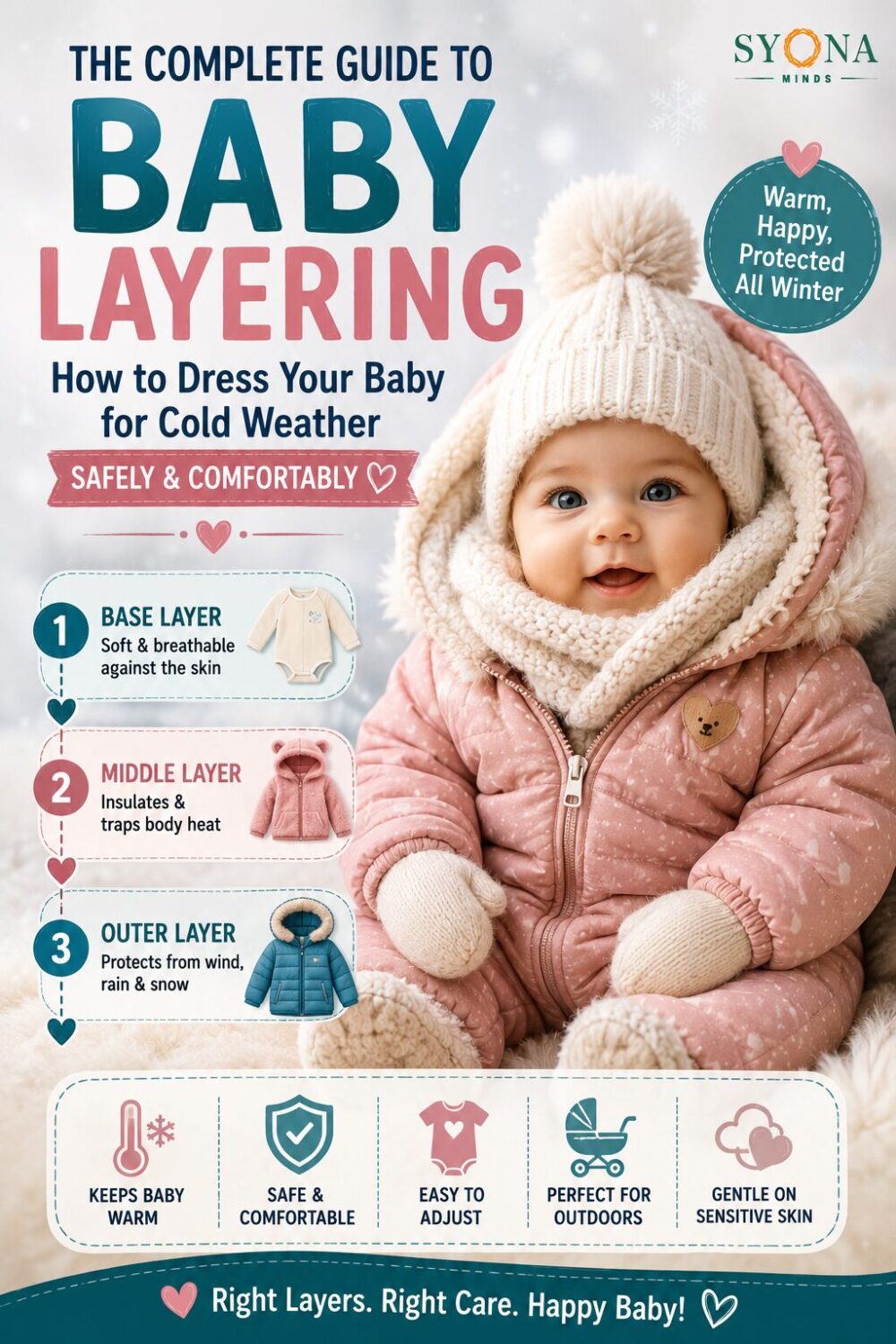
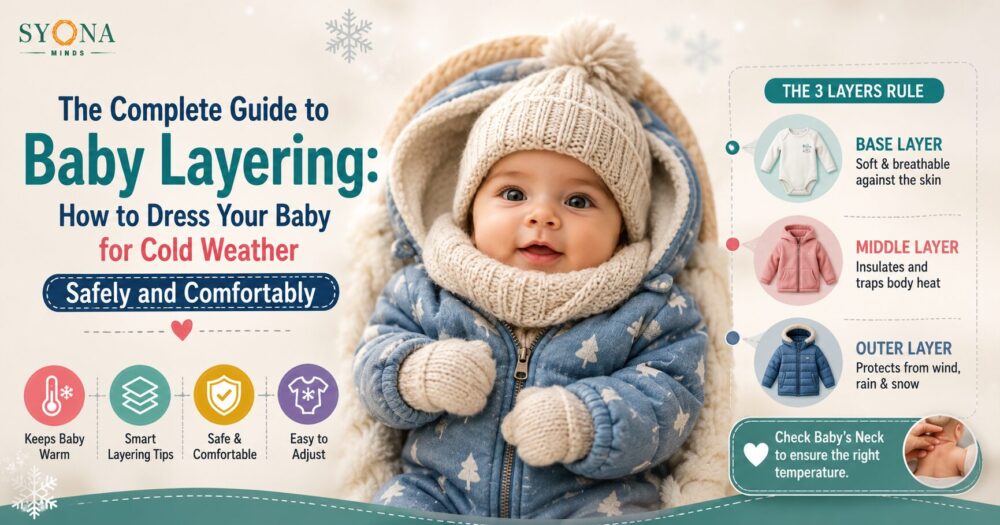
Baby layering means dressing your baby in several lightweight clothing layers rather than one thick outfit.
Each layer has a different purpose:
- Base layer keeps skin dry and comfortable.
- Middle layer traps body heat.
- Outer layer protects against wind, rain, and snow.
This approach offers flexibility because parents can easily remove or add layers as temperatures change.
For example:
- Indoors → Base layer only
- Cool weather → Base + Middle
- Cold outdoors → Base + Middle + Outer
Layering allows babies to remain comfortable without becoming overheated.
The Science Behind Layering
Many parents assume thicker clothing automatically means more warmth.
Actually, air is the real insulator.
Each clothing layer traps small pockets of warm air close to your baby’s body.
These air pockets reduce heat loss while allowing excess warmth to escape when necessary.
This explains why several lightweight layers often provide better temperature regulation than one bulky coat.
The right combination also reduces sweating, which can make babies feel colder once moisture cools against the skin.
How to Tell If Your Baby Is Too Cold or Too Hot
Parents often check a baby’s hands or feet.
However, these aren’t the most reliable indicators because babies naturally have cooler extremities.
Instead, gently feel:
- Neck
- Chest
- Upper back
These areas provide a much more accurate indication of body temperature.
Signs Your Baby May Be Too Cold
- Cool chest or neck
- Pale skin
- Shivering (rare in young infants)
- Fussiness
- Low activity level
Signs Your Baby May Be Too Hot
- Sweaty neck
- Damp hair
- Flushed cheeks
- Rapid breathing
- Restlessness
If your baby appears too warm, remove one layer and reassess after a few minutes.
How to Layer Your Baby Properly
1. Start with a Breathable Base Layer
The base layer sits directly against your baby’s skin.
Its primary role is to:
- Keep skin dry.
- Reduce irritation.
- Trap gentle warmth.
- Allow airflow.
Choose fabrics such as:
- Organic cotton
- Soft cotton blends
- Merino wool (for colder climates)
Long-sleeved bodysuits or footed onesies work particularly well.
Avoid rough fabrics that may irritate delicate skin.
Why It Matters
A comfortable base layer prevents moisture buildup while providing the first layer of insulation.
2. Add an Insulating Middle Layer
The middle layer provides warmth.
Good choices include:
- Fleece jackets.
- Knitted sweaters.
- Wool cardigans.
- Quilted rompers.
Unlike bulky coats, these materials retain warmth while remaining lightweight enough for comfortable movement.
Merino wool is especially useful because it naturally regulates temperature and wicks away moisture.
Why It Matters
This layer traps body heat without causing overheating.
3. Protect Against Wind and Rain with an Outer Layer
When heading outdoors, add a weather-resistant outer layer.
Look for:
- Windproof jackets.
- Waterproof snowsuits.
- Insulated coats.
- Weather-resistant bunting bags.
The outer layer should protect your baby from cold air, rain, or snow without restricting movement.
Choose clothing that’s breathable rather than completely airtight.
Why It Matters
Wind significantly increases heat loss, even on days that don’t seem especially cold.
4. Keep Tiny Extremities Warm
Babies lose considerable body heat through their:
- Head
- Hands
- Feet
Winter accessories are essential.
Include:
- Soft wool hats.
- Fleece mittens.
- Warm socks.
- Insulated booties.
Choose snug-fitting accessories that remain secure without becoming tight.
Why It Matters
Warm extremities help maintain overall body temperature and improve comfort.
5. Choose Clothing That Makes Diaper Changes Easy
Parents quickly discover that winter dressing becomes frustrating if every diaper change requires removing multiple complicated layers.
Instead, choose clothing with:
- Front zippers.
- Snap fasteners.
- Two-way zippers.
- Envelope necklines.
These features make changing diapers faster while reducing your baby’s exposure to cold air.
Why It Matters
Convenient clothing helps keep babies warm while making everyday care easier for parents.
6. Choose the Right Footwear for Cold Weather
While babies may not be walking yet, their feet can lose heat quickly during winter. Keeping little feet warm is just as important as protecting their hands and head.
For infants, choose:
- Soft fleece-lined booties
- Wool socks
- Insulated baby booties
- Flexible winter shoes (for early walkers)
Avoid tight footwear that restricts circulation, as this can actually make your baby’s feet colder. Look for footwear with elastic openings or adjustable fasteners so they stay securely in place without squeezing tiny feet.
If your baby is already walking, select shoes with non-slip soles that provide warmth without being too bulky.
Why It Matters
Warm feet help maintain your baby’s overall body temperature and keep them comfortable during outdoor activities.
7. Keep Your Baby Cozy in Strollers and Carriers
Winter walks can be refreshing for both parents and babies, provided your little one is dressed appropriately.
Instead of adding multiple bulky blankets, consider using:
- Insulated stroller footmuffs
- Weatherproof stroller covers
- Baby carrier covers
- Windproof stroller shields
These accessories protect babies from cold winds while allowing proper airflow.
Important Tip
Avoid completely covering the stroller with thick blankets or plastic covers, as this may reduce ventilation and increase the risk of overheating.
When using a baby carrier, remember that your own body provides additional warmth. You may need one less clothing layer than you would use in a stroller.
Why It Matters
Proper stroller protection keeps babies warm without interfering with safe airflow or comfort.
8. Select Breathable Fabrics
Many parents assume the thickest fabrics are always the warmest.
However, breathable fabrics regulate temperature much more effectively.
The best winter fabrics include:
Merino Wool
- Excellent insulation
- Naturally moisture-wicking
- Soft on sensitive skin
- Helps regulate body temperature
Organic Cotton
- Gentle on delicate skin
- Highly breathable
- Comfortable indoors
- Reduces irritation
Fleece
- Lightweight
- Warm
- Quick drying
- Excellent insulating layer
Avoid fabrics that trap excessive heat or cause sweating.
Why It Matters
Sweating during winter can actually make babies colder once moisture cools against their skin.
Breathable clothing helps maintain a comfortable body temperature throughout the day.
9. Layer Your Baby Safely During Sleep
Nighttime requires a different approach than outdoor clothing.
The American Academy of Pediatrics recommends avoiding:
- Loose blankets
- Heavy quilts
- Pillows
- Thick comforters
- Stuffed toys in the crib
Instead, dress your baby using:
- Cotton long-sleeved onesie
- Footed sleeper
- Wearable sleep sack appropriate for room temperature
Sleep sacks provide warmth while reducing the risk associated with loose bedding.
Keep the Nursery Comfortable
Experts generally recommend maintaining the room between 20–22°C (68–72°F).
If you’re comfortable wearing light clothing, your baby probably doesn’t need heavy winter sleepwear.
Why It Matters
Safe sleep practices reduce the risk of overheating and support safer infant sleep.
10. Protect Your Baby’s Delicate Skin
Cold weather often causes:
- Dry skin
- Chapped cheeks
- Cracked lips
- Windburn
- Eczema flare-ups
Help protect your baby’s skin by:
- Dressing them in soft natural fabrics.
- Applying fragrance-free moisturizer before outdoor walks.
- Using gentle cleansers.
- Limiting very hot baths.
- Patting skin dry rather than rubbing.
If your baby drools frequently, keep the chin area dry to prevent irritation.
Why It Matters
Healthy skin provides an important protective barrier against winter dryness and irritation.
How to Dress Your Baby for Different Winter Conditions
Different weather requires different layering strategies.
Cool, Dry Days (10–15°C / 50–59°F)
- Cotton bodysuit
- Light sweater
- Pants
- Socks
- Soft hat if outdoors
Perfect for mild winter mornings.
Cold, Windy Days (0–10°C / 32–50°F)
- Cotton base layer
- Fleece middle layer
- Windproof jacket
- Warm hat
- Mittens
- Wool socks
- Booties
Ideal for winter walks.
Snowy or Very Cold Days (Below 0°C / 32°F)
- Thermal base layer
- Fleece or wool middle layer
- Insulated snowsuit
- Thick hat
- Waterproof mittens
- Insulated booties
- Weatherproof stroller cover
Limit outdoor exposure during extremely cold temperatures, especially for newborns.
Common Baby Layering Mistakes
Even experienced parents sometimes make mistakes during winter.
Overdressing
Adding too many layers can cause sweating and overheating.
Remember:
Warm—not hot—is the goal.
Checking Hands Instead of Chest
Cold hands don’t necessarily mean your baby is cold.
Always check:
- Neck
- Chest
- Upper back
Using Thick Coats in Car Seats
This is one of the most important winter safety rules.
Bulky winter coats compress during a collision, creating dangerous slack in car seat harnesses.
Instead:
- Dress baby in thin layers.
- Secure harness snugly.
- Place a blanket over the harness after buckling if additional warmth is needed.
Ignoring Indoor Temperatures
Parents often forget to remove outdoor layers once indoors.
Babies can overheat surprisingly quickly inside heated homes or shopping centers.
Winter Car Seat Safety
Many parents are unaware that winter coats should not be worn underneath a properly fastened car seat harness.
Instead:
- Dress baby in thin warm layers.
- Secure harness tightly.
- Add blankets over the harness after buckling.
- Warm the car before placing your baby inside whenever possible.
Car seat safety should always take priority over bulky clothing.
Signs Your Baby May Be Overheating
Watch carefully for:
- Sweaty neck
- Damp hair
- Red cheeks
- Fast breathing
- Restlessness
- Warm chest
- Heat rash
If you notice these signs:
- Remove one clothing layer.
- Move to a cooler environment.
- Monitor your baby closely.
If symptoms persist or your baby appears lethargic or unusually sleepy, seek medical advice promptly.
Key Takeaways
✔ Layering is the safest and most effective way to keep babies warm during winter.
✔ Begin with a breathable base layer, followed by insulating and weather-resistant layers as needed.
✔ Choose breathable natural fabrics like cotton, merino wool, and fleece.
✔ Protect your baby’s head, hands, and feet, where heat loss is greatest.
✔ Avoid bulky winter coats underneath car seat harnesses.
✔ Use wearable sleep sacks instead of loose blankets during sleep.
✔ Check your baby’s chest or neck—not hands or feet—to assess body temperature.
✔ Remove layers when moving indoors to prevent overheating.
Frequently Asked Questions (FAQs)
How many layers should my baby wear during winter?
A good rule is to dress your baby in one additional layer compared with what a comfortable adult would wear in the same environment. Adjust layers based on your baby’s activity level and the weather.
Can newborns go outside during cold weather?
Yes, healthy newborns can usually go outdoors for short periods if dressed appropriately. However, avoid prolonged exposure in freezing temperatures or severe wind, and consult your pediatrician if your baby was born prematurely or has medical concerns.
Should babies wear hats indoors?
Generally, healthy babies do not need hats indoors if the room temperature is comfortable (around 20–22°C / 68–72°F). Keeping hats on indoors for long periods may contribute to overheating.
How do I know if my baby is too cold?
Check your baby’s chest or upper back. If these areas feel cool, your baby may need another layer. Avoid relying solely on cold hands or feet, as these are often naturally cooler.
What fabrics are best for winter baby clothing?
Soft cotton, merino wool, and fleece are excellent choices because they provide warmth while remaining breathable and gentle on sensitive skin.
Conclusion
Keeping your baby warm during winter is about finding the right balance between comfort, safety, and flexibility. Rather than relying on heavy, bulky clothing, layering allows parents to adjust their baby’s outfit according to changing temperatures while helping maintain a stable body temperature. A breathable base layer, an insulating middle layer, and a weather-resistant outer layer work together to keep babies warm without increasing the risk of overheating.
Winter care also goes beyond clothing. Choosing breathable fabrics, protecting delicate skin, dressing babies safely for sleep, and following proper car seat guidelines all contribute to your child’s overall wellbeing. Paying attention to signs of discomfort and checking your baby’s chest or neck instead of their hands and feet can help you make informed decisions about adding or removing layers.
Remember, every baby is different. Factors such as age, activity level, weather conditions, and indoor temperatures all influence how much clothing your little one needs. Observing your baby’s cues and making small adjustments throughout the day will help keep them comfortable and content.
At Syona Minds, we believe that informed parenting creates confident parenting. Understanding the principles of baby layering not only helps protect your child during the colder months but also gives you peace of mind, allowing you to enjoy cozy winter walks, family outings, and precious moments with your baby while knowing they are safe, warm, and comfortable.
References
1. American Academy of Pediatrics. (2022). HealthyChildren.org: Winter Safety Tips for Babies and Young Children.
2. Centers for Disease Control and Prevention. (2023). Infant Safe Sleep Recommendations.
3. Mayo Clinic Staff. (2023). Keeping Babies Safe in Cold Weather.
4. National Health Service (NHS). (2023). Keeping Your Baby Warm.
5. World Health Organization. (2023). Care of the Newborn.