Summary
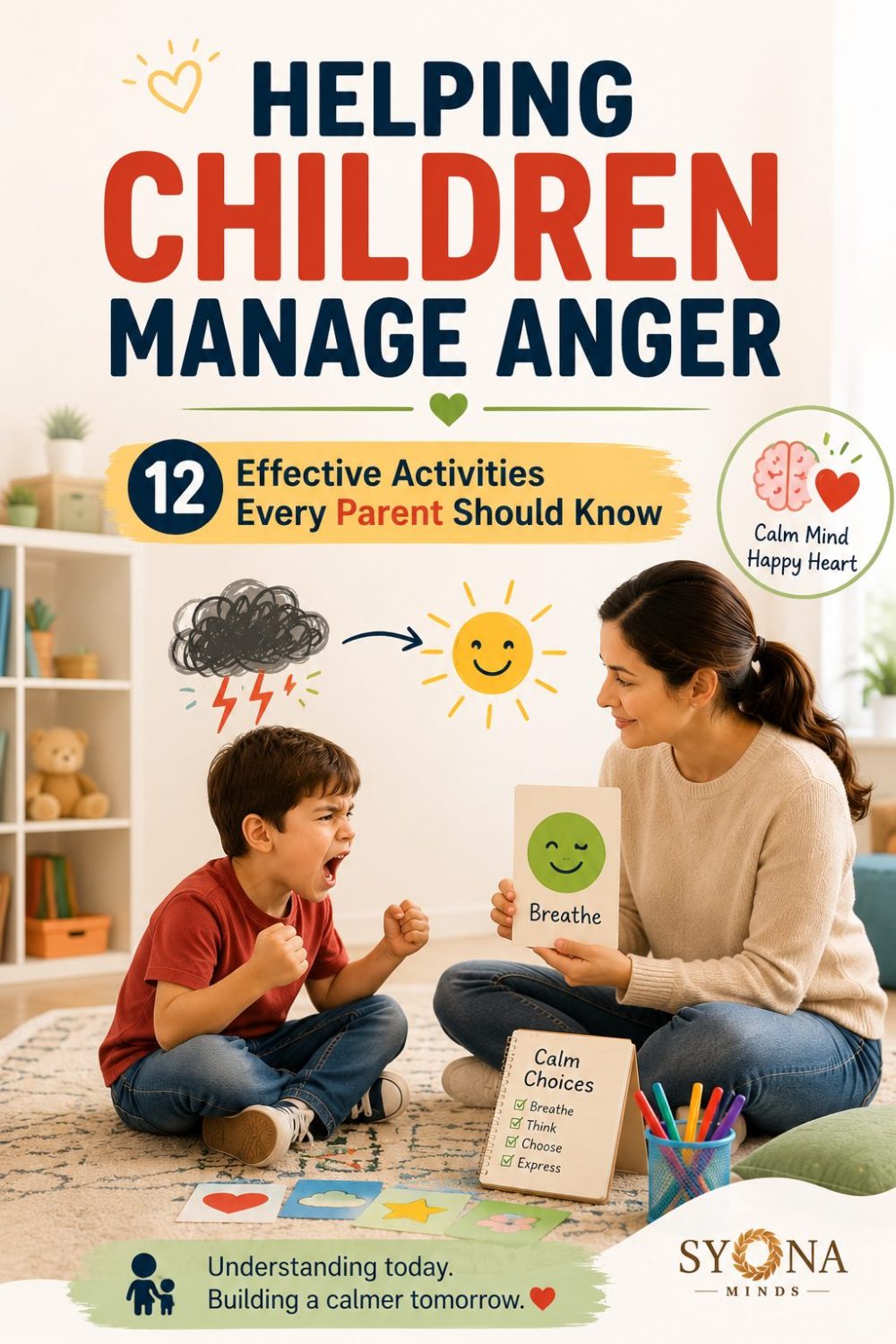
Anger is a natural human emotion, even for children. Whether it’s frustration after losing a game, disappointment over hearing “no,” or difficulty expressing big feelings, every child experiences anger differently. The challenge isn’t preventing anger; it’s helping children learn healthy ways to understand, express, and manage it.
Young children are still developing the parts of the brain responsible for self-control, emotional regulation, and decision-making. This means angry outbursts, tantrums, and impulsive reactions are often signs that a child lacks the skills to manage overwhelming emotions, not that they are “bad” or intentionally misbehaving.
The good news is that emotional regulation can be learned. With patience, guidance, and consistent support, parents and caregivers can teach children how to calm themselves, solve problems, communicate their feelings, and build lifelong emotional resilience.
In this article, we’ll explore why children struggle with anger, the science behind emotional regulation, practical warning signs to watch for, and twelve evidence-based activities that help children manage anger in healthy and constructive ways.
Introduction
Imagine this familiar scene.
Your child comes home from school, throws their backpack across the room, slams the bedroom door, and bursts into tears because a classmate said something hurtful.
As a parent, you might immediately wonder:
“Why are they reacting like this?”
“Why can’t they just calm down?”
“Am I doing something wrong?”
These questions are common, and so is childhood anger.
Children experience frustration, disappointment, jealousy, embarrassment, fear, and sadness just like adults do. The difference is that they haven’t yet developed the emotional skills to understand or manage these feelings effectively.
When emotions become overwhelming, anger often becomes the easiest emotion to express.
Instead of seeing anger as “bad behaviour,” psychologists encourage parents to view it as a signal that says a child needs guidance, understanding, and emotional support.
Learning how to manage anger isn’t just about preventing tantrums. It’s about helping children develop emotional intelligence, stronger relationships, better problem-solving skills, and greater confidence throughout life.
What Is Anger?
Anger is one of our basic human emotions. It is the body’s natural response to situations that feel unfair, frustrating, threatening, or disappointing.
For children, anger can be triggered by seemingly small events, such as:
- Losing a game
- Being told “no”
- Sharing toys
- Homework difficulties
- Feeling misunderstood
- Changes in routine
- Hunger or tiredness
- Sibling conflicts
Adults often see these situations as minor. However, children experience emotions with far less emotional regulation than adults.
For them, these moments can feel overwhelming.
Anger itself is not the problem.
The problem arises when children don’t yet know how to express or regulate their emotions in healthy ways.
Teaching children that “it’s okay to feel angry” while also helping them choose safe ways to respond builds emotional resilience rather than emotional suppression.
Why Do Children Find It Difficult to Control Their Anger?
Many parents assume children simply need more discipline.
In reality, emotional regulation is a developmental skill that gradually improves as the brain matures.
Young children are still learning to:
- Recognize emotions
- Pause before reacting
- Solve problems
- Communicate needs
- Tolerate frustration
- Recover after disappointment
Until these skills develop, children often respond impulsively.
Imagine asking a four-year-old to control emotions with the same maturity as an adult.
It would be like expecting someone to ride a bicycle before they’ve learned how to balance.
Children don’t need fewer emotions.
They need more opportunities to learn emotional regulation.
The Science Behind Childhood Anger
Psychologists often explain emotional regulation using two important parts of the brain.
The Amygdala – The Brain’s Alarm System
The amygdala detects potential threats and triggers emotional reactions.
When a child feels embarrassed, rejected, frightened, or frustrated, the amygdala reacts almost instantly.
This can lead to:
- Crying
- Shouting
- Hitting
- Running away
- Throwing objects
These reactions happen before the child has fully thought about the situation.
The Prefrontal Cortex – The Brain’s Decision Maker
The prefrontal cortex helps us:
- Think logically
- Solve problems
- Control impulses
- Consider consequences
- Calm ourselves
The important thing to remember is that this part of the brain is still developing throughout childhood and adolescence.
That means children often feel emotions long before they know how to manage them.
This is why adults play such an important role.
When parents stay calm, they help “lend” their emotional regulation to the child, a process psychologists call co-regulation.
Over time, children learn to calm themselves by experiencing calm adults.
Signs Your Child May Need Help Managing Anger
Every child gets angry occasionally.
However, some behaviours suggest they may need extra support in developing emotional regulation skills.
Watch for patterns such as:
- Frequent explosive tantrums beyond what is typical for their age
- Hitting, kicking, biting, or throwing objects
- Difficulty calming down after becoming upset
- Blaming others for every problem
- Becoming aggressive toward siblings or classmates
- Struggling to express feelings with words
- Constant frustration over small disappointments
- Refusing to follow simple boundaries
- Extreme emotional reactions to minor setbacks
- Withdrawing completely after becoming angry
These behaviours do not necessarily indicate a mental health condition.
More often, they suggest that a child needs guidance in learning healthier coping strategies.
12 Anger Management Activities That Help Children Regulate Emotions
1. Balloon Breathing
One of the simplest ways to calm an overwhelmed nervous system is through slow, deep breathing.
Ask your child to imagine they are slowly inflating a giant balloon.
Take a slow breath in through the nose…
Hold for a moment…
Then gently blow the balloon back out through the mouth.
Repeat five times.
Deep breathing activates the body’s relaxation response and helps reduce the intensity of anger.
For younger children, turning breathing into a game makes it much more enjoyable.
2. The Feelings Thermometer
Children often struggle to recognise how upset they are until emotions become overwhelming.
Create a simple thermometer numbered from 1 to 10.
Together, identify what each level feels like.
For example:
1–3: Calm
4–6: Frustrated
7–8: Very angry
9–10: Ready to explode
Teach children to notice when they’re reaching a “6” instead of waiting until they’re at a “10.”
This encourages early emotional regulation.
3. Create a Calm Corner
Instead of using “time-out” as punishment, create a calming space children choose to use when emotions become too big.
Include items such as:
- Soft cushions
- Books
- Colouring pages
- Stress balls
- Sensory toys
- Stuffed animals
The goal isn’t isolation.
It’s helping children learn that calming down is a skill not a punishment.
4. Art as Emotional Expression
Children don’t always have the vocabulary to explain their feelings.
Art gives emotions another language.
Encourage them to:
- Draw their anger.
- Paint different emotions.
- Create comic strips.
- Use colours to represent feelings.
Afterwards, ask gentle questions such as:
“Can you tell me about your picture?”
This opens conversation without pressure.
5. Movement Breaks
Anger creates physical energy.
Children often need to release this energy before they can think clearly.
Healthy movement might include:
- Dancing
- Jumping
- Running
- Obstacle courses
- Stretching
- Throwing soft balls into a basket
Physical activity helps lower stress hormones while improving mood through the release of endorphins.
6. The Stop–Think–Choose Game
Teach children a simple three-step strategy.
🛑 STOP
Pause before reacting.
🤔 THINK
“What are my choices?”
✅ CHOOSE
“What choice will help solve the problem?”
Practice during calm moments using everyday situations.
For example:
“My brother took my toy.”
“What could I do instead of hitting?”
Children become better at emotional regulation through repetition, not during the middle of a meltdown, but long before it happens.
7. The Anger Volcano Activity
Children often believe anger appears suddenly, like an explosion. In reality, anger usually builds gradually just like a volcano.
Draw a volcano together and ask your child to fill it in.
At the bottom, write small frustrations such as:
- “I was tired.”
- “My friend ignored me.”
- “I couldn’t find my toy.”
Near the top, write the thoughts and feelings that built up.
Finally, at the eruption point, describe what happened:
- Shouting
- Crying
- Throwing toys
- Slamming doors
This activity helps children understand that emotional outbursts usually begin long before the “explosion.”
Once they recognise the early warning signs, they can begin using calming strategies before emotions become overwhelming.
8. Keep an Emotion Journal
Many children find it easier to write or draw about their feelings than talk about them.
A simple journal encourages children to reflect on:
- What happened today?
- How did I feel?
- What made me angry?
- What helped me feel better?
- What could I try next time?
For younger children, drawings, emojis, or colours can replace written words.
Over time, journaling helps children recognise emotional patterns and improves self-awareness—an important step toward emotional regulation.
9. Positive Self-Talk
Children often speak to themselves more harshly than adults realise.
After becoming angry, they may think:
- “Nobody likes me.”
- “I’m bad.”
- “I always mess everything up.”
Help children replace these thoughts with realistic and encouraging statements.
Examples include:
- “I’m upset, but I can calm down.”
- “Everyone makes mistakes.”
- “I can try again.”
- “I’m learning something new.”
This simple technique strengthens confidence and teaches children that difficult emotions do not define who they are.
10. Role-Play Difficult Situations
Children learn best through practice.
Instead of only discussing behaviour after a conflict, recreate everyday situations through role-play.
Examples include:
- Someone cuts in front of them during a game.
- A sibling refuses to share.
- A classmate says something unkind.
- They lose a competition.
Ask:
“What are three different ways we could respond?”
This allows children to practise healthy communication before facing real-life situations.
Psychologists refer to this as behavioural rehearsal, and it is widely used to build emotional and social skills.
11. Mindfulness Through the Five Senses
When children become angry, their minds often race.
A simple grounding exercise can help bring their attention back to the present.
Ask them to notice:
👀 Five things they can see
✋ Four things they can touch
👂 Three things they can hear
👃 Two things they can smell
👅 One thing they can taste
This technique slows emotional reactions by encouraging the brain to focus on the environment rather than overwhelming thoughts.
It is particularly helpful for older children who experience frustration, anxiety, or emotional overload.
12. Build a Personal Calm Kit
Every child calms down differently.
Invite your child to create a small “calm kit” filled with items that help them feel safe and relaxed.
This might include:
- A favourite book
- Colouring pencils
- A soft toy
- Stress ball
- Fidget toy
- Positive affirmation cards
- Family photos
- Bubble solution for breathing exercises
Allow children to personalise the kit.
When they feel angry, encourage them to choose one calming activity instead of reacting impulsively.
Having a personalised plan helps children feel more in control of their emotions.
How Parents Can Respond During an Angry Outburst
One of the biggest misconceptions about childhood anger is that children need immediate discipline during emotional meltdowns.
In reality, the brain cannot learn effectively while overwhelmed.
During intense anger, the emotional centres of the brain become highly active, while the thinking part of the brain temporarily becomes less effective.
Instead of trying to reason immediately:
Stay Calm
Children naturally look to adults for emotional cues.
A calm adult helps a child’s nervous system settle more quickly.
Acknowledge Their Feelings
Validation is not the same as agreement.
Instead of saying:
“Stop being silly.”
Try:
“I can see you’re really frustrated right now.”
Feeling understood often reduces emotional intensity.
Keep Everyone Safe
If necessary:
- Remove dangerous objects.
- Create space.
- Stay nearby.
- Speak calmly.
Avoid physical punishment or shouting.
Talk After Everyone Is Calm
Children learn best after emotions have settled.
Ask questions such as:
- “What happened?”
- “How were you feeling?”
- “What could we try differently next time?”
This turns mistakes into learning opportunities rather than sources of shame.
Common Parenting Mistakes That Can Increase Anger
Even with the best intentions, some responses may unintentionally reinforce emotional outbursts.
Solving Every Problem
When adults immediately fix every difficulty, children have fewer opportunities to develop resilience and problem-solving skills.
Guide them instead of rescuing them.
Giving In During Tantrums
If children receive what they want after shouting or crying, they may learn that emotional outbursts are effective ways to influence others.
Consistency matters.
Dismissing Feelings
Comments such as:
- “It’s not a big deal.”
- “Stop crying.”
- “You’re overreacting.”
can make children feel misunderstood.
A better approach is to acknowledge the feeling while guiding behaviour.
Expecting Adult Self-Control
Remember:
A six-year-old cannot regulate emotions like a sixteen-year-old.
Development matters.
Progress takes time.
When Should Parents Seek Professional Help?
Most childhood anger is a normal part of development.
However, professional support may be helpful if anger:
- Happens almost every day.
- Leads to frequent aggression.
- Causes problems at school.
- Damages friendships.
- Results in self-harm or harm to others.
- Continues despite consistent parenting strategies.
- Is accompanied by anxiety, depression, trauma, or developmental concerns.
A child psychologist or mental health professional can identify underlying causes and recommend appropriate interventions.
Seeking support early often prevents difficulties from becoming more serious later.
Frequently Asked Questions
Is anger normal in children?
Yes.
Anger is a normal emotion.
The goal is not to eliminate anger but to teach children healthy ways to express and manage it.
What causes frequent anger in children?
Common causes include:
- Frustration
- Poor emotional regulation
- Fatigue
- Hunger
- Anxiety
- Family stress
- Learning difficulties
- Developmental challenges
Sometimes several factors occur together.
Can rewards improve anger management?
Praise and encouragement work best when they recognise effort rather than perfection.
For example:
“I noticed you took a deep breath before speaking that was a great choice.”
Positive reinforcement encourages children to repeat healthy behaviours.
Should children be punished for angry outbursts?
Children should learn that hurtful behaviours have consequences.
However, punishment alone rarely teaches emotional regulation.
Guidance, modelling, and practising coping skills are far more effective for long-term emotional development.
Key Takeaways
✔ Anger is a natural emotion not a sign that a child is “bad.”
✔ Children learn emotional regulation gradually as their brains develop.
✔ Parents play an important role through calm, consistent co-regulation.
✔ Activities such as breathing exercises, journaling, movement, mindfulness, role-play, and creative expression help children manage overwhelming emotions.
✔ Emotional coaching is more effective than punishment alone.
✔ Helping children recognise emotions early allows them to choose healthier responses before anger escalates.
✔ Every child develops at their own pace. Patience, consistency, and connection remain the strongest foundations for emotional growth.
Conclusion
Every child experiences anger. What shapes their future is not whether they become angry, but how they learn to respond when those emotions arise.
Children are not born knowing how to manage frustration, disappointment, or conflict. These are skills that develop over time through guidance, practice, and supportive relationships. By teaching children to recognise their emotions, express them safely, and solve problems thoughtfully, parents help build qualities that extend far beyond childhood resilience, empathy, confidence, and emotional intelligence.
Remember, progress is rarely immediate. Some days will be easier than others, and setbacks are a normal part of learning. Rather than aiming for perfect behaviour, focus on helping your child make small, consistent improvements.
The calm conversations, patient responses, and healthy coping strategies you practice today become the emotional tools your child will carry into adolescence and adulthood. Every moment spent teaching emotional regulation is an investment in your child’s lifelong wellbeing.
References
1. American Academy of Pediatrics. (2023). HealthyChildren.org: Helping Children Manage Anger.
2. American Psychological Association. (2023). Building Emotional Regulation Skills in Children.
3. Centre on the Developing Child at Harvard University. (2021). Executive Function & Self-Regulation.
4. Gottman, J., & DeClaire, J. (1997). The Heart of Parenting: Raising an Emotionally Intelligent Child.
5. Siegel, D. J., & Bryson, T. P. (2012). The Whole-Brain Child. Bantam Books.
6. Siegel, D. J., & Bryson, T. P. (2014). No-Drama Discipline. Bantam Books.
7. Shonkoff, J. P., & Phillips, D. A. (2000). From Neurons to Neighborhoods: The Science of Early Childhood Development. National Academies Press.
8. World Health Organisation. (2022). Mental Health and Well-Being Across the Life Course.